Tuesday, August 13, 2013

Tuesday's Overlooked Films and/or Other A/V: the links

Theatre of Blood
Below, today's set of reviews and citations of audiovisual works and related matter, with the posts at the links...as always, thanks to all the contributors and to all you readers for your participation. As usual, there are likely to be additions to this list over the course of the day, and if I've missed your, or someone else's, post, please let me know in comments...thanks again...

Allan Mott: Theatre of Blood
Cocoon

Bill Crider: Cocoon [trailer]

Brian Arnold: The Incredible Mr. Limpet

B.V. Lawson: Media Murder

Clayton K. Walter: Luke Slaughter of Tombstone

Ed Gorman/David Kalat: Marilyn Monroe and Howard Hawks

Ed Lynskey: The Snoop Sisters; Fear in the Night

Elizabeth Foxwell: Girl in the News

Evan Lewis: "Popeye the Sailor Meets Sindbad the Sailor"

Submarine
George Kelley: Justice League: The Flashpoint Paradox

How Did This Get Made?: Crocodile Dundee in Los Angeles

Iba Dawson: Submarine (2010 film)

Ivan G. Shreve, Jr.: The Adventures of Sam Spade; The Jack Benny Program: The Lost Episodes

Jackie Kashian: The Dork Forest: "Live in Portland: Carrie Brownstein"


Jacqueline T. Lynch: Adventure in Manhattan

James Reasoner: The Quest (1976 US television series)
Deadlier than the Male

Jeff Flugel: Deadlier than the Male (1967 Bulldog Drummond revival film)

Jerry House: Annie Oakley (herself and the tv series)

Kelly Robinson: Craig Rice

Kliph Nesteroff: How to Commit Marriage (and Irwin Corey interview passage): The Last of the Secret Agents

Laura: Timber Stampede; Disney Expo 2013

Lucy Brown: Hindle Wakes (aka Holiday Week): School for Scoundrels (1960 film)

Mike Tooney: Stargate SG-1: "Collateral Damage"

The Valley of Gwangi
Mystery Dave: Men of Honor

Patti Abbott: Foul Play

Pearce Duncan: Demons

Randy Johnson: The Beast of Hollow Mountain; The Valley of Gwangi; Ace High (aka I quattro dell’ave Maria)

Rick: People Will Talk (1951 film)

Rod Lott: Wanted Dead or Alive (1986 film); Airport (1970)

Scott Cupp: Shock Treatment (1981 film)

Sergio Angelini: Heat (William Goldman's novel and the film adaptation)

Stacia Jones: Mitchell 

Stephen Gallagher: Pilgrim Shadow; Doctor Who hoohah

Walter Albert: Maria, A Hungarian Legend (aka Marie, A Hungarian Legend aka Spring Shower aka Tavaszi zápor)

Tavaszi zápor

Monday, August 12, 2013

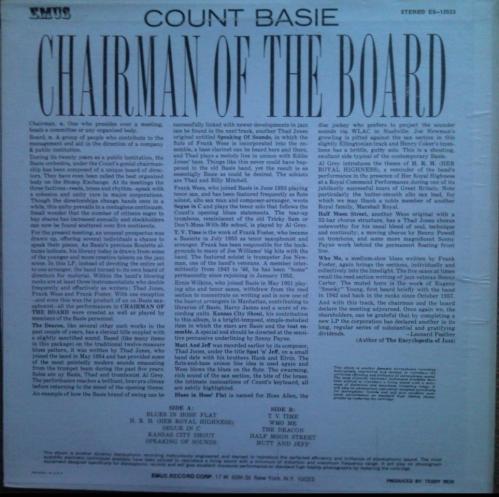
the first records I purchased for myself: Saturday Music Club on Monday

The first recordings I purchased for myself...all the albums were cut-outs when not discount items initially (Pickwick). I had only so many $2/3 allotments in the early/mid 1970s.


The flipside of this sole 45 was a cover of "Barefootin'"...


1958. Emus was apparently more a d/b/a pseudonym than division of the
shady Roulette Records (see any account of payola).
 
I'm not sure where I first saw Steinberg, but I was happy to find this
for only a few bucks in a Grant's or Woolco or perhaps K-Mart...
Oddly enough, w/o credit anywhere, the LP appended several short
orchestral works by Mussorgsky and Ravel.


I though of Pickwick at the time as the "paperback" record company.
Certainly their discs were thinner and more easily bent than anyone
else's...


...So, what were your first purchased records? 45s, LPs, 78s perhaps (they did last through the 1950s into the '60s), cassettes, CDs? I can only guess that more readers now first purchased a download (the rare one that couldn't be had easily for free) than have ever bought an open-reel tape or 16rpm vinyl disc...

Friday, August 9, 2013

Jack/John Holbrook Vance FFB: THE DOGTOWN TOURIST AGENCY by Jack Vance (1975)

This, my review of Jack Vance's short novel/long novella The Dogtown Tourist Agency, first published in the bugcrushing all-original-publication anthology Epoch, edited by Robert Silverberg and Roger Elwood (subtitled, modestly, "The State of the Art of Science Fiction Now") will be delayed to later today, as I'm feeling a bit under the weather. It is notable that Epoch was Berkley Books's attempt to do just that, offer an expensively-budgeted all-original anthology to stand with anyone's, including such relatively rare commercial successes as the Star Science Fiction series edited by Frederik Pohl (Ballantine, 1950s) and its less-sustained heir of sorts, Stellar Science Fiction (edited by Judy-Lynn Benjamin/Del Rey, for Ballantine, then Ballantine/Del Rey Books, 1970s) or Dangerous Visions edited by Harlan Ellison (Doubleday, 1967) after an Ellison-commissioned similar project to be edited by Judith Merril had fizzled while Ellison was editing at Regency Books.

Robert Silverberg, during the most artistically "hot" period of his life as a writer, and most prolific period as anthologist for adult and younger readers, and Roger Elwood, the controversial and hugely prolific anthologist (infamous in sf circles for his conservative Christian opinions and relative nonchalance about the quality of the work he would publish, while usually querying work from good writers for his original anthologies and often depending on his co-editors to exercise most of the literary judgment about what was going into original or reprint anthologies) were given the contract to produce the Big Book for Berkley, which was also one of the first books (iinm) to be published after the merger of the paperback line with G.P. Putnam, as a Berkley/Putnam hardcover. The SF Book Club and, of course, Berkley's originals line Medallion did reprint editions, and that latter was how I first saw and read the volume in early 1977, when my father had purchased it for himself (probably not least because it leads off with the first appearance of Larry Niven's novella "ARM" and he was a Niven fanatic up until about that point of Niven's career). It was also the first time I would see the name of my friend A. A. Attanasio in print (and it was close to his first sale).

For some reason as yet unknown to me, this solid example of Vance's voluptuous color sense, knack for sketching convincing alien culture and keen sardonic wit has been republished in, among other collections, the second volume of The Early Jack Vance, which leads me to wonder if this first Miro Hetzel story had been sitting in Vance's drawer before he dusted it off and sent it along to Silverberg and Elwood (or if it simply struck the editors of The Early Vance as in the spirit of Vance's early work for Planet Stories and Startling Stories magazines, which it is)...why that would be the case, I'm unsure, as it is while not the absolute essence of Vance's art that the likes of the Dying Earth and arguably the Lyonesse sequences of books, or his early award winners, have been, they are still Vance hitting on all cylinders.

More anon.

The ISFDB index to Epoch (the hardcover and book club editions, with different pagination for the paperback, unsurpisingly)
  • Pages: viii+623
Please see BV Lawson's blog for more of today's (Vance week) books...Patti Abbott is on assignment.

Tuesday, August 6, 2013

Tuesday's Overlooked Films and/or Other A/V: the links

"The Deep End"
Below, today's set of reviews and citations of audiovisual works and related matter (only two prominently featuring sharks...non-metaphorical ones, anyway), with the posts at the links...as always, thanks to all the contributors and to all you readers for your participation. As usual, there are likely to be additions to this list over the course of the day, and if I've missed your, or someone else's, post, please let me know in comments...thanks again...

Bill Crider: Kraft Suspense Theater (aka Suspense Theater aka Crisis): "The Deep End" (based on John D. MacDonald's The Drowner)

Brian Arnold: Blue Water, White Death

BV Lawson: Media Murder

Think Fast, Mr. Moto
Dan Stumpf: The Mad Doctor of Market Street

Dwayne Epstein: Lee Marvin (courtesy Bill Crider)

Ed Gorman: Walter Hill

Ed Lynskey: Shock

Elizabeth Foxwell: Went the Day Well? (based on "The Lieutenant Died Last" by Graham Greene)

Law & Order: UK
Evan Lewis: Think Fast, Mr. Moto

George Kelley: Law & Order UK

How Did This Get Made?: Jaws: the Revenge

Iba Dawson: Miss Pettigrew Lives for a Day

Ivan G. Shreve, Jr.: I Saw What You Did (1965)

Jackie Kashian: The K Ohle with Kurt Braunohler (which features Kashian this week)
Miss Pettigrew Lives for a Day


Jacqueline T. Lynch: The Valley Players and other famous actors in small-town summer stock

James Reasoner: Van Helsing

Jeff Flugel: Zane Grey Theater

Jerry House: The Terror (1938 film)

Kliph Nesteroff: Kraft Music Hall: Woody Allen, John Byner, Liza Minelli (1967); Frankie Man

The Days and Nights of Molly Dodd
Laura: Thunder on the Hill

Lucy Brown: The Big Street

Michael Shonk: South of Sunset 

Mystery Dave: Big Night

Patti Abbott: The Days and Nights of Molly Dodd

Paul Shirey: The Frighteners

Pearce Duncan: Flesh for Frankenstein (aka Andy Warhol's Frankenstein)
Flesh for Frankenstein


Randy Johnson: The Charge at Feather River; A Bullet For A Stranger (aka Gli fumavano le Colt…lo chiamvano Camposanto, Bullet For A Stranger, His Pistols Smoked…They Call Him Cemetery, and They Call Him Cemetery)

Rick: Susan George

Rod Lott: Hatchet for the Honeymoon (aka Il rosso segno della follia); The Witch Who Came from the Sea

Scott Cupp: The Twonky

Sergio Angelini: The [First] Great Train Robbery

Stacia Jones: Let's Kill Uncle

Steve Lewis: The Ghost Train

Sunday, August 4, 2013

Large bands, third stream...Monk, Akiyoshi, Brubeck, Evans, Roach, Gillespie, Ellington: Saturday Music Club on Sunday

Thelonious Monk Big Band at Town Hall

Part 2

Thelonious Monk, Dizzy Gillespie, Art Blakey, Sonny Stitt, Kai Winding, Al McKibben 1971


Toshiko Akiyoshi/Lew Tabackin Big Band: Sumie (possibly my favorite flute solo/orchestration so far)

Tuning Up (a composition by that title)

Brubeck Quartet with the New York Philharmonic Orchestra (cond. Bernstein): two segments of the suite Dialogues for Jazz Combo and Orchestra by Howard Brubeck: Andante-Ballad:

Allegro Blues

The Gil Evans Orchestra: La Nevada


Max Roach's M'Boom with the World Saxophone Quartet: Bluiett's Blues (1981...intro runs about two minutes)


Dizzy Gillespie Rhythmstick Orchestra: Caribe


The Duke Ellington Orchestra: Harlem Airshaft

Saturday, August 3, 2013

Friday's Forgotten Books: new links

Below you'll find the links to the text of reviews, citations, and a "lost" Erle Stanley Gardner story among our "forgotten" and sometimes all too forgotten books and shorter works today; also, at bottom, my own reviews for this week. If I've missed yours or someone else's, please let me know in comments. Next week, the bonnie Ms. B.V. Lawson will be hosting the links list (email here), for a week devoted mostly to the work of Jack Vance (or John Holbrook Vance, as the [alas] recently late genius preferred to more formally sign his crime fiction).

Sergio Angelini: The Living and the Dead (aka D'entre les morts aka Vertigo) by Pierre Boileau and Thomas Narjejac (aka Boileau-Narcejac)

Anonymous reviewer for The Nation (1909): The Perfume of the Lady in Black by Gaston Leroux

Joe Barone: Lady Killer by "Ed McBain"

Les Blatt: Glass on the Stairs by Margaret Scherf

Brian Busby: Vanish in an Instant by Margaret Millar

Bill Crider: Past Masters and Other Bookish Natterings by Bud Webster

William F. Deeck: The Blue Geranium by "Dolan Birkley" (Dolores Hitchens); Just a Corpse at Twilight by Robert Martin

Martin Edwards: Vantage Striker (aka The Prime Minister is Dead) by Helen Simpson

Curt Evans: The Backstairs of the Mind by Rosamond Langbridge

Ray Garraty: The Dame by "Richard Stark" (Donald Westlake)

Ed Gorman: Fright by Cornell Woolrich (aka George Hopley); Bertil Falk on Leigh Brackett

Jerry House: The Dream Detective by Sax Rohmer

Randy Johnson: The Case of the Bouncing Betty by Michael Avallone

Nick Jones: Valdez is Coming by Elmore Leonard

George Kelley: The Collected Stories of Robert Silverberg: Volume 8, Hot Times in Magma City (1990-1995); Must Read: Rediscovering American Best Sellers edited by Sarah Churchwell and Thomas Ruys Smith

Margot Kinberg: Forty Words for Sorrow by Giles Blunt

Rob Kitchin: Black Seconds (aka Svarte sekunder) by Karin Fossum

B.V. Lawson: The Long Shadow by Celia Fremlin

Evan Lewis: "The Man in the Silver Mask" by Erle Stanley Gardner (complete text & context)

Steve Lewis: Puzzle for Fiends by "Patrick Quentin"

Todd Mason: Ellery Queen's Mystery Magazine, September 1945, edited by Frederic Dannay; Street & Smith's Detective Story Magazine, September 1946, edited by Daisy Bacon (please see below)

John F. Norris: Powers of Darkness: Macabre Stories by Robert Aickman

John O'Neil: The Best of Henry Kuttner (in print in the tie-in edition The Last Mimzy: Stories) by Kuttner (often in collaboration with Catherine L. Moore), edited anonymously (but probably by Judy-Lynn and Lester Del Rey in consultation with with C. L. Moore)

James Reasoner: [Fargo:] Wolf's Head by "John Benteen" (Ben Haas)

Karyn Reeves: The Cases of Susan Dare by Mignon G. Eberhart

Richard Robinson: Judge Dee at Work by Robert Van Gulik

Charles Rutledge: [Sexton Blake:] Sorcerers of Set by Martin Thomas

Scott Cupp: The Girl, The Gold Watch, and Everything by John D. MacDonald

Kerrie Smith: San Andreas by Alistair MacLean 

Kevin R. Tipple: Absent the Soul: A Collection of Short Mysteries by B. J. Bourg

"TomCat": "The Jacket Blurbs Puzzle" and "The Parson's Nose" (long fictions in EQMM, 2013) by Jon L. Breen
___________________________________________________________
***Todd Mason:--from the FictionMags discussion list, 14 May 2000:


STREET & SMITH'S DETECTIVE STORY MAGAZINE, September 1946 (Volume 172, Number 5). Legendary editor: Daisy Bacon. Monthly. 15c ($1.50/year in US/$1.75 Pan American Union/$2.25 elsewhere; no Canadian subscriptions accepted [Can edition?]). 

Ads for Calvert Whiskey, Listerine Antiseptic mouthwash, Pepsi-Cola, Ray-o-Vac batteries, Olin Bond flashlights and batteries, Gillette razor blades, Ballco Vacutex blackhead extractor. 

Digest, 130 pp. Cover photograph by Ardean Miller, III.

from one of my contributions to the FictionMags Index, or FMI:
Street & Smith’s Detective Story Magazine [v172 #5, September 1946] ed. Daisy Bacon (Street & Smith, 15¢, 130pp, digest, cover by Ardean Miller, III, photo) [TM]
ELLERY QUEEN'S MYSTERY MAGAZINE, September 1945 (Volume 6, issue number 24). Legendary editor: Frederic Dannay; Mildred Falk, Mng. Ed.; Charlotte Spivak, Ass. Ed. Bimonthly. 25c ($1.50/year US and Pan American Union/$1.75 Canada/$2 elsewhere).


Ads for the Detective Book Club and an Inner Sanctum Mystery/Simon & Schuster (LAY THAT PISTOL DOWN by Richard Powell). 

Digest, 128 pp. Cover painting by George Salter.

one of Douglas Greene's FMI contributions:  
Ellery Queen’s Mystery Magazine [v 6 #24, September 1945] ed. Ellery Queen (American Mercury, 25¢, 128pp, digest s/s, cover by George Salter)  managing editor Mildred Falk. [DG]

While published about a year apart, unlike the last two fiction-magazine issues I've
reviewed here [on the discussion list], a few of my beloved parallels obtain, even when
in reverse. Aside from both issues being very pleasant reading
experiences overall (and neither being much sought after on the
collectors market--purchase of the DETECTIVE STORY cost me more in
postage than in eBay bid price of $2, the EQMM was a buck in a comics
store; while both are no better than good reading copies, try getting
a merely complete PLANET STORIES for that price), one of the most
striking things about them was how forgotten the DSM writers mostly
are, and how many familiar names (perhaps some more remembered than
read) are in the EQ. The only definitely familiar name to me in the
S&S item is William Campbell Gault, and perhaps unsurprisingly his
"They'd Die for Linda" is the best story in that issue; possibly I'd
heard of Roy Lopez before, whose "You'll Be the Death of Me" is, like
most of the other DETECTIVE stories, what could be called "fake
hardboiled": wisecracking 'tecs of various sorts in stories with
the trappings of classic BLACK MASK and post-diaspora DIME DETECTIVE
fiction, without the bracing sense of hard living or worldly
cynicism of Hammett or Chandler. Odder is the issue's 33-page
"complete novel," "The Screaming Rock" by John H. Knox (whether a
close relation to Calvin M. Knox [Robert Silverberg's most famous pseudonym]

 in spirit, I'm not sure), which is nothing so much as a weird-menace/shudder pulp story with most of the torture taken out, more wisecracks and politics inserted. The
McGuffin is a series of experiments in cryogenics, not so named, that serve as
obfuscation for murders at a remote psychiatric clinic, one not too
different from the one in FAREWELL, MY LOVELY. William Honest (good
old Honest Bill?) offers a reasonably affecting frame for his
impossible murder story, "Murder Is Where You Dig It"; Dorothy Dunn's
"A Photo Finish" (the cover story) reads like a slightly more
wholesome and ultimately upbeat version of a Jim Thompson desperate
loser story (before Thompson, at least, was publishing them); "Oswald
Has His Night" by Ronald Henderson is an interesting twist on a theme
AHMM (to say nothing of ALFRED HITCHCOCK PRESENTS the tv series) would
eventually beat to death; in this case the henpecked husband is
framed for a murder he didn't commit by a third party and has to solve the
mystery before his wife returns from a visit as well as before being
collared by the police; "Blood Red Rubies" by Roland Phillips is
imitation THE THIN MAN, but not too shabby an example. What the
magazine reads like, in its mostly noirish feel but not quite
full-fledged hopeless existentialism (or MANHUNT brutality), is AHMM
in its first decades, even down to the mediocre uncredited line-drawing illustrations.
Gault's use of multiple viewpoints/narrators is the major deviation
from basically serious plain tales wisecrackingly told, and his and
perhaps Dunn's are the stories that most deserve to survive this
issue's shelf life, but one common feature here is in fine pulp
tradition: attention-getting, even when cliched, opening lines:

Lopez: "He was a little guy, wearing a checked suit. He was
bald-headed. And he was scared green."

Honest: "You felt like front table at El Morocco when Marie came in.
Nobody expected her to sing, but it wouldn't have been surprising.
Tycoons like Roger Tillman could afford such a wife."

Dunn: "Tommy Murphy tore up his losing ticket after the eighth race
and left the grandstand. His hopes fluttered down to the cold cement
flooring with the pieces of cardboard. And he felt cold and grey
inside, drained of his laughter and his luck."

Knox: "Plain Sid Wilson felt the sickening pause as the wheels of
his coupe lost their grip on the icy slope."

Unlike [fellow Street & Smith fiction magazines] ASTOUNDING or UNKNOWN, but like WILD WEST, DETECTIVE STORY here restricts Ms. Bacon's editorial comment to teaser blurbs, and offers
couple of examples of rather sentimental doggerel as space-filling
tags (the better one by Edgar Daniel Kramer, the other by L[ight?].
Breeze).

No such restriction applies to Fred Dannay, of course, whose
introductory essays several times threaten to exceed the length of
the stories blurbed. Fully half the contributions to this issue of EQMM
are reprints, and only one of the originals is bylined unfamiliarly
(as far as I can recall): James Yaffe's "The Problem of the
Emperor's Mushrooms," aside from being a short, decent alternate-to-Graves
modern retelling of the intrigues in the Roman court of Claudius, is
piss-poor example of a crime story, albeit with another draft it
could've been a better one; Dannay flagellates himself in the intro
over Yaffe's previous EQMM story, because it never occurred to either
author nor editor that a toy balloon blown up by a person wouldn't
levitate in normal atmosphere, apparently a crucial plot point (the
flaw in the story at hand is more in telegraphing and awkwardness in
dialog, but, as Dannay notes, it was rushed into print to prove Yaffe
not an idiot).

More experienced hands than Yaffe's are tapping in Morse in this
issue. Agatha Christie's "The Case of the Vulture Women" (a reprint
from a 1939 THIS WEEK magazine [wasn't this a PARADE-like newspaper
insert?][yes, it was--the later me]), is a Hercule Poirot puzzle that probably could've been
solved in a few minutes cogitation by Dr. Watson or even Mike Hammer;
it was certainly pretty obvious to me, albeit AC's digs at the
English's depredations upon other languages ring true with anyone
who's ever heard what too many Britons do to Spanish words. The other puzzle
stories in this issue are less straightforward, if too often too
easily soluble: John Dickson Carr's quasi-impossible crime tale,
"Will You Walk into My Parlor?", is actually a radio script, previously
broadcast as part of the SUSPENSE series; G. K. Chesterton's "Dr.
Hyde, Detective, and The White Pillars Murder" (ENGLISH LIFE, January
1925) is not atypically as much philosophical rumination as puzzle,
and somewhat guessable in its "surprise"; Lillian de la Torre's
original Samuel Johnson/James Boswell historical mystery, "The
Wax-Work Cadaver," gets only slightly bogged in its attempts at
period color. James M. Cain's non-puzzle, "Pastorale" (AMERICAN MERCURY,
1928), is a minor murder tale with a not particularly deft use of
vaudeville "countrified" dialect (but a cheap inhouse reprint from a
name, and certainly hardboiled enough; inadvertantly Tuckerizing
opening lines: "Well, it looks like Burbie was going to get hung.
And if he does, what he can lay it on is, he always figured he was so dam
smart."). Things look up with Ben Hecht's brief parody, "The
Whistling Corpse," an original (intentionally) as turgid as the "had I but
known" (as Dannay calls them) once and future Gothics (as I tag them)
within the cf tradition, and worth a chuckle; far funnier and more
devastating is H. F. Heard's original Mr. Mycroft (as in Holmes
pastiche) tale, "Adventure of Mr. Montalba, Obsequist," which, in
addition to goosing Doyle a bit, prefigures Waugh's THE LOVED ONE in
most of the latter's best dimensions (this one's use of cutting-edge taxidermy/undertaking
practices and arguable positing of long-term self-induced suspended
animation sparks an argument--fantasy or no?--between Heard and
Dannay which is dutifully detailed in an endnote, and makes for a weak
parallel with Knox's proto-cryogenics story in DSM). Philip Wylie's
original "Perkins' 'First Case'" is an amiable mix of NYC
slice-of-life and offbeat detection, far less sententious (as I guess
it would have to be) than what SF by him I've tried (WHEN WORLDS
COLLIDE with Balmer and THE DISAPPEARANCE); anyone read his Crunch
and Des stories? Vying with the Heard for second-best in the issue is
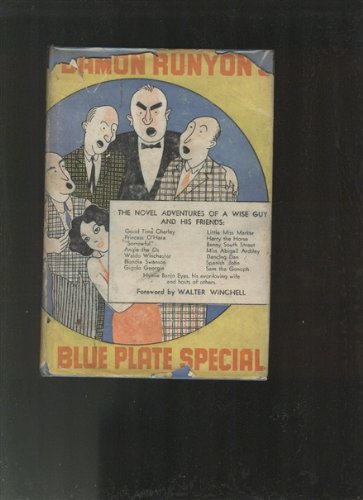
Damon Runyon's "What, No Butler?" (from COLLIER'S in 1933 and  the 1944 collection BLUE

PLATE SPECIAL), like most of the DETECTIVE STORY offerings a basically
serious story dressed up with humor, this time from the master of
present-tense slang. The best story is unsurprisingly Dashiell
Hammett's "Two Sharp Knives" (COLLIER'S MAGAZINE, 1942), which more
than any of the other stories in either issue (the Gault and the
Runyon come the closest, but it's not that close) gives the sense of
life as it is actually lived by adults. And tells a fine, understated
story.

(And one wonders if Daisy Bacon and Dannay, both on his own ticket
and because he seemed to frequently work with women editors, had for
obvious reasons less truck with the misogyny several here have
mentioned as impediments to reprinting MANHUNT and at least some
BLACK MASK stories....)