Showing posts sorted by relevance for query cele goldsmith. Sort by date Show all posts

Friday, August 7, 2015

Cele Goldsmith Lalli

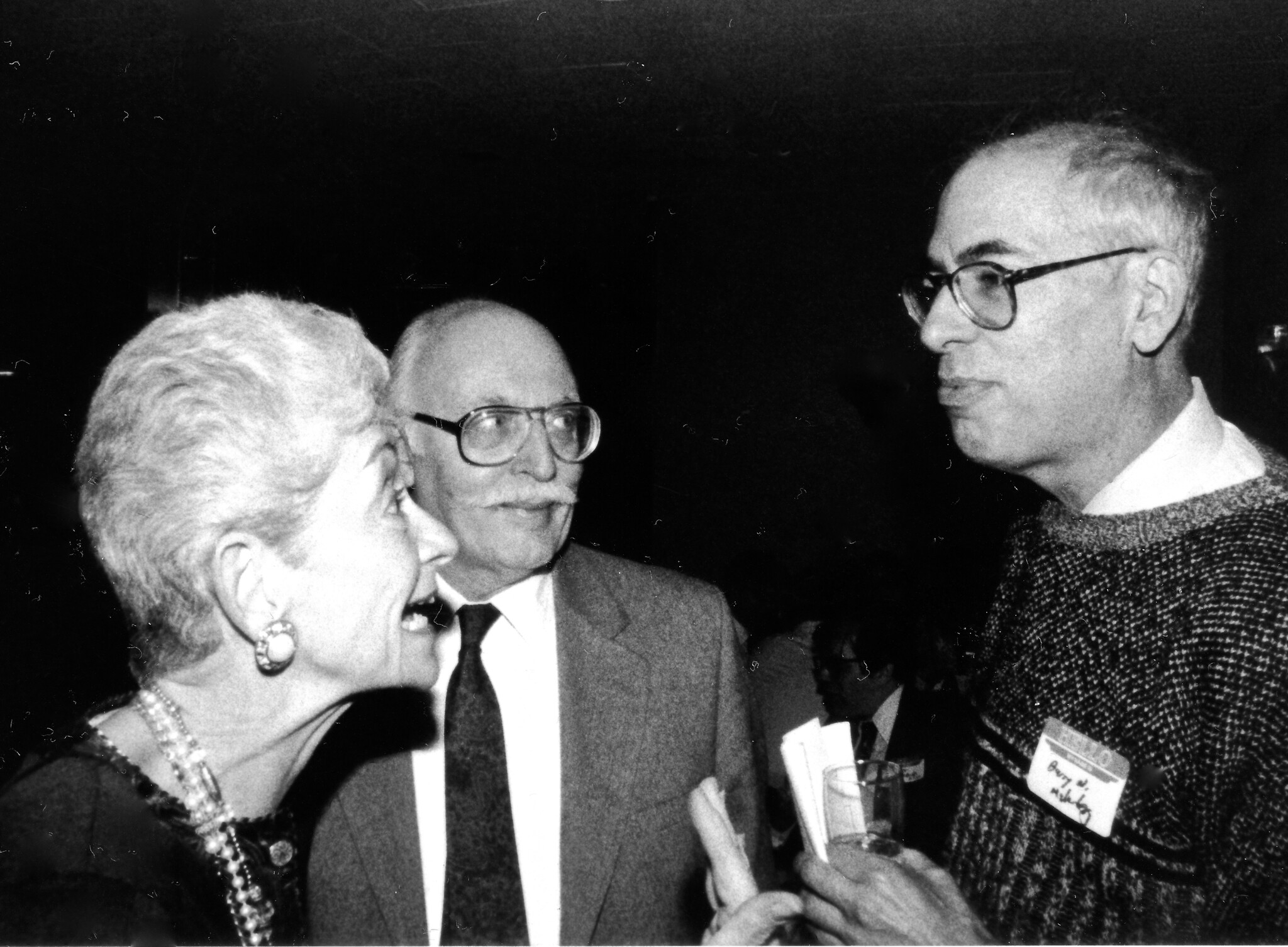
Michael and Cele Goldsmith Lalli at a 1980s LunaCon.
Photo by and Copyright © Andrew Porter; all rights reserved.
And here's the obit I wrote for the April 2002 issue of Science Fiction Chronicle:

Cele Goldsmith Lalli, 68, former editor of Amazing and Fantastic and later editor-in-chief of Modern Bride, died January 14th [2002] in a car crash near her Newtown, Conn., home when she apparently lost control of her car and hit a tree. She is survived by her husband Michael Lalli, daughters Francesca Morrissey of New Milford, Conn. and Erica L. Sullivan of Stamford, and five grandchildren. 

Four decades ago, Cele Goldsmith took Amazing and Fantastic, two digest-size magazines which were practically moribund during the 1950’s, into the forefront of SF and fantasy publishing. Her reign lasted from Amazing and Fantastic’s December 1958 to their June 1965 issues. To honor her, she received a Special Hugo Award for her efforts, at the 1962 World SF Convention. During her tenure, and working with a shoestring budget, Amazing and Fantastic published stories by a pantheon of SF’s greats: J.G. Ballard, James Blish, John Brunner, Avram Davidson, Philip K. Dick, Thomas Disch, Harlan Ellison, Philip Jose Farmer, Frank Herbert, Keith Laumer, Ursula K. Le Guin, Fritz Leiber, Michael Moorcock, Cordwainer Smith, Jack Vance, James White, Roger Zelazny and many others. She bought the first stories of a number of authors, including Zelazny and Le Guin. In Amazing, under her editorship Sam Moskowitz reprinted numerous long-forgotten stories, with background material, and Lester del Rey and Ben Bova ran nonfiction articles. 

Faced with falling sales, in 1965 owner Ziff-Davis, publisher since 1938, sold them to Sol Cohen, ending this intensely creative period. Goldsmith, now Cele Lalli following her marriage to Z-D assistant controller Michael Lalli, moved to Z-D’s Modern Bride, where she remained for another 33 years, retiring as editor-in-chief in 1998. Her years at Modern Bride made her one of the longest tenured editors of any major consumer magazine. She had converted to Catholicism upon her marriage to Lalli, which, according to associates, gave her insights into the wedding traditions of both Jewish and Catholic brides. Ironically, she died within a few hours of Modern Bride’s sale to Conde Nast for $52 million. 

The Encyclopedia of Science Fiction stated, “Under Cele Goldsmith’s editorship Amazing improved dramatically, publishing good work by many leading authors... Zelazny was one of several writers whose careers were aided in their early stages by Goldsmith; others include Ben Bova, David R. Bunch, Thomas M. Disch, Ursula K. Le Guin and Robert F. Young”.  And The Encyclopedia of Fantasy noted, “In the period 1960-65 Fantastic was the premier fantasy magazine”.

Todd Mason: That last judgement isn't wrong, but I'd suggest that Mike Ashley, who made it, is more sweeping in putting Fantastic ahead of The Magazine of Fantasy and Science Fiction and Science Fantasy than he might be...all three together, with some not insignificant contributions from the Magazine of Horror and others mentioned recently and over the years on this blog, made the early 1960s a good time for fantasy short fiction in magazines. Among her other discoveries: Keith Laumer (see the interview, link below).

Previous Cele Goldsmith Lalli posts:

Tuesday, July 24, 2012

Cele Goldsmith Lalli, interviewed by Barry Malzberg

Cele Goldsmith, who married and took the name Cele Lalli, edited, as noted below, the magazines Fantastic and Amazing from 1959-1965 (having served as Assistant Editor since 1955, briefly with Howard Browne and then with Paul Fairman), until Ziff-Davis sold the titles to Sol Cohen's Ultimate Publications, at which time she moved over to the staff of ZD's Modern Bride, the latter half of her 33-year career there as editor-in-chief. In the wedding-consultancy industry there is a notable memorial award in her honor.

Barry Malzberg edited Fantastic and Amazing in 1968, after a short and much better-paid term at Escapade magazine; the new publisher had rid himself of the then-current Escapade staff, and the ridiculous lack of resources at Ultimate led in notable part to Malzberg's resignation, as it had for Harry Harrison before him; Ted White, who followed, was capable of getting by on the modest (to put it very kindly) stipend editing for Ultimate offered.

George Zebrowski originally commissioned this interview, as he notes below, while on staff at a later Amazing, during its game-company years.


Reprinted from Synergy SF: New Science Fiction, edited by George Zebrowski (Five Star, 2004), with the kind permission of Zebrowski, who wrote the italicized prefatory note, and Barry Malzberg, with further thanks to Pamela Sargent for her assistance. I might just transcribe this, but for now, the (relatively) Quick and (?)Easy (please click on images to enlarge):


    Cele Goldsmith Lalli, Michael Lalli, Barry Malzberg:

    Photo by and Copyright © Andrew Porter; all rights reserved

prefatory note Copyright © 2004 by George Zebrowski; interview copyright 2002 by the Science Fiction Foundation on behalf of Barry Malzberg; copyright © 2004 by Barry Malzberg; originally published in Foundation

Related: Cele Goldsmith Lalli: an obituary and photography by Andrew Porter

Women Editors in Fantasy and SF at Midcentury

Anthologies from Amazing

Barry Malzberg, co-editor: Neglected Visions

Fantastic and its peers (when I was first reading them)...

Cele Goldsmith/Lalli at the Internet SF Database

Judith Merril's Year's Best SF (speculative fiction, so fantasy, sf and more), the 10th Edition, covering Lalli's penultimate year at the fiction magazines...

A Disch/Goldsmith note.

Laurie Powers, who misidentifies Cele Goldsmith/Lalli as a pulp editor, but otherwise offers useful information in this post. (Sadly, Laurie's Blogspot blog was mysteriously taken down by Blogspot, and hasn't been restored online anywhere as far as I know. The link above is to a later PulpFest citation of her presentation at one of the annual conventions, touching on some of the same matter.)


A Barry Malzberg-edited issue, the blue one featuring Fritz Leiber's "Richmond, Late September," below several Goldsmith/Lalli issues.


A very incomplete Cele Goldsmith/Lalli bibliography:

Editorial work at Ziff-Davis, as noted, on Fantastic Stories (which during her editorship, in 1960, became Fantastic: Stories of Imagination), Amazing Stories (which became Amazing: Fact and Science Fiction Stories), Dream World: Tales of Incredible Powers (a shortlived Fantastic spin-off), Pen Pals, Modern Bride

Anthologies from the fiction magazines particularly highlighting her years (courtesy the Contento and ISFDb indices):

The Best from Amazing Stories ed. Ted White (Manor, 1973, pb)
· No Charge for Alterations · Horace L. Gold · nv Amazing Apr/May ’53
· The Augmented Agent [“I-C-a-BeM”] · Jack Vance · nv Amazing Oct ’61
· The Misfit · Roger Zelazny · nv Amazing Oct ’63
· The Dowry of the Angyar [“The Dowry of Angyar”] · Ursula K. Le Guin · ss Amazing Sep ’64
· Placement Test · Keith Laumer · nv Amazing Jul ’64
· The Horn of Time the Hunter [“Homo Aquaticus”] · Poul Anderson · ss Amazing Sep ’63
· Phoenix · Ted White & Marion Zimmer Bradley · ss Amazing Feb ’63
· Rogue Psi · James H. Schmitz · nv Amazing Aug ’62

The Best from Fantastic ed. Ted White (Manor 95242, 1973, 95¢, 192pp, pb)
9 · Foreword · Ted White · fw
13 · I’m Looking for “Jeff” · Fritz Leiber · ss Fantastic Fll ’52
27 · Angels in the Jets · Jerome Bixby · ss Fantastic Fll ’52
40 · Paingod · Harlan Ellison · ss Fantastic Jun ’64
51 · The Malatesta Collection · Roger Zelazny · ss Fantastic Apr ’63
58 · Sally · Isaac Asimov · ss Fantastic May/Jun ’53
79 · The Roller Coaster · Alfred Bester · ss Fantastic May/Jun ’53
88 · Eve Times Four · Poul Anderson · nv Fantastic Apr ’60
125 · Final Exam · Chad Oliver · ss Fantastic Nov/Dec ’52
138 · April in Paris · Ursula K. Le Guin · ss Fantastic Sep ’62
151 · A Trip to the City [“It Could Be Anything”] · Keith Laumer · nv Amazing Jan ’63

[I'm not sure why White included an Amazing story in this Fantastic book.]

Amazing Stories: 60 Years of the Best Science Fiction ed. Isaac Asimov & Martin H. Greenberg (TSR 0-88038-216-3, Jul ’85 [Aug ’85], $7.95, 255pp, pb); Anthology of 20 stories which originally appeared in Amazing, with a section of color illustrations showing magazine covers.
5 · Amazing Stories and I · Isaac Asimov · in
9 · The Revolt of the Pedestrians · David H. Keller, M.D. · nv Amazing Feb ’28
29 · The Gostak and the Doshes · Miles J. Breuer, M.D. · ss Amazing Mar ’30
43 · Pilgrimage [“The Priestess Who Rebelled”; Meg] · Nelson Bond · nv Amazing Oct ’39
57 · I, Robot [Adam Link] · Eando Binder · ss Amazing Jan ’39
67 · The Strange Flight of Richard Clayton · Robert Bloch · ss Amazing Mar ’39
75 · The Perfect Woman · Robert Sheckley · vi Amazing Dec ’53/Jan ’54
79 · Memento Homo [“Death of a Spaceman”] · Walter M. Miller, Jr. · ss Amazing Mar ’54
93 · What Is This Thing Called Love? [“Playboy and the Slime God”] · Isaac Asimov · ss Amazing Mar ’61
103 · Requiem · Edmond Hamilton · ss Amazing Apr ’62
115 · Hang Head, Vandal! · Mark Clifton · ss Amazing Apr ’62
125 · Drunkboat · Cordwainer Smith · nv Amazing Oct ’63
ins. · 60 Years of Amazing Stories’ Covers · Misc. Material · il
147 · The Days of Perky Pat · Philip K. Dick · nv Amazing Dec ’63; expanded to The Three Stigmata of Palmer Eldrich, Garden City, NY: Doubleday, 1964
165 · Semley’s Necklace [“The Dowry of Angyar”] · Ursula K. Le Guin · ss Amazing Sep ’64
179 · Calling Dr. Clockwork · Ron Goulart · ss Amazing Mar ’65
187 · There’s No Vinism Like Chauvinism · John W. Jakes · nv Amazing Apr ’65
215 · The Oögenesis of Bird City · Philip José Farmer · ss Amazing Sep ’70
225 · The Man Who Walked Home · James Tiptree, Jr. · ss Amazing May ’72
237 · Manikins · John Varley · ss Amazing Jan ’76
247 · In the Islands · Pat Murphy · ss Amazing Mar ’83

Title: Fantastic Stories: Tales of the Weird & Wondrous
Editors: Martin H. Greenberg, Patrick L. Price
Year: 1987-05-00
ISBN-10: 0-88038-521-9 ISBN-13: 978-0-88038-521-3
Publisher: TSR
Contents
Fantastic Stories: Tales of the Weird & Wondrous • (1987) • interior artwork by Janet Aulisio
7 • Introduction (Fantastic Stories: Tales of the Weird & Wondrous) • (1987) • essay by James E. Gunn
11 • Double Whammy • (1970) • shortstory by Robert Bloch
21 • A Drink of Darkness • (1962) • shortstory by Robert F. Young
33 • A Question of Re-Entry • (1963) • novelette by J. G. Ballard
59 • The Exit to San Breta • (1972) • shortstory by George R. R. Martin
70 • The Shrine of Temptation • (1962) • shortstory by Judith Merril
85 • Dr. Birdmouse • (1962) • shortstory by Reginald Bretnor
97 • Eve Times Four • (1960) • novelette by Poul Anderson
126 • The Rule of Names • [Earthsea Cycle] • (1964) • shortstory by Ursula K. Le Guin
135 • The Still Waters • (1955) • novelette by Lester del Rey
144 • A Small Miracle of Fishhooks and Straight Pins • (1961) • shortstory by David R. Bunch
148 • Novelty Act • (1964) • novelette by Philip K. Dick
174 • What If . . . • (1952) • shortstory by Isaac Asimov
186 • An Elixir for the Emperor • (1964) • novelette by John Brunner
202 • King Solomon's Ring • (1963) • novelette by Roger Zelazny
220 • Junior Partner • (1962) • shortstory by Ron Goulart
229 • Donor • [Dr. Russell Pearce] • (1960) • novelette by James E. Gunn

(citations courtesy WorldCat:)
Modern Bride-related books:

Modern bride wedding celebrations : the complete wedding planner for today's bride
Author: Cele Goldsmith Lalli; Stephanie H Dahl
Publisher: New York : J. Wiley & Sons, ©1992

Modern bride guide to etiquette : answers to the questions today's couple really ask
Author: Cele Goldsmith Lalli
Publisher: New York : J. Wiley & Sons, ©1993

Modern bride complete wedding planner : the #1 bridal magazine helps you create the wedding of your dreams
Author: Cele Goldsmith Lalli; Stephanie H Dahl
Publisher: New York : J. Wiley, ©1997

Selected video performances:
The Party of your life
Author: Cele Goldsmith Lalli; Tott's Champagne Cellars.
Publisher: Modesto, CA : Tott's Champagne Cellars, ©1992.

[Guest lecturer, Cele Lalli]
Author: Cele Goldsmith Lalli; Fashion Institute of Technology (New York, N.Y.)
Series: CL 111 lecture series, v. 92.


Monday, May 30, 2011

Women editors in fantasy and sf at midcentury...


Laurie Powers has a nice bit of remembrance of Cele Goldsmith, later married to become Cele Lalli (and I didn't know for a long time that "Cele" sounded like "seal"), winner of a special award of not quite Hugo status at the 1962 World Convention (John W. Campbell, Jr., won a relatively undeserved award for the previous year, if one deserved for his career)...Laurie was under the impression that Goldsmith was one of the few editors of the fantastic-fiction magazines in her decade (essentially 1955-1965, as she passed from serving as assistant to the inept Paul Fairman into full editorship of Fantastic and Amazing in 1958, which lasted till her publishers, Ziff-Davis, sold the magazines out from under her in 1965, at which point she moved over to ZD's bridal magazines for the balance of her career). Though Laurie mistook the Goldsmith/Lalli magazines for pulps, a status Fantastic never had (despite merger with its pulp predecessor, Fantastic Adventures, in 1954) and Amazing gave up when Fantastic was founded, in 1952.

Goldsmith/Lalli was one of the great women magazine editors in fantastic fiction, but was hardly alone...in fact, there were almost more female editors of the fully-professional magazines before her than there have been since, even with Ellen Datlow's major projects and Shawna McCarthy and Kris Rusch as editor and/or former editor of two high-profile magazines each; Sheila Williams at the head of Asimov's, and such magazines as Weird Tales in its current Ann VanderMeer-edited inpulpation and Hildy Silverman's Space and Time hovering at the edge of not-little-magazine status.

Well, here's my (revised) comment at Powers's blog:
It should be noted, that Fantastic and Amazing weren't pulps any longer when Cele Goldsmith began editing them, or even when she was, as assistant editor, pulling the decent stories out of the slush pile (such as Kate Wilhelm's first story) to put in the magazines to supplement what Paul Fairman was buying without reading from reliable pros.

Amazing had gone to (initially expensively semi-slick) digest sized issues with the foundation of Fantastic in 1952, and both remained in that format till Fantastic's absorption by Amazing during Elinor Mavor's editorship in 1980, and Amazing retained it till game company TSR reformatted the magazine as a large-sized slick in the 1980s. So, they were no more pulps than Dell's Zane Grey Western was. [Laurie, the granddaughter of a prolific pulp-fiction writer, is more familiar with western fiction than with fantastic fiction, hence some correspondences cited.] One of Mavor's issues, after the merger:


Goldsmith wasn't the dominant editor of her time (frankly, in the early '60s in the magazine field, there wasn't one...but a number of excellent ones), but was one of the most eclectic, publishing relatively experimental work by the likes of Ballard, Thomas Disch, David Bunch, Ursula K. Le Guin (though Le Guin began rather conservatively), Harlan Ellison, and others alongside some old-fashioned material by E. E. Smith (the Zane Grey of sf) and others, as well as artists as important as Leiber (somewhere between the Elmer Kelton and the Walter Van Tilburg Clark of sf and fantasy)...Barry Malzberg and particularly Ted White's versions of the magazines were about as good, and as adventuresome, but didn't have the Ziff-Davis distribution might behind them and were never monthly.

Along with Wilhelm and essentially Le Guin and Roger Zelazny (who had published juvenilia elsewhere), among Goldsmith/Lalli's "discoveries" were Disch, Ben Bova, Keith Laumer, and I believe Sonya Dorman as a prose writer (like Disch, she was simultaneously a widely-published poet).

Mavor and Goldsmith/Lalli were the only female full editors of Amazing and Fantastic, but Lila aka L. E. Shaffer was doing more than her share of the work editing Fantastic Adventures (Fantastic's predecessor) and Amazing during Howard Browne's official tenure (much later editor Kim Mohan is a male Kim).

Among the other female editors in sf and fantasy pulps and digests in the 1940s into 1950s and onward, one should look into:


Dorothy McIlwraith, who did brilliant work as editor of Weird Tales for the second half of its original run (Leiber, Robert Bloch, Manly Wade Wellman, Margaret St. Clair, Ms. C. L. Moore, and Moore's husband Henry Kuttner, along with Leigh Brackett's husband Edmond Hamilton, all published some brilliant work there, and they by no means alone); McIlwraith was compelled by the publisher to sign herself as simply D. McIlwraith while simultaneously editing Short Stories magazine...


Mary Gnaedinger, long-term editor of Famous Fantastic Mysteries and Fantastic Novels, which reprinted from the early Argosys and All-Storys, and eventually would reprint novels published in hardcover, going as far as to reprint both Franz Kafka's "The Metamorphosis" and Ayn Rand's Anthem in the last issue...(most of the reprints were better than the latter, I hasten to add, and the magazines published some important original fiction as well)...


Bea Mahaffey, who worked with Ray Palmer, who had been Ziff-Davis's first editor of Amazing and Fantastic Adventures before striking off on his own...his most durable title has turned out to be the paranormal magazine Fate, but he was still interested in publishing fiction magazines in the 1950s, and Mahaffey was editor of the best of them, Universe...notable for publishing Theodore Sturgeon's pro-gay-acceptance story "The World Well Lost" in its first issue, in 1953...

And among those in editorial support roles, Larry Shaw worked for several publishers in latter '50s on magazines, and his (first, I think) eventual life partner, Shirley Hoffman, often helped out, under the name she used in her fannish writing and eventually in her fantasy, sf, and Spur-Award-winning western writing as well, Lee Hoffman.

There're more, of course...Judith Merril didn't edit magazines, but anthologies like nearly no one else in her time (including collaborating with husband Frederik Pohl to ghost-edit Tomorrow, the Stars, officially "edited" by Robert Heinlein), for example...but, well, yup, there're still quite a few out there for you to look into.

But Cele Goldsmith/Lalli was never a pulpster...

(And it's time again tomorrow for Tuesday's Overlooked Films and/or Other A/V!)

Wednesday, September 7, 2022

SSW: Kate Wilhelm, Harlan Ellison, Marion Zimmer Bradley, Gordon Dickson, Edward Wellen, Arthur & Irwin Porges: FANTASTIC, April 1959, edited by Cele Goldsmith (Lalli)

The third in a series of posts about select set of late '50s issues of fantasy and related-fiction magazines: 

The first can be read here: Fantasy/Horror/SF fiction magazine issues from the 1950s fantastica "End of Summer": THE MAGAZINE OF FANTASY AND SCIENCE FICTION April 1958 edited by "Anthony Boucher"; FANTASTIC April 1959 edited by Cele Goldsmith; FANTASTIC UNIVERSE April 1958 edited by Hans Stefan Santesson; TALES OF THE FRIGHTENED August 1957 edited by Lyle Kenyon Engle; SCIENCE FANTASY April 1958 edited by John Carnell (and INSIDE SF's F&SF/Mercury Press parody issue/September 1958, edited by Ron Smith, and MACABRE, Summer 1958, edited by Joseph Payne Brennan)

Not yet reviewed, though described in the first post's overview...and a more eye-catching cover than than the Fantastic sports!

The second, here: Short Story Wednesday: Kit Reed, Margaret St. Clair, William F. Nolan, Avram Davidson, Richard Wilson, and others: April 1958 fantasy (and related) stories from THE MAGAZINE OF FANTASY AND SCIENCE FICTION and FANTASTIC UNIVERSE (part 2)

Can be read here.

The first thing one might note about the April 1959 issue of Fantastic, beyond the notional cover, is that the issue became Even More an all-star issue in time than it was upon release...Arthur Porges (usually without his brother) might be the most obscure of the professional writers assembled here, and he can be remembered for the more clever stories he saw published in fantasy, sf and crime fiction magazines, such as "$1.98" in F&SF in 1954 (Irwin presumably helped develop the gimmick in "A Touch of the Sun", as he never published his own fiction in magazines, though he did publish essays). Kate Wilhelm and Harlan Ellison went on to become major writers in several fields; Wilhelm's first published story, "The Pint-Sized Genie"  had been pulled out of the "slush pile" by Goldsmith during her assistant-editor days and was published in Fantastic, though she had already sold her notable story "The Mile-Long Spaceship" to Astounding SF, it would be published later; I remain somewhat amused that she thus limned small and large, fantasy and sf, in her earliest career; Ellison had, during Goldsmith's predecessor-editor Paul Fairman's term, been one of the writers with a contract to produce a certain amount of fiction each month for a flat fee, and that was that, making for a fair amount of on-the-job training. Edward Wellen was a consistently interesting writer of crime fiction and some speculative fiction (often with a criminous aspect as well), and while Jack Sharkey, who had his first published short story in the previous, March 1959, issue of Fantastic, never wrote too much of lasting value in fantastica, he did go on to become one of the most successful playwrights among those who provided mostly one-act plays for community theater and similar productions, published by Samuel French, Inc. Rog Phillips was, along with William P. McGivern, among the rather good writers who often provided the best copy as regulars in the Ray Palmer years of Fantastic's older siblings Amazing Stories and Fantastic Adventures. And, other cover Names Jack Williamson, Marion Zimmer Bradley, and Gordon R. Dickson had already established their often influential careers, Williamson already one of the grand old writers in the fields, his work first appearing in the 1920s.

Another thing one might note is that while the previously reviewed F&SF and Fantastic Universe 4/58 issues were toward the end of their editors' runs (several issues before Anthony Boucher turned over the magazine to Robert P. Mills, barely more than twice as many issues before FU was abruptly folded in 1960, having published only the first installment of Fredric Brown's novel The Mind Thing), this was only the fifth issue Cele Goldsmith served as editor of...though throughout her run on Fantastic and Amazing, "editorial director" Norman Lobsenz wrote the editorials and blurbs for the magazines (sexism and ageism will out, particularly in the latter '50s and early '60s). Previously, I wondered if Paul Fairman's departure, and the end of  his quota system of gathering staff stories, led to a sudden shortage of fiction and a related dearth of interior illustration, and this issue suggests that might well've been the case...a largish number of Coming Soon stories from major writers mentioned in a house ad in this issue are in fact included in this issue.

The Wilhelm and Ellison stories share a certain sense of their writers still trying to refine their approaches. Ellison's "The Abnormals" ("The Discarded" being his preferred title) has a reasonably good sense of propulsion and demonstrates his concern for outsiders and enjoyment of flashy grotesqueries. It features a fairly easy-to-anticipate twist in the plot. Wilhelm's "The Ecstasy of It" demonstrates her interest from the beginning of her career in grounding her stories in day-to-day realities for her characters, notably in this case an insecure torch singer and a philosophical pianist traveling with a small press corps to interact with a first Mars colony, somewhat improbably all-male, and what befalls them. The title refers mostly to what appears to be an illness that strikes several of the characters in the colony, leaving them temporarily unwilling to do anything but enjoy their sudden esthetic appreciation for things generally. Thus also an early example of Wilhelm's fascination with diseases and similar infections that can leave at least some of the afflicted better off than previously. This, and a consistent general engagement with science that is often expressed in how it affects specific individuals, which will also recur in her work (including some of her crime fiction, such as the impressive Death Qualified).

Fantastic was making one of its occasional moves toward being a Mostly fantasy-fiction magazine at this point (and Norman Lobsenz's typically breezy, shallow editorial is about his mulling what kind of classic monster he would prefer to be, between a ghoul, a vampire or a werewolf, settling on the last), and most of the shorter stories are Goldsmith's favorite sort of fantasy, mildly surreal contemporary fantasy...probably part of he reason her magazines were home to some early "new wave" fiction (though she was also a champion of Fritz Leiber's work, including his high fantasy and more traditional horror, among no few others, in years to come, as well as numbering Ursula K. Le Guin and Thomas M. Disch among her many '60s"discoveries"). Edward Wellen's "Hear a Pin Drop" involves a prisoner seeking to retain his sanity in the face of unceasing solitary confinement and darkness, and how things go very oddly; Gordon Dickson's "After the Funeral" is a horror story involving a mixture of ESP research and a haunting; Marion Zimmer Bradley's "A Dozen of Everything" is a mildly amusing deal-with-djinn tale, fairly typical of her lighter-mode stories, and with just enough twist at the end to not be wholly predictable. While the Porges brothers' story is one of the sf "problem stories" Arthur Porges loved to write, along with the not-dissimilar "locked room"/impossible crimes kinds of mysteries he also published copiously, this one a little less dependent on a high-school physics class gimmick than most problem stories, if also acceptably far-fetched and slightly more devoted than usual to fleshing out its caricature characters...in a sense, it's barely sf, since it could conceivably happen and would be arguably possible with the technology of the time, albeit it's unlikely. I shall catch up with the balance of stories in the three issues so far, including the brilliant Leiber and famous Brian Aldiss story in the F&SF, and the other magazines' contents, Soon!

for more of this week's Short Story Wednesday entries, 
!Miercoles!

Monday, January 2, 2023

At Last: FRIDAY'S "FORGOTTEN" BOOKS AND MORE: the links to the reviews, texts, etc.: 1-30 September 2021

Rescued from draft status.

Cele Goldsmith Lalli at the World SF Convention 1962

Patricia Abbott: Catastrophe and Other Stories by Dino Buzzati (translated by Judith Landry); Let Him Go by Larry Watson; Bring Your Baggage and Don't Pack Light by Helen Ellis; Stories from Justice by Larry Watson; "Outside the Jurisdiction" from Justice by Larry Watson; In the Morning, I'll Be Gone by Adrian McKinty; Troubled Daughters, Twisted Wives edited by Sarah Weinman (and particularly the Patricia Highsmith and Dorothy Salisbury Davis stories); "So Much Water, So Far from Home" by Raymond Carver (UCSB Spectrum, 1975)

Bob Adey: Smear Job (David Callan #4) by James Mitchell

Thomas Baird: The Glimpses of the Moon by "Edmund Crispin" (Robert Bruce Montgomery)

Brad Bigelow: Sigh for a Strange Land by Monica Stirling; the 1976 Club: The Red House by Else Jerusalem (translated by Grace Isabel Colbron)

Mike Blake: The Naked Sun by Isaac Asimov

Les Blatt: Miss Pym Disposes by "Josephine Tey" (Elizabeth Mackintosh)

Peter Blauner: Christ in Concrete by Pietro di Donato

Elgin Bleecker: The Big Book of the Continental Op by Dashiell Hammett (edited by Richard Layman and Julie Rivett)

Joachim Boaz: "The Oceans are Wide" by Frank M. Robinson, Science Stories, April 1954, edited by Bea Mahaffey and Ray Palmer; Furthest by Suzette Hayden Nelson; In Watermelon Sugar by Richard Brautigan; Fellowship of the Stars edited by Terry Carr

John Boston: Amazing Stories August 1966, edited by Joseph "Ross"; Watchers of the Dark by Lloyd Biggle, Jr.; Amazing Stories October 1966, edited by Joseph "Ross"; "In Praise of Cele Goldsmith Lalli"

Cora Buhlert: The Star Warriors by Lin Carter; Cele Goldsmith Lalli and the Sword & Sorcery Revival

Brian Busby: the novels of Robert Barr (and The Story of Esther Costello by Nicholas Monsarrat); the paperback originals of Brian Moore as "Michael Bryan"; Kim Campbell: The Making of a Politician and other work by Robert Fife; Poldrate Street (aka The Undertaker Dies) by Garnett Wilson; The Water-Drinker and The Yellow Briar by "Patrick Slater" (John Mitchell)

James M. Cain interviewed by David Zinsser, The Paris Review, Spring/Summer 1978,  edited by George Plimpton

Douglas Cohen: Realms of Fantasy April 1997 edited by Shawna McCarthy

Eric Leif Davin: Hugo Gernsback and his magazines

Liz Dexter: Peace Breaks Out by Angela Thirkell; Black Joy edited by Charlie Brinkhurst-Cuff and Timi Sotire; The Impossible Mile by Johnny and Becki Agar; Digging to America by Anne Tyler; Index, A History of the by Dennis Duncan; Noah's Compass by Anne Tyler; The Heart of a Woman by Maya Angelou; The Transgender Issue by Shon Faye

Scott Edelman: Veronica Schanoes; Javier Hernandez, Zach Kruse, Carl Potts and Arlen Shumer on Steve Ditko

Lucy R. Fisher: Passenger to Frankfurt by Agatha Christie

Barry Gardner: Two for the Dough by Janet Evanovich; am I out of step? (in 1995)

Dana Gioia: Collected Poems: 1945-1990, by Barbara Howes

Ed Gorman: Baby Moll by John Farris; archived version with new comments

Doug Greene: Sometimes They Bite by Lawrence Block

Aubrey Hamilton: Patterns in the Dust by Lesley Grant-Adamson; Unholy Dying by R. T. Campbell; Uncle Paul by Celia Fremlin; Blue Murder by "Harriet Rutland" (Olive Seers Shimwell); A Trouble of Fools by Linda Barnes; Rainy City by Earl Emerson; Blood Moon by Gary Disher; Bull Mountain by Brian Panowich; The Judge by Steve Martini

Jerry House: "Legend of the Dropping Well" from Scenes and Legends from the North of Scotland (2nd edition) by Hugh Miller; Gosh! Wow! (Sense of Wonder) Science Fiction edited by Forrest J Ackerman;  Asthma Simpson, the Village Queen by Myer Marcus; "The History of the Prince Tangut, and of the Princess with a Nose of a Foot Long" by Jean Paul Bignon, translated by William Hatchett; "An Oak Coffin" by Louisa T. Meade and "Clifford Halifax" (Edgar Beaumont), The Strand Magazine, March 1894 (edited by Herbert Greenhough Smith); Those Who Can: A Science Fiction Reader edited by Robin Scott Wilson; Buck Ryan in Shadow Castle (Super Detective Picture Library), 1 September 1960, written by Don Freeman and illustrated by Jack Monk

Maxim Jakubowski: The Joy and Sorrow of Fiction Magazines

Tracy K: The Taking of Pelham One Two Three by "John Godey" (Morton Freedgood); "Sugar and Spice" by Vera Caspary The American Magazine December 1943 edited by Summer Blossom; "Sweet Baby Jenny" by Joyce Harrington Ellery Queen's Mystery Magazine May 1981 edited by Eleanor Sullivan; The Wheel Spins (aka The Lady Vanishes) by Ethel Lina White; Montalbano, Hard Boiled and Noir compilations; Murder by Parnell Hall; September reading

Jackie Kashian: Michael Charbonneau on Neil Gaiman

Evan Lewis: Ellery Queen's Mystery Magazine October, November and December 1946 edited by "Ellery Queen" (Frederic Dannay); The Saint comic strip, week 6, 1948, by Mike Roy and Leslie Charteris (and the previous and subsequent strips); "Vengeance of the Mounted" by Jack Cole True Crime Comics July-August 1948; The Thin Man radio series, 1041; "The Clue of the Tattooed Man" by Clayton Rawson, Ellery Queen's Mystery Magazine, December 1946, and subsequent contest entries to conclude the story; "The Bandits of Eagle Rock" illustrated by Graham Ingels, Gunfighter November-December 1949; The Shadowed Circle #1 (2021) edited by Steve Donoso; Ellery Queen's Mystery Magazine, January, February and March 1947, edited by "Queen"/Dannay; "Kit Carson" (anon.) (though Patricia Highsmith might've written for this comic book) It Really Happened #1 1944; Lancecon (small paperback collectors' convention) 1988 (photos by Art Scott); EQMM, April, May and June 1947, edited by Dannay; "A Fight to the Death" illustrated by H. C. Keifer, War Against Crime June-July 1948; "The New Racket" (aka "The Judge Laughed Last" in 1930s newspaper syndication) by Dashiell Hammett The Black Mask 15 February 1924 edited by George W. Sutton, Jr.; "Tom Mix and the Ride for Life" illustrated by Fred Meagher Tom Mix Comics February 1942 

Steve Lewis: Future Science Fiction Jun 1954 edited by Robert A. W. Lowndes; Treasure Hunt by John Lescroat; Threshold of Eternity by John  Brunner; The Mother Shadow by Melodie Johnson Howe; J. Randolph (Randy) Cox, 1936-2021; The War of Two Worlds by Poul Anderson; Worlds of If Science Fiction January 1967 edited by Frederik Pohl

Gideon Marcus: The Magazine of Fantasy and Science Fiction, October 1966: Isaac Asimov Special Issue edited by Edward L. Ferman

Walker Martin: Windy City Pulp Convention 2021

Todd Mason: "The Governess: A Professor Challenger Story as told by Mr. Edward Malone" by Stephen Gallagher; stories by Kurt Vonnegut, Robert Bloch, Fritz Leiber, Rosel George Brown, Avram Davidson, Fredric Brown et al., from Fantastic August 1960 edited by Cele Goldsmith Lalli  and The Magazine of Fantasy and Science Fiction October 1961 edited by Robert P. Mills; stories by Eudora Welty, Robert M. Coates, James Still and Edita Morris from The World Within: Stories Illuminating the Neuroses of Our Time edited by Mary Louise Aswell

Gloria Maxwell: Christine by Stephen King

Francis M. Nevins: Georges Simenon in the early WW2 years

Bill Peschel: The Chinatown Death Cloud Peril by Paul Malmont

Bill Pronzini: Gil Brewer

James Reasoner: The Girl With No Place to Hide by "Nick Quarry" (Marvin Albert); Smashing Western March 1937; Strange Detective Mysteries September 1940; Trent V. 2: The Kid script by Rodolphe Jacquette, illustration by "Léo" (Luiz Eduardo de Oliviera); Fright by Cornell Woolrich (originally published as by "George Hopley"); 5 Western Novels Magazine April 1952; Amazing Stories July 1943 edited by Raymond Palmer (see also this); Greatest Enemy by Jason Kasper; Interface by Joe Gores; Big Book Western Magazine April 1947; Detective Novels Magazine December 1939 edited by Harvey Burns(?); Rimrock Raiders by "Bradford" (A. Leslie) Scott; Star Western August 1953 edited by Rogers Terril and/or Michael Tilden; Fantastic Adventures May 1942 edited by Raymond Palmer

Richard Robinson: Doing Time by Jodi Taylor; Silver Waves of Summer edited by David M. Olsen; Art Fitzpatrick and Van Kaufman: Masters of the Art of Automobile Advertising by Rob Keil; Best Eaten Cold and Other Stories edited by Martin Edwards; Lightning Strikes by William Kent Krueger

Ron Scheer: The Wire-Cutters by Mollie Davis

Robert Silverberg: The Best Science-Fiction Stories: 1949 edited by Everrett Bleiler and T.D. Ditky

Victoria Silverwolf: Worlds of Tomorrow August 1966 edited by Frederik Pohl; Fantastic September 1966 edited by Joseph "Ross"; Catastrophe Planet by Keith Laumer

Kevin Tipple: Crooked Roads: Crime Stories by Alec Cizak; The Devil's Bones by Larry D. Sweazy; Unhappy Endings by Judy Penz Sheluk; Fallen from Grace by J. R. Lindermuth; 

Scott Tipple: The Builders by Daniel Polanski: 

Danielle Torres: "Sugar and Spice" by Vera Caspary The American Magazine December 1943 edited by Summer Blossom; Say Nothing by Patrick Radden Keefe

David Vineyard: Departure Delayed by Will Oursler; 

Bill Wallace: Weird Tales, edited by Farnsworth Wright: December 1926; January 1927; February 1927; March 1927; Pulp Empire: The Secret History of Comic Book Imperialism by Paul S. Hirsch; The Pocket Austin Ossman Spare edited by Jake Dirnberger; The Unlimited Dream Company by J. G. Ballard; Gorgo Attacks! by Joe Sinnott, Joe Gill and Vince Coletta; Surrealism and the Occult: Shamanism, Magic, Alchemy, and the Birth of an Artistic Movement by Nadia Choucha

A. J. Wright: the novels of William P. McGivern

Mark Yon: New Worlds September 1966 edited by Michael Moorcock; sf Impulse September 1966 edited by Kyril Bonfiglioli and Keith Roberts; October 1966 New Worlds (ed. Moorcock) and sf Impulse edited by Harry Harrison and Keith Roberts