Showing posts with label #CriterionBlogathon. Show all posts

Tuesday, November 24, 2015

Tuesday's Overlooked Films and/or Other A/V: the links to reviews, interviews, etc.

Kansas City Bomber
This week's adventures in audio/visual materials that the reviewers think need at least another look (or, occasionally, actually deserve obscurity); thanks as always to everyone, and please let me know if I've missed your or someone else's notable posts.  

--Todd Mason, 
who notes that the Criterion Blogathon is responsible for a few more Criterion DVD and BluRay reviews this week...see Kristina Dijan, Ruth Kerr and Aaron West's citations for guides to the participants and their essays, and hear them on Criterion Close Up; also, Stacia Jones and Rod Lott on the National Lampoon documentary...I was able to non-virtually meet, along with his wife Pamela Scoville and old friend Ray Ridenour, contributor Paul "John Grant" Barnett at what I could attend of the annual convention in the area, the PhilCon, over this past weekend, and it was a very pleasant evening...wish him a happy birthday if you see him soon...he notes his daughter provided him with his most proud-making gift, the token of her Oxfam contribution in his honor...

A. J. Wright: The Fighting Kentuckian

Aaron West: Criterion Blogathon: Day 5

Alien: Resurrection
Anne Billson: Porky's II: The Next Day and other films better than she expected

Anonymous: Easy Living; 5 Fingers; Crazy, Stupid, Love; Noah Beery, Jr.; The Treasure of the Sierra Madre

Bhob Stewart: Giger Museum; Liberace Museum; 1968 Comic Art Convention (NYC), etc.

The Big Broadcast: 22 November 2015
Tony Rome

Bill Crider: Kansas City Bomber [trailer]

Brian Arnold: Simple Gifts: Introduction and "The Great Frost"

B.V. Lawson: Media Murder

Colin: Tony Rome
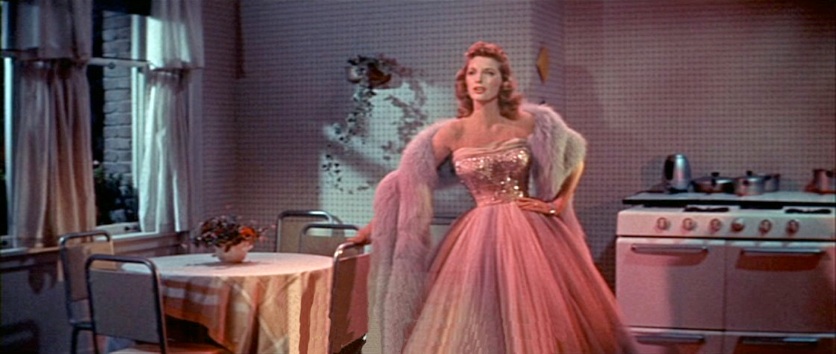
The Girl Can't Help It

Comedy Film Nerds: CFN vs. Keith and the Girl on The Martian; Rock 'n' Roll Movies with Lord Carrett

Criterion Close Up: Criterion Blogathon, New Releases for February, etc.

Cullen Gallagher: Barquero

Cynthia Fuchs: Democrats; Mimi and Dona; Secret in Their Eyes
June Havoc

David Vineyard: Midnight (1934 film)

Dorian and Vinnie Bartolucci: Lady in the Lake; Trancers

Elgin Bleecker: The Prowler

Elizabeth Foxwell: Black Friday (1940 film); about Anatomy of a Murder

Evan Lewis: Dick Tracy (1950s tv series): "Dick Tracy and FlatTop"

Gary Deane: June Havoc

George Kelley: Spotlight

Gilligan Newton-John:  Mad scientist film bondage (some mildly NSFW imagery)
Lifeforce

How Did This Get Made? (featuring guest Lennon Parham): Lifeforce

Iba Dawson: some of the worst...

Ivan G. Shreve, Jr.: The Strange One; The Garment Jungle

Jackie Kashian: Chez Amanda on The X-Files; The Amazing Spider-Man 2
The Deadly Mantis

Jacqueline T. Lynch: Jerome Cowan

James Reasoner: The Deadly Mantis; The Bold Caballero 

Janet Varney: Colin Hanks

Jerry House: Roy Rogers and his peers; X Minus 1: "Nightmare"

John Grant: Curtain at Eight; Crime Unlimited; Flat Two

Jonathan Lewis: Treasure Island (1972 film)
Top 25: Shield for Murder

Juri Nummelin: Morons from Outer Space

Karen Hannsberry: William Conrad; Top 25 Noir Films 

Kate Laity: The Hudsucker Proxy

Kelly Robinson: Criterion and Lynch (and Kelly)

Ken Levine: On Roseanne; further on Roseanne; Undateable; Wish I Was Here and Kickstarter abuse

Kevin Pollack's Chat Show: Vince Gilligan

Kristina Dijan: Criterion Blogathon: Day 4

Laura G:  3 Bad Men; Murder in the Fleet; The 33Pocahontas (1995 Disney animation); 42nd Street (stage)

Lucy Brown: River; Once Upon a Time (current US tv)

Marty McKee: The Final Terror

Mildred Perkins: The Mummy (1959 film)

Mystery Dave: "Captain EO"
the book

Patricia Nolan-Hall: Harry Carey and the Carey family

Patti Abbott: Reflections in a Golden Eye

Rick: 1960s TV series on the road...

Rod Lott: Rattlers; Drunk Stoned Brilliant Dead: The Story of the National Lampoon

Ronna and Beverly: Jessica St. Clair

"Rupert Pupkin": Broken Lance
Carol

Ruth Kerr: Criterion Blogathon Day 6

Sam Juliano: A Room with a View; Carol

Scott A. Cupp: The Mad Miss Manton

Sergio Angelini: Molle Mystery Theater (radio); Thriller (US tv); et al.: "Yours Truly, Jack the Ripper" and its extensions by Robert Bloch
(...and...A Thriller a Day on that adaptation)
The Mad Miss Manton

Stacia Kissick Jones: Manos, the Hands of Fate; The Night of the Generals; Drunk Stoned Brilliant Dead

Stephen Bowie: Sunday Showcase (1959 US tv): "What Makes Sammy Run?"

Stephen Gallagher: Stan Lee's Lucky Man

Danger Theater presents: "The Voice"

North by Northwest

TV Obscurities: The Tammy Grimes Show

Victoria Loomes: Louise Beavers

Vienna: North by Northwest (stage); Leslie Howard; Bad Day at Black Rock

Yvette Banek: La belle et la bete
Beauty and the Beast

Thursday, November 19, 2015

Thursday's Overlooked Films and/or Other A/V: the links to reviews, interviews, etc. (delayed from Tuesday, with further apologies)

Sonia Delaunay designs
This week's adventures in audio/visual materials that the reviewers think need at least another look (or, occasionally, actually deserve obscurity); thanks as always to everyone, and please let me know if I've missed your or someone else's notable posts.  Todd Mason, who notes that the Criterion Blogathon is responsible for most of the Criterion DVD and BluRay reviews this week...see Kristina Dijan, Ruth and Aaron West's citations for guides to the participants and their essays...

Aaron West: The Apu Trilogy; Criterion Blogathon

Anne Billson: westerns from countries other than the US...

Anonymous: The Treasure of the Sierra MadreAu Hazard Balthazar; The Young Girls of Rochefort; No Way Out

Bhob Stewart: Pandora and the Flying Dutchman (keep scrolling)

The Big Broadcast: 15 November 2015 (host Rob Bamberger has no clue about the history of dime novels, pulps and Nick Carter, and isn't afraid to display this.)

Bill Crider: The Adventures of Don Juan [trailer]

BV Lawson: Media Murder (it's the delayed time of year)

Colin: Thunder in the East

Comedy Film Nerds: Rob Cohen; The Martian

Cullen Gallagher: The Monster and the Girl

Cynthia Fuchs: DemocratsToto and His Sisters 

David Vineyard: Midnight (1934 film); Time Lock

Doug Ellis: the 1939 WorldCon, the first

Dorian Bartolucci: Lloyd Corrigan

Elizabeth Foxwell: The Cat and the Canary (1939 film)

Evan Lewis: Django (1966 film)

Gary Deane: Vanishing PointGone in Sixty Seconds (1974)

George Kelley: DC SuperVillains/Justice League: Masterminds of Crime

Gilligan Newton-John: Summer School (1976 film); VHS film boxes

Iba Dawson: Catfish (2010 film)

Ivan G. Shreve, Jr.: I Can Get It for You Wholesalefilms on Turner Classic Movies; The Many Loves of Dobey Gillis

Jack Seabrook: Alfred Hitchcock Presents: "The Belfry"

Jackie Kashian: Chef; Steve Young on American Horror Story, Harper, etc.

Jacqueline T. Lynch: No Down Payment

James Reasoner: The Bold Caballero

Janet Varney: Carla Cackowski; Kate Walsh 

Jeff Flugel: Red Dwarf

Jerry House: Teenagers from Outer Space; X Minus One: "Nightmare" (from Benet's "By the Waters of Babylon")

John Grant: Curtain at EightCrime Unlimited

Jonathan Lewis: Terror Beneath the Sea; Cowboy from Brooklyn

Karen Hannsberry: New York Confidential; Tom Neal

Kate Laity: Anna Karenina (2012 film)

Kelly Robinson: Eraserhead and silent film

Ken Levine: Larry Gelbart; blog party

Kristina Dijan: Criterion Blogathon: Day 4; Day 1; In Cold Blood; Eduardo Cianelli; The Florentine Dagger

Laura G: Two Weeks with Love; Night in New Orleans; Them!; Man-Proof; 30 in 30

Lucy Brown: Angel Face

Martin Edwards: The Scotland Yard Crime Museum; the Detection Club

Marty McKee: Blood Beast of Monster Mountain; Tales from the Darkside: The Movie; The Verdict; Narrow Margin (1990)

Mildred Perkins: Dead Rising: Watchtower; Longmire

Mystery Dave: Confessions of a Teenage Drama Queen

Patricia Nolan-Hall: Sanjuro

Patti Abbott: Rachel, Rachel

Prashant Trikkanad: Chess in movies

Rick: Sydney Greenstreet; Family Affair: "Christmas Came a Little Early"

Rod Lott; Deliver Us from Evil; Never Say Never Again; Beowulf (2007); Murder Can Hurt You

"Rupert Pupkin": Living in Oblivion

Ruth: Criterion Blogathon; Ikiru; Daffy Duck

Sam Juliano: I Walked with a Zombie

Scott Cupp: Doctor Strange

Sergio Angelini: I Start Counting

Stacia Jones: The Deadly Bees; Phase IV; Hustle; Darling Lili

Stephen Bowie: Leigh Chapman

Stephen Gallagher: George Barris

Steve Lewis: Killshot Cry Danger; Thanks a Million; Silverfox  (Mason on Killshot some years back)

Television Obscurities: Hollywood Special (eventually aka ABC Sunday Night at the Movies)

Todd Mason: The Virgin Spring

Victoria Loomes: Sonia Delaunay

Vienna: Leslie Howard; Robert Ryan

Yvette Banek: Ministry of Fear

Tuesday, November 17, 2015

film: THE VIRGIN SPRING (Jungfrukällan) (1960, Sweden) A Criterion Blogathon entry

My 1972 book, Ingmar Bergman Directs, begins with a long interview. After that, the first sentence runs: "Ingmar Bergman is, in my most carefully considered opinion, the greatest filmmaker the world has seen so far." Thirty-five years later, upon news of Bergman's death last month, that is still my opinion. 
--John Simon, in "Cinema's Shakespeare" in The Weekly Standard (2007)

Jungfrukällan, released in English as The Virgin Spring, is, like nearly all the films Ingmar Bergman directed, beautifully shot and set in a very solid, fleshed-out world...one gets a sense of how life probably was lived in medieval Sweden better than that provided by nearly any other historical drama of its time, even as the film, based on a famous Swedish tragic ballad from the 1300s, dramatically is a parable, even more than the ballad itself a fable devoted to dealing with extremes of behavior, faith and guilt, the search for some sort of redemption in the face all sorts of loss. The film is a mystery or miracle play in cinematic terms, a distant (but not too distant) cousin of such English classics as "Everyman."

Synopsis: 
Ingeri, the young woman of the household whose status is somewhere between servant girl and foster daughter, goes about her chores to start the day; we see she is gravid. We soon learn that she is pregnant out of wedlock (she notes that a bastard will produce a bastard) and that the other women of the household hold her in some contempt for her wild ways and rebelliousness; she also had paused in her chores early on to pray to Odin, in what is otherwise apparently a Christian household. The patriarch and matriarch of the family, Tore and Mareta, discuss who should deliver the family's offering of candles to the not quite nearby church, though tradition apparently demands that the offering be presented by a virginal young woman, so daughter Karin, who's sleeping in after complaining of illness (and having danced the night away), is eventually settled upon to perform the delivery. This after much cosseting and playful interchange between Karin and her parents, who dote on her enormously, and she, in turn, displays no little Elektraesque interest in her father, and takes her mother slightly more for granted. She is also excessively childishly vain and becoming aware of her sexuality but in a very coy and girlish way. Karin asks that Ingeri be allowed to come along, and Karin, in expensive finery and riding proudly sidesaddle, and Ingeri, slumped astride a smaller horse in her disheveled work clothes, begin their small pilgrimage. 

Ingeri's resentment of Karin is in no way lessened by mostly unintentionally smug and proper chat from the golden girl as they make their way; it might be that Ingeri was raped, but it definitely seems that the young farmhand Ingeri is drawn to and seeks as a mate is taken with Karin, who had danced with him among others the previous night. Ingeri responds in a slightly more self-aware if cynical manner, suggesting that Karin might well lose herself if nuzzled, or if she finds herself in a situation where a little fellatio or a tumble in the hay might not get her something she desires beyond sex and attention. Karin, having boasted of her virtue and determination to fight off any sexual advance before marriage, slaps Ingeri, then immediately apologizes. The two young women come across the run-down cottage of a fellow pagan, an old and  chewed-up man, just as they are about to enter the dark forest part of their journey...Ingeri is suddenly seized with a premonition of danger, and dares not go on. Karin is quite certain God is her co-pilot, and so goes on her way alone, while Ingeri gets a little too much presumptuous hospitality from the old man and, when he makes a blatant pass after showing her some human-sacrifice relics, flees his hut to catch up with Karin. 

Karin meanwhile has met up with two young men and a boy with some goats; the goatherds are ragged and hungry, and she offers to share her provisions with them...she obliviously brags of her wealth and status as a princess as the two young men make ever more sinister noises, which she barely registers till she notes that the goats have brand-style markings that suggest the trio have rustled them; this immediately sparks the rape the young men had been obviously hoping to engage in, while their younger brother looks on, aghast. After both young men assault her, one goes on to club her head with a branch, delivering a killing blow. Ingeri, who had witnessed from a small distance the beginning of the assault and had grasped a rock to attack the men with, instead finds herself stymied by a mix of fear, guilt over wishing Karin harm or at least comeuppance, and perhaps even a bit of PTSD from her own experience or a certain amount of guilty lust given the open, if brutal, display before her.  She doesn't intercede at all, eventually dropping the stone and fleeing unseen by the thugs, who strip the valuables from Karin and leave their kid brother to watch the stolen goats and incidentally the corpse briefly while they go about other business. The child, after trying to eat some of Karin's picnic leftovers, vomits, and makes an impulsive effort at burial of her body, but only manages to throw a thin layer of dirt on her face and chest, the result more unintentional insult than proper ceremony. 


The trio of rustlers make their way to what they don't know to be the small estate of Karin's parents and Ingeri's masters and ask Tore, as travelers who've hit bad luck, to be put up for the night.  He agrees to do so, and the trio join in supper with the family, their servants, and an impoverished guest/mendicant also staying at the compound. The boy still can't stomach the food on offer, as he guiltily looks from one slightly sinister-seeming benefactor to another. They put him to bed in the dining hall, with the mendicant telling him a grim (or proto-Grimm) bedtime story that somewhat parallels the child's recent experiences, only with a reasonably happy ending, while the people of the compound ready themselves for a night's sleep (and Ingeri, still recovering, slips back home and continues to hide at first). One of the thugs offers Karin's dress to her mother, as perhaps something she'd like to buy and fix up, claiming it had been his sister's; Mareta surreptitiously bars the dining room door behind her, trapping them. Tore decides he will take vengeance on them, and preps himself with a sauna and self-flagellation with birch branches, with Ingeri serving him as he does this nude ritual. He then stabs one of the men, seems to choke another while forcing him to lie in the fire with Tore atop him (in a manner that resembles the sexual assault) and then, despite the child running to Mareta and being lightly embraced by her, Tore grabs the boy and throws him against the shelves on the wall, killing him. 

The household then goes raggedly in search of Karin's body; when they find her, they lament her state, and Tore steps away to pray, to ask why his God might have allowed the murder of a child (whether Karin or the goat boy), and promises to build an elaborate, permanent church on the spot of Karin's murder. As they move Karin's corpse after this promise, a small spring begins jetting clear water from beneath where her head lay, and Ingeri purifyingly washes her own face in it, while Mareta begins to wash the dirt from the corpse. 
End of synopsis.

from the Criterion page for this film:


CAST

CREDITS

DirectorIngmar Bergman
ScreenplayUlla Isaksson
CinematographySven Nykvist
EditingOscar Rosander
ProducerIngmar Bergman
MusicErik Nordgren
Production designP.A. Lundgren
Costume designMarik Vos


Part of what makes the film so good is, again, the groundedness of what is a philosophical fable in the gritty details of daily life; the stylization is mostly one of making the story play out with slightly high-flown dialog, as if it were a pageant as well as the unfolding of the tragedy; everything happens in strict chronological order. And, rather as in life, not everything is explained in any sort of detail; Mareta bemoans the fact that Karin is "all she has now"; whether that means that she's feeling alienation from Tore and (probably) mourning Ingeri's "fallen" state, or had lost another child in something like stillbirth or the potential of having another due to menopause, or even lost a child to the war that had forced their mendicant houseguest to flee Sweden briefly before returning, is never made explicit.  The ambiguous but clearly barely tolerated presence of Ingeri in the house, particularly given her unwed pregnancy, is apparently part of a long Swedish tradition of taking in foundlings (she's been a second-class member of the extended family or at least among the retainers for a while), and her fate is only slightly less dire than that of the other younger characters, all of whom suffer from the depredation and/or duplicity of their elders. And while there is a certain fantasticated feel to the film, the only point at which it becomes arguably fantasy is at the very climax...Bergman would save his overt fantastic work for such earlier films as the delightful comedy The Devil's Eye, and The Seventh Seal, and such later projects as Hour of the Wolf and (with a clever framing device) The Magic Flute.

Another part of what makes the film excellent is that it's the first film in which cinematographer Sven Nyqvist would work with Bergman and his crew, and what had already become something of a regular company of actors. Max von Sydow had already scored international attention in The Seventh Seal, for obvious example...while this was one of the relative few of his films where Bergman was not the primary scriptwriter, instead turning to novelist (Ms.) Ulla Isaakson to adapt the ballad "Tore's Daughter at Vange" into cinematic form, while collaborating with her to some extent and making some changes in the final shooting script (apparently the company were also up for a little improvisation at the time of filming). Some of the film demonstrates very clearly the influence of Akira Kurosawa, and such films of his as Rashomon, had on Bergman, an influence Bergman would consciously attempt to not display in future work. (The kinship with such other successors to Kurosawa as Onibaba [1964] can be felt, as well.)


But that the film was good at all is not and certainly was not in 1960 a universal opinion. Certainly, Bergman himself apparently didn't consider it anything like his best work, and only rarely referred to it later in discussing his career, beyond the fact that it winning an Oscar in 1961 for Best Foreign Language Film didn't hurt his ability to secure his often shoestring budgets from Svensk Filmindustri. The Cahiers du Cinema jokers decided this film was indicative of Bergman's sudden irrelevance, in their hipster way, and as the French upstart film establishment of the time snarled, so too, not long after, did their Swedish colleagues (who were apparently also put off by the heavy indulgence in Christian vs. pagan themes and the general sense of the Dour Swede on parade). Meanwhile, the bluenoses in Sweden, and certainly in the U.S. among other places, were Very put off by the explicit viciousness and relatively realistic staging of the rape of Karin; not much more than her thighs (and her face as she suffers) are ever exposed, and not quite that much of her two rapists' bodies, but that and the display of her still-clothed corpse afterward (and, probably, Ingeri's reference to oral sex earlier in the film) were enough to get the film banned in Ft. Worth, Texas, at very least, and some seconds cut in New York and elsewhere, while at least some were simply disappointed that Bergman might seemingly parallel one of his least favorite film technicians, Alfred Hitchcock, with the latter's staging of an attack on Janet Leigh's character in the adaptation of Robert Bloch's Psycho, also released that year to some similar hostility (if in neither case the kind of foolish insult and censure that Peeping Tom faced; much later films such as River's Edge might also be paying homage).  I'm not sure of this, but would also not be too surprised if some of the more blatant Freudian aspects of the film were targets for criticism, as well; aside from the Elektra complex suggestions (and perhaps something a bit darker involving the other "daughter"), not only do swords and long knives serve as obvious (not overstressed, but clear) phallic symbols, but so also do the pole that holds open the smoke-releasing trap door in the dining hall ceiling, and a birch sapling that Karin's father attacks in his despair while readying himself to take revenge. Rather more explicitly Swedish symbolism that ties toads in with not only Satanic forces but also women's genitalia also plays out. All told, the fallout from the film was a bit of a mixed bag, by any measure. And it was the last of Bergman's films to have an explicitly, distantly other-times historical setting (with the arguable exception of the Mozart opera film). 

The Criterion package of the film is typically good, with an excellent DVD reproduction and upgraded subtitles from previous releases, and a nice set of booklet and on-disc extras (if not up to the best I've seen from them, from the two-disc set of The Killers and its several adaptations); Birgitta Steene's on-disc annotation might be a bit too negatively critical, and while her commentary misses a few things I've touched on above, she also supplies very useful background information on Swedish folkloric and cinematic traditions that the film both takes advantage of and breaks away from. Bergman's own brief explanation for why the rape scene was shot as it is makes for very good reading, and is sadly too true (essentially, that it doesn't help to pretend that things aren't as ugly as they can be, particularly if one is in no way celebrating them). The 2006 interviews with the actors playing the young women, Gunnell Lindblom and Birgitta Petterson, are more than fine and useful, and Ang Lee's "introduction" also if slightly less so, though it most certainly shouldn't be viewed before watching the film.  Which on the Criterion disc one can do with an English dubbed soundtrack if one chooses (which I've not explored yet), and in the original Swedish without any subtitles. 

Please check out the other entries in the Criterion Blogathon, hosted by the folks at Silver Screenings (Ruth Kerr), Speakeasy (Kristina Dijan) and Criterion Blues (Aaron West). 

Criterion not only has been doing remarkably good packages of mostly extremely deserving films and related projects in DVD and BluRay (and back in the day, 12" laserdisc) format for the years of several dogs (somehow they never jumped on that soon-disabled RCA stylus videodisc bandwagon), but they are the heirs as a company to the Janus Film Collection, which has been popping up as the mark of quality for decades more since being birthed in Cambridge/Boston-area art cinema spaces, and, most tellingly for my early enjoyment, feeding films to what in the latter 1970s WGBH-TV Boston (and perhaps they alone, despite being then as now the biggest contributing station of programming to its network) called PBS Theater, a weekend staple where I got to enjoy the likes of Forbidden Games and The 400 Blows and even some films not about children when I, too, was a youth...and I was always happy to see the Janus logo pop up elsewhere, for example on another, rather short-lived Boston-based project, The Monitor Channel, the cable news and cultural programming arm of The Christian Science Monitor for a brief period in 1991; aside from a decent attempt at tv news coverage, they offered a Mort Sahl commentary series and the likes of Black Orpheus in a film package from then already Criterion folks. The first day's roundup of film essays is at Kristina's blog here.  The film: