Showing posts with label textbooks. Show all posts

Friday, January 12, 2018

FFB/M: FANTASY: THE LITERATURE OF THE MARVELOUS, edited by Leo P. Kelley (McGraw-Hill 1973); ALFRED HITCHCOCK'S MYSTERY MAGAZINE, August 1964, edited by Richard Decker, with Victoria S. and Ned Benham, G. F. Foster and Patricia Hitchcock (HSD Publications)

As with the Leo P. Kelley high-school-targeted textbook in the same Patterns in Literary Art series I dealt with last week, the Fantasy companion is an interesting mix of chestnuts and some classics, with a fair amount of relatively obscure material (in 1973 and today) including a story by Kelley himself...but even more than the Supernatural volume, or the earlier Themes in Science Fiction anthology published the previous year, this one strikes me as assembled off the top of his head, featuring as it does two stories by Gahan Wilson (wrapped around the John Collier entry, no less), no fewer than four reprinted from Harlan Ellison's notable (and in 1973 very much in-print) anthology Dangerous Visions (1967), and two stories by August Derleth (for all that one is among the "posthumous collaborations" Derleth would spin out from fragments of manuscripts left among H. P. Lovecraft's papers at the time of the latter's death--as always, Derleth writing for and as himself is superior). And exactly two folktales are included...both out of collections of Irish folklore from the third decade of the 1800s...definitely giving the impression of Kelley pulling things off his shelf and putting this together rather hastily, or at least with less considered judgment than he demonstrates with the other two volumes. Also notable is the amount of arguable science fiction in this fantasy volume, particularly given his juxtaposition of potentially opposing camps of sf and fantasy in his preface. Kelley does manage to include stories by two of the more brilliant and multifarious women writers of our time in this one, however, if only two: Carol Emshwiller and Josephine Saxton.

Meanwhile, the Hitchcock's issue, coincidentally one dated with the month I was born, is otherwise a fairly typical issue of this magazine in the shank of its time as the independent "second" magazine in the English-language crime-fiction market (Ellery Queen's Mystery Magazine being the best-selling and most traditionally respected in those years, and most years before and since; the second publisher of EQMM, Davis Publications, founded around the purchase of Queen's in 1958, would buy AHMM in 1976), and as such it suggests a few thoughts about the magazines in the field and AHMM's place among them.

Contents: courtesy the Contento/Locus Index to Anthologies, with links to ISFDB as well:

    (McGraw-Hill 0-07-033502-8, 1973, $3.96, 305pp, tp) 

One can suspect the degree to which Kelley saw some of these stories in the same venues I would, aside from Dangerous Visions:  a number were collected in Judith Merril's Year's Best Science-Fantasy/Speculative Fiction anthologies of the latter '50s into the latter '60s (it's probably not altogether irrelevant that DV arose from the ashes of an anthology Ellison commissioned from Merril when he was editing the Regency Books paperback line), while others probably were, rather sapiently, plucked from other anthologies, including probably Playboy's series of books collecting their fiction. As is the John Collier classic collected here only more so, David Ely's "The Academy" is outre but not actually fantasy by most definitions, for all that it was adapted for a mildly effective Night Gallery tv series segment. Any book that includes such stories as Davidson's "Or All the Seas with Oysters" and Bloch's "The Cheaters" and Finney's "Of Missing Persons" isn't actually cheating the young readers who might've been assigned this text, and the likes of Hensley's "Lord Randy", while also barely fantasy if at all, does have a built-in appeal to young readers. That the surreal Emshwiller and the similarly edge-of-science-fiction Asimov  stories might be brought together in this context is actually pretty useful, even if this book thus doesn't become a compilation of consistently brilliant work it might've been. George Malko in, and Jack Vance or Shirley Jackson or Joan Aiken or Jorge Luise Borges or Fritz Leiber or Muriel Spark or Margaret St. Clair not in, is a somewhat eccentric choice, and one wonders what specifically drove it.

Barry Malzberg somewhere once made an offhanded joking reference to, close paraphrase, "a plot stupid enough to sell to Hitchcock's" in the HSD years, and the desire to feature twist endings as a default did lead AHMM to offer some pretty damned dense semi-idiot plots. Richard Deming's "Escape Routes" (this one, as opposed to the other one, as Douglas Greene is careful to help us distinguish) is an unfortunate example of this...a fleeing criminal accidentally hijacks another fleeing criminal's car and loot...and, knowing that the other fleeing criminal had a risky plan of escape from his own current perplex, decides to go ahead and impersonate the second criminal and steal the latter's false identity and escape plan, rather than contenting himself with stealing the considerable cash and car and making his own way to a no-extradition haven.  It's cute, and has good detail, but is indicative of a weakness for this kind of story that it's also the lead story for the issue. Jack Ritchie's "Captive Audience" is more clever, if relatively slight, in its tale of a kidnapping survivor who gets to bite back at his former captors, including supposed friends. Jonathan Craig's "Bus to Chattanooga" is rather better yet, for all that it posits a rather too stereotypical abusive situation for its backwater young woman and her adoptive, thuggish uncle...her means of getting around this, however, are reasonably well thought out and the story makes emotional sense as well, however much we might wish it didn't, even given she wins in the the end.  Arthur Porges's story is part of a series of his, and in one of his default modes--it's another update on Sherlock Holmes, and the kind of notional story Porges would also tend to write in his science-fictional work, where there is a simple but baffling problem that can be addressed by some technological know-how...an approach that can make for amusing, but usually rather light at best, fair-play detection or dealing-with-the-aliens kinds of story...Porges was usually a bit better in fantasy contexts, where his cleverness with this kind of gimmick lent itself to even greater wit and charm, as with his relatively famous deal-with-a-minor-demon story "$1.98". Ed Lacy lives down to my expectations with his story, marginally better than what I've seen from him elsewhere (in marginal magazines), but also referring to whites and "natives" in the Caribbean...when he means whites and blacks, as opposed to actual native nation folk. I somewhat idly wonder if there's any familial connection between Jonathan and Douglas Craig. 

AHMM was the Other consistently good-paying short crime fiction market in the 1960s, along with Queen's; I gather The Saint Mystery Magazine as well as knowing Mike Shayne Mystery Magazine and the dying Manhunt were rather less well-funded and thus less generous; not sure about the London Mystery Selection and John Creasey's, but this was also a period where crime fiction might appear, for very good money indeed, in not only The Saturday Evening Post and Playboy still, but also Cosmopolitan or The Ladies Home Journal...even if a sale to the UK Argosy or Strand were somewhat more attainable goals...one could make decent-enough money from at least AHMM and EQMM. The talent gathered in those issues, even if not always working to its fullest extent, remains pretty impressive. 

Friday, January 5, 2018

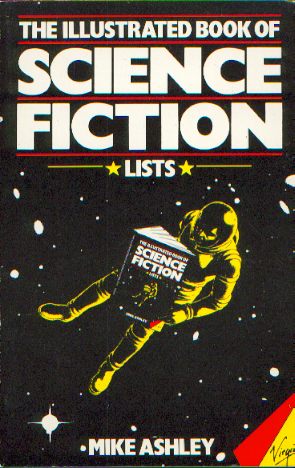
FFB: THE SUPERNATURAL IN FICTION edited by Leo P. Kelley (McGraw-Hill 1973); THE ILLUSTRATED BOOK OF SCIENCE FICTION LISTS by Mike Ashley (Virgin Books 1982; Cornerstone Library/Simon & Schuster 1983)

Two good examples of painless education in fantastic fiction publishing, even if neither was given quite the support they could have used. Leo P. Kelley, as far as I know, was never a teaching academic, but nonetheless was tapped by McGraw-Hill to edit three volumes in their 1970s textbook series Patterns in Literary Art; they issued this one along with Fantasy: The Literature of the Marvelous (also 1973) and Themes in Science Fiction (1972), all three interesting selections of classics, chestnuts and amusing choices of a more unlikely sort, but not unreasonably so. Kelley was primarily a speculative fiction writer, while also an advertising copywriter for most of his daily bread, from 1955 into the early 1970s, and in later years turned most of his fiction-writing attention to western novels. Mike Ashley has been a notable anthology editor, in historical fiction, crime fiction and other matter as well as sf and fantasy, but might be even better known as an historian of sf and fantasy, crime fiction and also of fiction magazine publishing generally; he has also been active in local politics in his native England. Ashley's book of lists, by no means focused exclusively on sf but very much also on fantasy and horror, was first published in Britain a  year before its (I suspect) rather less-well-copyedited and -produced US edition (I've never seen the UK original), and after his first major work on the history of sf magazines had been published in both countries. Ashley's colleagues Malcolm Edwards and Maxim Jakubowski would offer The Complete Book of Science Fiction and Fantasy Lists (reprinted in the US as The SF Book of Lists) in 1983, theirs published in both countries in the same year, thus putting the two books head to head in their US editions. Both the Edwards/Jakubowski book and the further Kelley texts might be discussed in future FFB essays as I dig them back out of storage boxes; the McGraw-Hill series included at least one other volume of considerable fantastic-fiction interest, Heaven and Hell edited by Joan D. Berbrich. Both books are much of their time, as commercial properties...the Kelley an example of the new freedom and diversity in literature-textbook publishing aimed at high school and younger college students in the 1970s particularly, the Ashley and its companion volume part of the wave of books, including several  direct sequels to the immensely popular The Book of Lists (1977) assembled by Irving Wallace and his daughter Amy Wallace and son (who reverted to the pre-Ellis Island version of the family name) David Wallechinsky; Amy Wallace would be among the many to produce more specific Books of Lists, including compiling (with Dick Manitoba) The Official Punk Rock Book of Lists (2007) and (with Scott Bradley and Del Howison) The Book of Lists: Horror (2008). 

From ISFDB:
As noted above, a rather good mix of inarguable classics, those recognized by most readers and those recognized by those knowledgeable in horror and related fields, along with some interesting but more obscure items, including the rather opportune inclusion of one of Kelley's own stories. (Well, for writing  the discussion questions he appends to each of the entries in the book, certainly there's no better authority on "The Dark Door"...) Even the Lanier "Brigadier Fellowes" story is one of the less dull examples of that series. The notion of the "haunted house of Man's mind" would sound a bit less ponderously sexist, if not much less ponderous, in 1973, but even then the utter lack of women contributors to this volume might've been a matter for some discussion. 

Far more inclusive, even given the thus slightly misleading title, the Ashley compendium is good-natured, careening cheerfully from the factual to the arguably factual to the utterly opinionated (including sever writers' choices of their own best, and in Isaac Asimov's case also his worst, work and those other writers most influential on them and/or the larger literary world). For all that it is illustrated, the reproduction is sometimes poor, exclusively in black and white in the text of the book (color printing in 1983 still not as comparatively inexpensive  as it is today), giving some of the author photographs an almost cartoonish look and the cover reproductions muddy, and the headers to most lists, while rather well set-off from the rest of the text, are also at times poorly copy-edited or typo'd: Richard Lupoff's "Alternative Hugos" list is carefully revised incorrectly into "Alternative Heroes" in both the header on its page and in the rather detailed, but page-number-free, table of contents. Nonetheless, these examples of bad publishing practice don't detract too much from the enjoyment of the arguments one can have with the choices made (Baird Searles's selection of the best fantasy films seems much more sound to me than his selection of the best sf films, for example), the parameters accepted (in selecting the most valuable collectors' items among published books, for example) and the like, while also enjoying the assessments of those not so often heard from even in these days of the clickbait list and databases of opinion, such as Mary Elizabeth Counselman's choices of notable Weird Tales stories, or even Robert Bloch's selection of the best Lovecraft fiction. Not a few of the factual matters discussed have since been superseded, of course (tallies of awards won, largest sales figures, most issues of magazines published) , but that is inevitable, in a book such as this published when there was no quickly-accessibe web, and magazines and fanzines, and newsletters and newspapes when they would cover such matters, were the only sources for this kind of information...thus the vogue for this kind of book.

One kind of list where a blog has a Definite advantage...even given these would not be my choices, even from the artists in question (well...maybe the Brown Startling cover...), and I wish di Fate had given a bit of description of why he chose these particular works: 

Vincent di Fate's 10 favorite fiction magazine covers:

Astounding Stories, December 1934: Howard V. Brown:

 Astounding Science Fiction, October 1939, Hubert Rogers:

Startling Stories, November 1939, Howard V. Brown:

Astounding Science Fiction,  May 1951, Hubert Rogers:

Space Science Fiction, September 1952, Earle K. Bergey:

Astounding Science Fiction, October 1953, Kelly Freas:

Analog, September 1962, Yura "George" Solonevich:

Analog, May 1966, John Schoenherr:

Analog, December 1967, John Schoenherr:

Analog, July 1975, John Schoenherr:

Both books worth seeking out, and inexpensive, from the usual sources. 

ISFDB lists the three Kelley anthologies in the Patterns in Literary Art series (and the Contento/Locus Index lists only the fantasy and the sf volumes), but the Berbrich anthology Heaven and Hell is detailed among the indices I've seen only in WorldCat and derivative services:

General introduction.

Heaven and hell and all that: 
Cynewulf. The last judgment. 
Parkes, F. E. K. African heaven. 
Lester, J. Stagolee. 
Maier, H. What price heaven? 
Goldin, S. The last ghost. 
Laurance, A. Chances are. 
Priestley, J. B. The gray ones. 
Levertov, D. The dead.

The paths of good and bad intention: 
France, A. Our lady's juggler. 
Winslow, J. M. Benjamen burning. 
Straley, D. B. The Devil grows jubilant. 
Tolstoy, L. How the Devil redeemed the crust of bread. 
Beerbohm, M. The happy hypocrite. 
Davidson, J. A ballad of hell.

Bargains with the Devil: 
Anonymous. Ballad of Faustus. 
Benet, S. V. The Devil and Daniel Webster. 
Arthur, R. Satan and Sam Shay. 
Masefield, J. The Devil and the old man. 
Collier, J. Thus I refute Beelzy. 
Elliot, B. The Devil was sick. 

Reward and retribution: 
Bierhorst, J. The white stone canoe. 
Johnson, J. W. Go down, Death! 
Dante. The Inferno. 
Irving, W. The Devil and Tom Walker. 
Hesiod. Right and wrong. 
Frost, R. A masque of reason. 

And here's the cover of the UK original of the Ashley volume:

For more of today's books, please see Patti Abbott's blog.

Friday, December 29, 2017

FFB: The Scott, Foresman Invitations to Personal Reading Program edited by Helen Robinson, et al.

I've written before about the Scott, Foresman reading/literature textbooks that my various schools, public and private, used through my elementary through high school education (1970-1982), in Massachusetts, Connecticut, New Hampshire and Hawaii. (They had the Dick and Jane first-grade franchise in the '60s, and were ubiquitous, obviously, in later grades as well.) I remember the first actively psychotic teacher I had, a second-grade reading teacher who egregiously resented my ability to read before entering her class, growing volubly vexed with me when I wrote in the answers in the blank spaces in the text assuming that was what we were meant to do.) Among the supplementary materials Scott, Foresman offered were editions of various selected children's and YA books that they published in uniform "framed" cover-format as above and below, though in various sizes--the books were more or less in the dimensions of the original editions, and reprinted the original covers, except with no dust jackets and printed-on-the-boards images of those original front covers. I don't have them to hand, but as I recall them they didn't make an attempt to reprint the back covers or flap copy.
The list at the end is the set that was available for browsing and reading in my fifth grade and sixtth grade classroom at Nathan Hale Elementary School in Hazardville, CT. (The examples above might've been pitched to a slightly younger set of readers, with a Jean Craighead George early reader that I've never seen...while I do clearly remember her powerful Newbery Award-winner Julie of the Wolves and My Side of the Mountain. (We had one classroom with one teacher for all but some art classes at that small school at that time, and the same teacher for both fifth and sixth grades, and nearly the identical population in the classroom in those two years. We were also, probably unfortunately but conveniently, divided by our perceived ability as readers, with a half-doze of us on the students' left side of the classroom the sophisticated readers, using as our textbooks Scott, Foresman's Vistas (in fifth grade) and Cavalcades (in sixth)...the intermediate readers, making up most of the class, had another text (title forgotten) and sat in the middle of the classroom; and the ten or so of the struggling readers sat on the right, and used the Open Highways volumes for their grades. Scholastic Book Services and Dell Yearling paperbacks, among some others, were available for the kids to read during "open reading" periods or indoor recess, in shelves at the back of the room...I dipped in more than most, I think, even among the "advanced" readers. 
Among those which mad the strongest impression were Henry Reed’s Journey by Keith Robertson, the first of Robertson's Reed and Midge Glass novels I read and the second in the series (I recall that a chapter from Henry Reed's Baby-Sitting Service had been included in one of textbooks), Harold Courlander's collection of mythlore and folktales from around the world Ride with the Sun, and the handsomely illustrated edition of "The Charge of the Light Brigade"...though I now remember, looking at this list, that I definitely read the Newbery-winning Across Five Aprils and The Twenty-One Balloons from this set, and North to Freedom, the Danny Dunn books (that one doesn't stand out in memory) and Sea Pup Again (interesting the degree to which they didn't feel the need to include the first novels in a given series). Pretty sure I read James Kjelgaard's Stormy, as well, having already read his Big Red and a few others (at least a few of those among the paperbacks on the same shelves)... Kjelgaard having been a prolific writer for adults, in the slick magazines and higher-paying pulps, as well, who died young, after illness...Robert Bloch helped him shape up some of his last work for publication, when he was simply too ill to produce final drafts. 

To what extent did your classrooms have their own collections of books when you were in elementary grades, and did you have any fond memories of those collections...in addition to any libraries your school also maintained? (We had a library at that Enfield, Connecticut school...Hazardville having been absorbed by Enfield some decades before...which was in 1973 already a "media center" instead...the first thing I remember taking out from there was an audiocassette dramatization of Dracula...which my brother, then aged two, gleefully recorded over in part while playing around with the inexpensive cassette player/recorder I had at that time.).

The Scott, Foresman Invitations to Personal Reading Program set we had in my 5th/6th grade classroom:


Adventures in Many Lands

Henry Reed’s Journey by Keith Robertson

The Minnow Leads to Treasure by A. Philippa Pearce

The Singing Cave by Ellis Dillon

“What Then, Raman?” by Shirley Aroroa


Science and Nature

The Giant Golden Book of Biology by Gerald Ames and Rose Wyler

Jets and Rockets and How They Work by William P. Gottlieb

The Peaceful Atom by Bernice Kohn

Sea Pup Again by Archie Binns

Stormy by James Kjelgaard


Biography and Historical Fiction

Across Five Aprils by Irene Hunt

America’s Ethan Allen by Stewart Holbrook

From the Eagle’s Wing by Hildegarde Swift

Trace Through the Forest by Barbara Robinson

Tree in the Trail by Holling C. Holling


Legends, Myths, and Other Tales

The Golden Treasury of Myths and Legends adapted by Anne T. White

Ride with the Sun edited by Harold Courlander


Science Fiction and Fantasy

Bob Fulton’s Amazing Soda-Pop Stretcher by Jerome Beatty, Jr.

The City Under the Back Steps by Evelyn S. Lampman

Danny Dunn, Time Traveler by Jay Williams and Raymond Abrashkin


Books Too Good to Miss

Mr. Twigg’s Mistake by Robert Lawson

North to Freedom by Anne Holm

The Story of Design by Marion Downer

The Twenty-One Balloons by William Pene du Bois


Poetry

The Charge of the Light Brigade by Alfred Lord Tennyson

The Moment of Wonder edited by Richard Lewis
For more of today's books, please see Patti Abbott's blog.