Keith Botsford (March 29, 1928, in Brussels, Belgium - August 19, 2018, in Battersea, England)
from 14 August 2015:
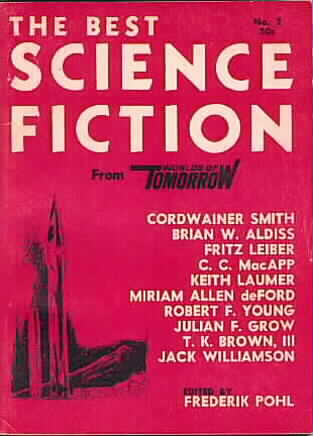
This wasn't the book I was going to review this week, but it kind of shouldered its way in...it arrived the same day as what was supposed to be Editors, edited by Saul Bellow and Keith Botsford, which was a similar volume with a similar remit...both were meant to cover the previous forty years in their editors' careers as editors of various magazines and often periodical book series. But, instead, the inventory sticker for Editors had been slapped onto a back issue of Granta (and not the cleanest copy I've ever seen), #99, one highlighted by an interview with Richard Ford (I have one of his books hanging fire, waiting for me to read it for this exercise as well). Bellow and Botsford, in their fat volume (1100 pages), pulled items from their various collaborative projects beginning with The Noble Savage (and I have a book in the queue that was mostly invented there) and wrapping up with their last such effort, News From the Republic of Letters; the rather fat Pohl volume (a mere 430 pages) begins with selections from the magazines Pohl began editing when 19 years old, Astonishing Stories and Super Science Stories; from there, the book draws on items from Pohl's first reprint anthologies, then the new-story Ballantine anthology series (and for one issue a magazine) Star Science Fiction; then onto taking over Galaxy and its sibling magazines (most notably If), at first while officially helping out the ailing H. L. Gold, and then in the clear, for more than a decade (ca. 1958 to leaving with the magazines' sale in 1969), editing for several months at the collapsing Ace Books of the early '70s and moving on from there to rather less chaotic times at Bantam Books for most of the decade; the last years are represented by novel excerpts, as Pohl didn't have an anthology series at Bantam: one each from Samuel Delany's Dhalgren, fellow former Futurian Society member David Kyle's completion of the planned but unfinished "Lensman" adventure novels by the late E.E. Smith, and Gustav Hasford's The Short-Timers, which, after this anthology was published, would be adapted for film as Full Metal Jacket, the script a collaboration between Hasford, Michael Kerr and Stanley Kubrick which won them an Oscar.  |
| Bantam let Arbor House do the hardcover edition (left), which they packaged atrociously as well. |
In the prefatory material running through this utterly functional (and no more than that) physical package, Pohl spells out, in more detail than I've seen elsewhere, the nature of his working life at each of his editorial desks, even if the reprint-anthology selections are a bit out of any sort of chronological or other apparent order. He can be cagy about certain matters (he mentions in passing that he met his second wife as a colleague at Popular Publications, the artist and writer Dorothy Les Tina, but doesn't mention her name here, even as he never mentioned meeting her at his first editorial job in his book-length memoir The Way the Future Was), but nonetheless is engaging and informative about the day-to-day production and business practices as well as the editorial work itself in each of his gigs. (It's notable that the Bellow/Botsford is similarly a no-frills physical presentation, featuring memoirs by its editors that include such bits as Bellow's boyhood acquaintance with the first professional writer he knew, a 1930s contributor to Popular's Argosy magazine and Street and Smith's Doc Savage; even as Pohl includes stories he'd gathered for his reprint anthologies, the B men include some of reprinted items they'd run in their magazines, particularly The Noble Savage's front pages, and the editorial offices of their magazines were not free of the odd romantic/emotional entanglement, such as the affair that inspired Bellow's Herzog.) The Pohl (courtesy the Homeville/William Contento indices):
- Yesterday’s Tomorrows ed. Frederik Pohl (Berkley 0-425-05648-1, Oct ’82, tp)
- ix · Introduction · Frederik Pohl · in
- 1 · The Fanzines: 1933-1939 · Frederik Pohl · ar
- 5 · The Pulps: 1939-1943 · Frederik Pohl · si
- 9 · Into the Darkness [Darkness] · Ross Rocklynne · nv Astonishing Stories Jun 1940
- 32 · Emergency Refueling · James Blish · ss Super Science Stories Mar 1940
- 37 · The Halfling · Leigh Brackett · nv Astonishing Stories Feb 1943
- 58 · Let There Be Light · Robert A. Heinlein · ss Super Science Stories May 1940, as by Lyle Monroe
- 72 · Strange Playfellow [aka "Robbie"] · Isaac Asimov · ss Super Science Stories Sep 1940
- 86 · Interstellar Way-Station · Bob Tucker · ss Super Science Stories May 1941
- 97 · The Anthologies · Frederik Pohl · si
- 103 · Report on the Barnhouse Effect · Kurt Vonnegut, Jr. · ss Collier’s Feb 11 1950 [included in Pohl and Judith Merril's Tomorrow, the Stars, attributed to Robert Heinlein]
- 114 · Eco-Catastrophe! · Paul R. Ehrlich · ss Ramparts Sep 1969 [included in Pohl's Nightmare Age]
- 125 · The Nine Billion Names of God · Arthur C. Clarke · ss Star Science Fiction Stories #1, ed. Frederik Pohl, Ballantine 1953
- 132 · The Man with English · H. L. Gold · ss Star Science Fiction Stories #1, ed. Frederik Pohl, Ballantine 1953
- 140 · Space-Time for Springers [Gummitch] · Fritz Leiber · ss Star Science Fiction Stories #4, ed. Frederik Pohl, Ballantine 1958
- 150 · The Monster · Lester del Rey · ss Argosy Jun 1951 [in Tomorrow, the Stars]
- 161 · The Rull [Rulls] · A. E. van Vogt · nv Astounding May 1948 [included in Carol and Frederik Pohl's Science Fiction: The Great Years V. 2]
- 186 · The Embassy · Donald A. Wollheim · ss Astounding Mar 1942, as by Martin Pearson [included in Pohl's Beyond the End of Time]
- 193 · Guinevere for Everybody · Jack Williamson · ss Star Science Fiction Stories #3, ed. Frederik Pohl, Ballantine 1954
- 209 · The Galaxy and If Years: 1960-1969 · Frederik Pohl · si
- 216 · The Pain Peddlers · Robert Silverberg · ss Galaxy Aug 1963
- 225 · Oh, to Be a Blobel! · Philip K. Dick · ss Galaxy Feb 1964
- 241 · The Ballad of Lost C’Mell · Cordwainer Smith · nv Galaxy Oct 1962
- 258 · A Gentle Dying · Frederik Pohl & C. M. Kornbluth · ss Galaxy Jun 1961
- 265 · Slow Tuesday Night · R. A. Lafferty · ss Galaxy Apr 1965
- 272 · Street of Dreams, Feet of Clay · Robert Sheckley · nv Galaxy Feb 1968
- 286 · The Coldest Place · Larry Niven · ss If Dec 1964
- 291 · The Great Slow Kings · Roger Zelazny · ss Worlds of Tomorrow Dec 1963
- 298 · The Life Hater [Berserker] · Fred Saberhagen · ss If Aug 1964
- 306 · Old Testament · Jerome Bixby · ss If Jul 1964
- 314 · The Moon Moth · Jack Vance · na Galaxy Aug 1961
- 344 · The Last Flight of Doctor Ain · James Tiptree, Jr. · ss Galaxy Mar 1969
- 351 · Among the Bad Baboons · Mack Reynolds · nv Galaxy Aug 1968
- 381 · Sweet Dreams, Melissa · Stephen Goldin · ss Galaxy Dec 1968
- 386 · A Bad Day for Vermin · Keith Laumer · ss Galaxy Feb 1964
- 393 · The Paperbacks: 1971-1978 · Frederik Pohl · si
- 400 · At the Mouse Circus · Harlan Ellison · ss New Dimensions I, ed. Robert Silverberg, Doubleday 1971 [included in Pohl's Best Science Fiction for 1972]
- 407 · Excerpt from Dragon Lensman · David A. Kyle · ex Bantam 1980
- 411 · Excerpt from Dhalgren · Samuel R. Delany · ex Bantam Jan 1975
- 425 · Excerpt from The Short-Timers · Gustav Hasford · ex Bantam 1979
- 431 · Afterword · Frederik Pohl · aw
The first issue of Galaxy "officially" edited by Pohl:


While here's the content of Editors (from the Toby Press site pages; News From the Republic of Letters is referred to only by its shorter title; amusingly, the editors' nickname for their magazine was TRoL
--now a dead link, but, courtesy Barry Malzberg, here's a Jim Burns retrospective essay on The Noble Savage):

EDITORS [their introductory memoirs]
Keith Botsford: On the Facts
Saul Bellow: Great and Not so Great Expectations, Noble Savage 3
Saul Bellow: Hidden Within Technology’s Empire, A Republic of Letters, The New York Times
Saul Bellow & Keith Botsford: Dialogue: As seen from the ground, ANON
Keith Botsford: On the Facts
Saul Bellow: Great and Not so Great Expectations, Noble Savage 3
Saul Bellow: Hidden Within Technology’s Empire, A Republic of Letters, The New York Times
Saul Bellow & Keith Botsford: Dialogue: As seen from the ground, ANON
ARIAS [essentially, editorials from the four magazines, including ANON and Bostonia]
Saul Bellow: Pains and Gains, Noble Savage 1
Stephen Spender: Doctor of Science, Patient of Poetry, Noble Savage 4
Saul Bellow: The 11:59 News, Noble Savage 4
Keith Botsford: Obit on a Witness, Noble Savage 4
Saul Bellow: Mr. Wollix gets an Honorary Degree, ANON
Mark Harris: Nixon and Hayakawa, ANON
Saul Bellow: White House and Artists, Noble Savage 5
Felix Pollak: The Poor Man’s Civil Defense Manual, Noble Savage 5
Philip O’Connor: A few Notes on the Changing World, Noble Savage 5
Saul Bellow: View from Intensive Care, The Republic of Letters 1
Saul Bellow: Graven Images, The Republic of Letters 2
Philip O’Connor: Last Journal, The Republic of Letters 2
James Wood: Real Life, The Republic of Letters 2
Martin Amis: Cars and the Man, The Republic of Letters 3
Julia Copeland: Objective Correlative,The Republic of Letters 7
Saul Bellow: Pains and Gains, Noble Savage 1
Stephen Spender: Doctor of Science, Patient of Poetry, Noble Savage 4
Saul Bellow: The 11:59 News, Noble Savage 4
Keith Botsford: Obit on a Witness, Noble Savage 4
Saul Bellow: Mr. Wollix gets an Honorary Degree, ANON
Mark Harris: Nixon and Hayakawa, ANON
Saul Bellow: White House and Artists, Noble Savage 5
Felix Pollak: The Poor Man’s Civil Defense Manual, Noble Savage 5
Philip O’Connor: A few Notes on the Changing World, Noble Savage 5
Saul Bellow: View from Intensive Care, The Republic of Letters 1
Saul Bellow: Graven Images, The Republic of Letters 2
Philip O’Connor: Last Journal, The Republic of Letters 2
James Wood: Real Life, The Republic of Letters 2
Martin Amis: Cars and the Man, The Republic of Letters 3
Julia Copeland: Objective Correlative,The Republic of Letters 7
ARCHIVES [reprints from what they reprinted in their magazines]
Samuel Butler: Ramblings in Cheapside, Noble Savage 1
DH Lawrence: Portrait of Maurice Magnus, Noble Savage 2
Joseph de Maistre: The Executioner, ANON
Victor Hugo: The Interment of Napoleon, The Republic of Letters 4
Samuel Butler: Ramblings in Cheapside, Noble Savage 1
DH Lawrence: Portrait of Maurice Magnus, Noble Savage 2
Joseph de Maistre: The Executioner, ANON
Victor Hugo: The Interment of Napoleon, The Republic of Letters 4
INVESTIGATIONS
George P. Elliott: Critic and Common Reader, Noble Savage 2
Harold Rosenberg: Seven Numbered Notes, Noble Savage 3
Louis Simpson: On Being a Poet in America, Noble Savage 5
Herbert Blau: The Public Art of Crisis in the Suburbs of Hell, Noble Savage 5
Marjorie Farber: The Romantic Method, Noble Savage 5
Raymond Tallis: A Dark Mirror, The Republic of Letters 2
George P. Elliott: Critic and Common Reader, Noble Savage 2
Harold Rosenberg: Seven Numbered Notes, Noble Savage 3
Louis Simpson: On Being a Poet in America, Noble Savage 5
Herbert Blau: The Public Art of Crisis in the Suburbs of Hell, Noble Savage 5
Marjorie Farber: The Romantic Method, Noble Savage 5
Raymond Tallis: A Dark Mirror, The Republic of Letters 2
LIVES
Josephine Herbst: A Year of Disgrace, Noble Savage 3
Antoni Slonimski: Memories of Warsaw, Noble Savage 4
G V Desani: With Malice Aforethought, Noble Savage 5
Rudolf Kassner: Sulla and the Satyr, ANON
Saul Bellow: Mozart, Bostonia, Spring 1992
Saul Bellow: Ralph Ellison in Tivoli, The Republic of Letters 3
Alan Govenar and Leonard St. Clair: Life as a Tattoo Artist, The Republic of Letters 6
Saul Bellow: Saul Steinberg, The Republic of Letters 7
Josephine Herbst: A Year of Disgrace, Noble Savage 3
Antoni Slonimski: Memories of Warsaw, Noble Savage 4
G V Desani: With Malice Aforethought, Noble Savage 5
Rudolf Kassner: Sulla and the Satyr, ANON
Saul Bellow: Mozart, Bostonia, Spring 1992
Saul Bellow: Ralph Ellison in Tivoli, The Republic of Letters 3
Alan Govenar and Leonard St. Clair: Life as a Tattoo Artist, The Republic of Letters 6
Saul Bellow: Saul Steinberg, The Republic of Letters 7
POEMS
Howard Nemerov: Life Cycle of Common Man, Noble Savage 1
Oonagh Lahr: The Advance on the Retreat, Noble Savage 4
Alexander Pushkin: Count Nulin, Noble Savage 4
Anthony Hecht: Message from the City, Noble Savage 5
Cesare Pavese: What an Old Man has Left, ANON
Michael Hulse: Winterreise, The Republic of Letters 7
Howard Nemerov: Life Cycle of Common Man, Noble Savage 1
Oonagh Lahr: The Advance on the Retreat, Noble Savage 4
Alexander Pushkin: Count Nulin, Noble Savage 4
Anthony Hecht: Message from the City, Noble Savage 5
Cesare Pavese: What an Old Man has Left, ANON
Michael Hulse: Winterreise, The Republic of Letters 7
TEXTS
Edward Hoagland: Cowboys, Noble Savage 1
Harold Rosenberg: Notes from the Ground Up, Noble Savage 1
Josephine Herbst: The Starched Blue Sky of Spain, Noble Savage 1
Arthur Miller: Please Don’t Kill Anything, Noble Savage 1
Wright Morris: The Scene, Noble Savage 1
Mark Harris: The Self-Made Brain Surgeon, Noble Savage 1
Louis Guilloux: Friendship, Noble Savage 2
Harold Rosenberg: Notes from the Ground Up, Noble Savage 1
Josephine Herbst: The Starched Blue Sky of Spain, Noble Savage 1
Arthur Miller: Please Don’t Kill Anything, Noble Savage 1
Wright Morris: The Scene, Noble Savage 1
Mark Harris: The Self-Made Brain Surgeon, Noble Savage 1
Louis Guilloux: Friendship, Noble Savage 2
Sol Yurick: The Annealing, Noble Savage 2
Dan Wakefield: An American Fiesta, Noble Savage 2
Jara Ribnikar: Copperskin, Noble Savage 3
John Berryman: Thursday Out, Noble Savage 3
Seymour Krim: What’s This Cat’s Story? Noble Savage 3
Thomas Pynchon: Under the Rose, Noble Savage 3
Herbert Gold: Death in Miami Beach, Noble Savage 3
G V Desani: Mephisto’s Daughter, Noble Savage 4
Louis Guilloux: Palante, Noble Savage 4
Louis Gallo: Oedipus-Schmoedipus, Noble Savage 4
Elémire Zolla: An Angelic Visit on Via dei Martiri, Noble Savage 4
Robert [Chapin] Coover: Blackdamp, Noble Savagee 4
 John Hawkes: A Little Bit of the Old Slap and Tickle, Noble Savage 5
Nelson Algren: Dad among the Troglodytes, or Show Me a Gypsy and I’ll Show You a Nut, Noble Savage 5
Bette Howland: Aronesti, Noble Savage 5
Anthony Kerrigan: Don Alonso Quixano, Lineal Descendants, Noble Savage 5
Arthur Miller: Glimpse at a Jockey, Noble Savage 5
Sydor Rey: Hitler’s Mother, Noble Savage 5
Leon Rooke: The Line of Fire, Noble Savage 5
Meyer Schapiro: Lichtenberg, Diderot, Galiani , ANON
Christopher Middleton & Cristoph Meckel: Pocket Elephants, ANON
Umberto Saba: A Jewish Savant, Bostonia, November 1989
John Auerbach: Distortions, Bostonia, March 1990
Bette Howland: A Little Learning, Bostonia, May 1990
S J Perelman: Strictly from Hunger, Bostonia, June 1990 (reprint of a classic reprint)
Conall Ryan: Grace Notes, Bostonia, September 1990
Keith Botsford: The Second Life of Gioacchino Rossini, Bostonia, February 1992
Silvio d’Arzo: Two Old People, Bostonia, September 1993
G T de Lampedusa: Lighea, or the Siren, Bostonia, September 1994
Karl Logher: My Father in the Mirror, The Republic of Letters 3
Saul Bellow: All Marbles Accounted For, The Republic of Letters 4
Murray Bail: The Seduction of My Sister, The Republic of Letters 5
S Scibona: Prairie, The Republic of Letters 6
Dan Wakefield: An American Fiesta, Noble Savage 2
Jara Ribnikar: Copperskin, Noble Savage 3
John Berryman: Thursday Out, Noble Savage 3
Seymour Krim: What’s This Cat’s Story? Noble Savage 3
Thomas Pynchon: Under the Rose, Noble Savage 3
Herbert Gold: Death in Miami Beach, Noble Savage 3
G V Desani: Mephisto’s Daughter, Noble Savage 4
Louis Guilloux: Palante, Noble Savage 4
Louis Gallo: Oedipus-Schmoedipus, Noble Savage 4
Elémire Zolla: An Angelic Visit on Via dei Martiri, Noble Savage 4
Robert [Chapin] Coover: Blackdamp, Noble Savagee 4

Nelson Algren: Dad among the Troglodytes, or Show Me a Gypsy and I’ll Show You a Nut, Noble Savage 5
Bette Howland: Aronesti, Noble Savage 5
Anthony Kerrigan: Don Alonso Quixano, Lineal Descendants, Noble Savage 5
Arthur Miller: Glimpse at a Jockey, Noble Savage 5
Sydor Rey: Hitler’s Mother, Noble Savage 5
Leon Rooke: The Line of Fire, Noble Savage 5
Meyer Schapiro: Lichtenberg, Diderot, Galiani , ANON
Christopher Middleton & Cristoph Meckel: Pocket Elephants, ANON
Umberto Saba: A Jewish Savant, Bostonia, November 1989
John Auerbach: Distortions, Bostonia, March 1990
Bette Howland: A Little Learning, Bostonia, May 1990
S J Perelman: Strictly from Hunger, Bostonia, June 1990 (reprint of a classic reprint)
Conall Ryan: Grace Notes, Bostonia, September 1990
Keith Botsford: The Second Life of Gioacchino Rossini, Bostonia, February 1992
Silvio d’Arzo: Two Old People, Bostonia, September 1993
G T de Lampedusa: Lighea, or the Siren, Bostonia, September 1994
Karl Logher: My Father in the Mirror, The Republic of Letters 3
Saul Bellow: All Marbles Accounted For, The Republic of Letters 4
Murray Bail: The Seduction of My Sister, The Republic of Letters 5
S Scibona: Prairie, The Republic of Letters 6
So, basically, books you can swim around in. A lot of work to be proud of for all three men, and yet also it would've helped had Berkley taken (and perhaps Toby Press to have had the resources to have taken) more care in packaging these bug-crushers so that they might be more pleasing to the eye. Though whether you're basking in the casual brilliance of R. A. Lafferty ("Slow Tuesday Night" is almost the template for what's best of his short work) or of Thomas Pynchon ("Under the Rose" isn't too far from his correspondent to the Lafferty), or we enjoy the work editorially pointedly solicited from Josephine Herbst and Alice Sheldon (aka "James Tiptree, Jr.") in these largely boys' clubs, you do get a good helping of why the editorial efforts of these writers mattered, and what kept drawing them back to the editorial chair. (Certainly, I was pleased in small, petty part to be appointed editor-in-chief of Hawaii Review when 18, beating Pohl's appointment to his first professional magazines by some months, but more because I hoped to do a fraction of what he'd done in the decades since...and have done rather a smaller fraction than I'd hoped.) Bellow, too, if more distantly, had also been a spur...I was perhaps a bit too much like Herzog even as a teen, and his "Seize the Day" if anything moved me more profoundly. (It should be noted that striving to mirror either Pohl or Bellow, and even Botsford in comparison, is setting a high bar.)


But in considering these books for today (while I'm still awaiting the delivery of Editors, I did read another copy some years ago), it occurred to me how much the complex of the former Futurians (including Pohl, Merril, Kyle, Isaac Asimov, Damon Knight and other geniuses) had an outsized influence on my literary life...not only the anthologies edited by Donald Wollheim (including the first story I read by ex-Futurian Richard Wilson, "A Man Spekith", being one of the first adult and rather grimly satirical sf stories I read, in my father's copy of the Wollheim and Terry Carr's World's Best Science Fiction 1970) but also in my wider reading, as the first edition of Dracula I picked up, about age 9, was the Airmont Classic paperback, a series edited and with introductions from ex-Futurian Robert A. W. Lowndes (he was already editing the Magazine of Horror by then, and would publish the first stories by Stephen King and F. Paul Wilson in Startling Mystery Stories not long after publishing his edition of the Stoker); even more importantly, I was collected as many of the Lancer Books Magnum "Easy-Eye" classics paperbacks, going for a quarter apiece at the local W.T. Grant's discount department store, a series edited and with brief introductions by ex-Futurian Larry Shaw (who was briefly married to Lee Hoffman, and had done a lot of interesting if usually underfunded editorial work as well...Lancer's 1960s reprints of Conan stories had done nothing to hurt the popularity of Robert Howard nor sword & sorcery fiction generally)...not solely the Poe collection (the first I'd bought of the Magnum Classics line) or sf such as Wells's The Time Machine and Edward Bellamy's socialist utopian Looking Backward, but also Mark Twain, Rudyard Kipling, Jane Austen, Joseph Conrad, Helen Keller's autobiography (no lack of socialists!), Booker T. Washington's and Benjamin Franklin's, O. Henry, Bret Harte, Edward Everett Hale, Henry James and such other fantasists as Lewis Carroll and Kenneth Grahame. Signet Classics and others were important as well to my early reading, but these editions, which I could obtain by the handful through parental largesse on every trip to that store, had a profound effect. It wasn't too many years later that I was reading Pohl's and Knight's memoirs, and even given the tough times they faced, decided that even more than a writer what I wanted to be was an editor. It was through Knight's The Futurians that I first read excerpts from and about Doris Baumgardt, one of the first female members of the Futurians and, in the 1940s photos in the Knight, devastatingly pretty; she and Pohl married, albeit briefly, and she took her first editorial job with the same low-rent entrepreneurs, the Albings, who gave Donald Wollheim his first (barely) professional gig; Pohl and Wollheim

 |
| Albing magazines--better covers than they paid for... |
 |
...whether of Rita Hayworth or by Hannes Bok... |
 |
| First "official" Pohl issue of If: Vonnegut, Laumer, the two E. E.s, Jim Harmon, James Schmitz...  |