Showing posts sorted by relevance for query esquire. Sort by date Show all posts

Friday, July 1, 2011

FFB: THE EVERGREEN REVIEW READER: 1957-66 edited by Barney Rosset et al.; SMILING THROUGH THE APOCALYPSE, edited by Harold Hayes, et al.


Two of the more clangorous magazines of the 1960s, I think we can all agree, were the newly energized Esquire, essentially the daddy of all the men's magazines of its era (even if the photography stayed away from the mild explicitness of Playboy and most of its imitators, Playboy having been almost an offshoot and certainly in part a response to Esquire by Esky staffer Hugh Hefner) and the ever more challenging, mildly avant-garde Evergreen Review, the rather big little magazine published by Grove Press, the more "literary" and intellectually grounded of the intertwined enterprises that also were publishing fairly adventurous, even avant-garde, porn as the Olympia Press. Though I believe The Story of O was available under both imprints. Meanwhile, very indirectly, Esquire was even a sort of daddy even to men's sweat magazines, as Argosy particularly was turning itself in the earliest 1950s from a wide-spectrum (though emphasizing adventure fiction) pulp magazine into a sort of more machismic, less ambitious version of Esquire, a policy which it maintained till its end in the 1970s (and its brief rebirth as a paleoconservative politics and lifestyle magazine)...a model that the likes of Adventure would emulate, and shortly thereafter the success of Saga and the newly sleazier (post-Ken Purdy) True would help inspire even more seedy and down-market "true" men's adventure titles.


Meanwhile, back at the fathership, new editor Harold Hayes was, to say the least, livelying up the magazine starting in 1963, getting some of the best and some of the more innovative reporters and essayists to work...often taking the typically inane celebrity profile into new territory, or simply adding depth and style to it (such as Gay Talese's famous "Frank Sinatra Has a Cold," famous also in sf/fantasy circles for Talese's account of Sinatra's peevish hassling of Harlan Ellison, and Ellison's refusal to truckle causing the club management to try to eject him). Norman Mailer unsurprisingly took further opportunity to make a public ass of himself in these pages, and Gary Willis, in covering Martin Luther King, Jr. and other people and matters, found in Esquire one of his primary markets as he moved leftward away from his early work for National Review, as one of William Buckley's great discoveries.
Talese, Tom Wolfe, and other "New Journalists" got that ball rolling in one of its most widely-read fora here. It was an impressive achievement, and then suddenly in 1973, Hayes was gone and Esquire was back to being the mildly engaging, mostly trivial magazine it remains.

Hardcover and (below) paperback editions of the anthology.

Meanwhile, as noted, Evergreen was both more self-consciously "literary" and bohemian...it was started as the kind of magazine that would publish Samuel Beckett, as well as help serve as an organ to advertise other Grove Press writers and help push the same boundaries the book imprints were striving to widen or break. After all, "Pauline Reage" was published in very explicit excerpt early on in the magazine, and not she alone, along with nude photography by Salvador Dali and others, and eventually a satiric as well as sexually semi-explicit (no genitals, a fair amount of semi-parodic misogynist perversity) serial comic, "The Adventures of Phoebe Zeit-Geist," which was very much of the mindset that scripter Michael O'Donoghue would bring to National Lampoon and Saturday Night Live, only its targets tended to be more literary and hipsterish. But Jorge Luis Borges was as much in evidence here as Terry Southern (even as Southern but not Borges was in Esquire), and Evergreen never gave up its ambition to be a first-rate literary magazine even as it also became a crusade for First Amendment rights. And mostly succeeded. And, then, in 1973, it was gone...the press 4 Walls 8 Windows has published a second Reader collecting from 1967-73.

For more of today's books, please see Patti Abbott's blog. And the goofballs at Time had at least the good taste to ask Patti's daughter Megan to mention a book she's reading this summer...

Friday, June 22, 2018

FFB: ESQUIRE'S WORLD OF HUMOR edited by Lewis W. Gillenson (Esquire/Harper & Row, 1964); TRUMP: THE COMPLETE COLLECTION (ESSENTIAL KURTZMAN, V. 2) edited by Denis Kitchen (Dark Horse, 2016); THE BEST AMERICAN COMICS 2015 edited by Jonathan Lethem and Bill Kartalopoulos (Houghton Mifflin Harcourt, 2015)

Anthologies of humor remain a tricky thing. In 1964, Lewis W. Gillenson, former editor of Coronet and about to begin his career, in 1966 as VP and Editor-in-Chief at Grosset and Dunlap, as boss editor at a number of different publishing houses before his death in 1992, was allowed to survey the backfiles of Esquire, a magazine which had, like The New Yorker before it, established itself with the aim of at least secondarily being a home for humor and wit, while in its case being a handsome, sophisticated magazine for men. Esquire staffer David Newman was tasked with writing the chapter introductions and running commentary through the book, so that Gillenson was not required (or perhaps was not trusted) to explain why his selections were so much more redolent of Coronet than what we might've expected from a selection from Esquire...
You might think, given that Harold Hayes's editorship had already made its mark with the magazine by 1965, revivifying it from the relatively anodyne magazine it had managed to become in the mid '50s, as former staffer and Esquire fanboy Hugh Hefner pushed the Esquire model further into a would-be hip but earnest salaciousness with his new magazine, that a coffee-table book devoted to Esquire's thirty years of often very impressive publication might dig heavily into the contributions of the likes of Dorothy Parker, Ring Lardner, and all the old crowd that might've had stronger ties to other magazines, such as James Thurber and H. L. Mencken, as well as the new lions such as Dan Greenburg and at least some of the New Journalism finding a supportive nursery in the magazine...but, instead, you get a Whole Lot of David Newman. Most of it not bad, but also not all that compelling. Even given he was about to co-script Bonnie and Clyde with fellow Esquire staffer Robert Benton.

And when you don't get David Newman, who with Benton also manage to cough up a rather remarkably fogeyish parody of Mad magazine as it was ca. 1964 , less than ingeniously titled Bad, much of the point of which being how nihilistic as well as gauche the rather restrained and bland Mad of that era was. There are single pieces each from Parker and Lardner and Thurber and Jules Feiffer and Ed Fisher and Jessica Mitford and Philip Roth and Harvey Kurtzman and David Levine and Mencken (and George Jean Nathan profiling Mencken) and  Terry Southern's minor classic "Twirling at Ole Miss" ...the major intrusion of what Esquire was becoming famous for in the pages...even Newman, as original writer of the Hayes-commissioned (and apparently a Harvard Lampoon concept in the Hayes years there) "Dubious Achievement Awards" beginning in 1962, is not represented by any of those then-available pieces...and not by any means because excessively topical pieces have been eschewed. And the selection of single-panel cartoons at the back of the book is somewhat surprisingly Off, as well, most of them feeling like New Yorker rejects of the time, though Gahan Wilson's sole representative work is unsurprisingly a highlight. Gloria Steinem, from about the period she was assistant editor of Kurtzman's Help! magazine (where she was succeeded by Terry Gilliam, before it folded and he draft-dodged to England) does contribute some wit to the "service" article for university freshmen, "The Student Prince", in collaboration with Benton, who is also overrepresented.

I hope to provide an index to this one soon, as no one else online seems to have done so.
But before Kurtzman was to begin editing Help! at the penny-pinching Warren Publications, or going broke after self-funding Humbug with his fellow staffers, but not long after leaving Mad when William Gaines wouldn't allow him partial ownership of the newly reformatted magazine, he was able to produce two 1957 issues (and get started on a never-released third) of Trump, a magazine which had no relation to our current lampoon of a U.S. president. Lavishly funded by Kurtzman fan and not-quite-pro-level cartoonist Hugh Hefner (someone's joke was that Trump had an unlimited budget, but still managed to exceed it), Trump strove to be adult in ways that Mad had never quite allowed itself to be, and was the first project where Kurtzman was able to work extensively with such similar spirits as Arnold Roth (one of the partners in the immediate successor Humbug)...published on slick paper in full color, and costing a somewhat prohibitive 50c a copy, the simple freedom to do what they wanted often seemed to work against the perfectionist Kurtzman...the two issues were published several months apart, in what was meant to be a bimonthly to start. Not having the impetus to produce more work more regularly also perhaps resulted in the feeling most readers get that the magazine didn't get to shake itself down, to find a firm footing in what it was hoping to achieve, compared to the other Kurtzman magazines...but this lavishly produced facsimile volume, featuring the two issues, some of the roughs and first drafts of material from them and the prospective third issue, and commentary by project editor Dennis Kitchen and others is a handsome and valuable book...but not one, as one moves from piece to piece in the archive here, very often compellingly funny, even when achingly well-done.  A brief piece from Playboy hyping the new magazine is excerpted rather than run in full, which seems odd, given the Playboy branding (perhaps meant to diffuse the damage to the Trump title by 2016); Hefner's publishing company was running into some financial pushback by the time of Trump's second issue, and perhaps Hefner was also not too pleased by sales reports, but, as everyone notes, he did donate what had been Trump's rented office space in New York to  Kurtzman and company for use till the lease ran out as homebase for the slightly more durable Humbug...

While Jonathan Lethem is a frequently brilliant writer, and a lifelong enthusiast of comics (he draws as well as writes his very funny comic strip of an introduction to this tenth annual volume, having just, as he notes, published his first scripts in professional comics), he (as he might insist, himself) was perhaps the least qualified guest editor the series had up to that point, and further admits that he's been particularly unengaged with "mainstream" or large-publisher, narrative-driven, mostly superhero-featuring comics...so they, and most of the kinds of comics those publishers will also offer, including crime-fiction and horror comics, are largely missing from this volume. And while that in itself isn't crippling...there's a lot of good work done in other modes in the comics field, and most of that in more need of exposure than the large publishers' work, for the most part...the heavy reliance in this volume on excerpts from graphic novels and other longer works, and almost no complete works as presented, makes for a less satisfying experience, if, again, a set of valuable pointers.  And leading off with Roz Chast and Jules Feiffer does tend to set the bar high, even for such fellow veterans as Peter Bagge. 

Unlike the first two volumes above, not everything here strives at all for humor, but much of it does, and much of that succeeds...rather better than the cover image, as cute a notion as it is (Raymond Pettibon's Ignatz Mouse drawing on the back cover is rather better)...


From WorldCat:

The Best American Comics 2015

Editor:Jonathan Lethem
Publisher:Boston : Houghton Mifflin Harcourt, 2015.

Mom and dad. 

Can't we talk about something more pleasant? (excerpt) / Roz Chast ; 
Kill my mother (excerpt) / Jules Feiffer 

Superheroes détourned.
Theth (excerpt) / Josh Bayer ; 
Sadistic comics / R. Sikoryak ; Mathilde's story / Diane Obomsawin ; 
Blane throttle (excerpt) / Ben Duncan 

Storytellers. 
The wrenchies (excerpt) / Farel Dalrymple ; 
Prometheus / Anders Nilsen ; 
Palm ash / Julia Gfrörer ; 
The good witch, 1947 / Megan Kelso 

Voices. 
No tears, no sorrow / Eleanor Davis ; 
Pretty smart / Andy Burkholder ; 
The Colombia diaries, Sept 14-16 (excerpt) / Gabrielle Bell 

You might even hang them on your wall. 
No title (I was fumbling), no title (the credits rolled), and no title (as we can) / Raymond Pettibon ; 
Lâcher de chiens / Henriette Valium ; 
Pythagoras / Ron Regé, Jr. ; 
76 manifestations of American Destiny (exerpt) / David Sandlin ; 
Cretin keep on creep'n creek / Mat Brinkman ; 
briefly, before dawn / Rosaire Appel 

Biopics and historical fictions. 
selections from Hip hop family tree / Ed Piskor ; 
Woman rebel : the Margaret Sanger story (excerpt) / Peter Bagge ; 
The Great War (excerpt) / Joe Sacco 

Working the cute nerve. 
Fran (excerpt) / Jim Woodring ; 
Little Tommy lost : book one (excerpt) / Cole Closser ; 
Mimi and the wolves (excerpt) / Alabaster ; 
Pockets of temporal disruptions (excerpt) from Safari honeymoon / Jesse Jacobs ; 
Misliving amended / Adam Buttrick 

Raging her-moans. 
My year of unreasonable grief (part four) (excerpt) from Lena Finkle's magic barrel / Anya Ulinich ; 
Someone please have sex with me / Gina Wynbrandt ; 
After school (excerpt) from Unloveable, vol.3 / Esther Pearl Watson 

The way we live now. 
Informanics (exerpt) / Matthew Thurber ; 
Cross delivery, Screw style, How did you get in the hole?, The pen, and We can't sleep from The hole / Noel Freibert ; 
Comets comets / Blaise Larmee ; 
Crime chime noir / A. Degen

Brainworms. 
No class (excerpt) from School spirits / Anya Davidson ; 
Net gain, Swiping at branches, and The perfect match / Kevin Hooyman ; Behold the sexy man! from Well come / Erik Nebel.


***For more of today's books, please see Patti Abbott's blog...

Panel dedicated to Trump at the 2016 New York Comic Con. From left to right: John Lind, Denis Kitchen, Arnold Roth, Al Jaffee and moderator Bill Kartalopoulos.


Wednesday, July 26, 2023

SSW: Dale, or William Dale, Jennings: "The Gingerbread Man" (THE MAGAZINE OF FANTASY AND SCIENCE FICTION, May 1954); "Children of the Cemetery" (ESQUIRE, April 1945)

William Dale Jennings, who was born in 1917 to Charlotte Sophia Knebel Jennings and William Arthur Jennings, thus usually went by Dale Jennings in daily life throughout most of his years, was a young dancer who became enamored of performing arts generally at a young age, and began scripting as well as performing them; enlisted in the US Army in 1942, honorably discharged in 1946, and a closeted gay man in those years, he helped found the Mattachine Society after he and his then boyfriend joined the discussion meetings that formed around Harry Hay and others in San Francisco; Jennings had his Rosa Parks moment a bit earlier than she did, in 1950, when (as he testified) he was followed home from a public restroom by an undercover cop who was trying to solicit him (Jennings wondered if the man was actually trying to rob him), and who in turn charged Jennings with illegal (because homosexual) solicitation. What made this case extremely unusual for the time was Jennings's willingness to not simply pay the fine and keep everything anonymous, but (with support from fellow Mattachine Society members and others) to go to trial; apparently his jury was hung, eleven jurors voting to acquit and a diehard holdout refusing to countenance anything but a guilty verdict, and the prosecution unwilling to refile the charges. Jennings, not long after, left Mattachine (where, apparently, the tendency was toward promoting homosexual men as the inherently culturally gifted as well as persecuted minority) and helped cofound ONE, Incorporated, which took a more egalitarian approach toward equal rights for gay men and lesbians (among others); Jennings edited their magazine, One, from founding in 1952 until 1954, when the business manager of ONE, Inc., and others, objecting to Jennings's combative tone, forced him from the editorship. 

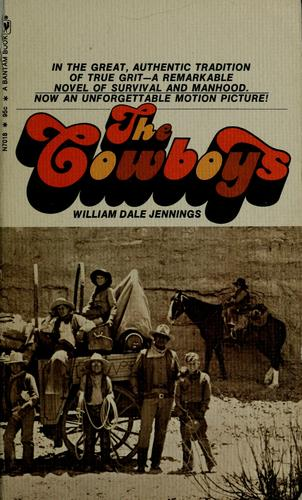
Throughout his long life, he was often involved in one sort of narrative art or another, ranging from working for the Ice Capades organization through working with West Coast regional editions of TV Guide, producing short films (including the intentionally goofy 1963 bicycle-safety film for kids, "One Got Fat", which he wrote and directed, narrated by Edward Everett Horton; kind of an absurdist take on the Ohio State Highway Patrol automobile-safety/bloodbath short films), and among his writings were his three published novels, The Ronin (1968), which he wrote while working for the Ice Capades, The Cowboys (1971, and the basis of the 1972 John Wayne film and subsequent short-lived 1974 television series), and The Sinking of the Sarah Diamond (1974). And only two of his short stories have been published, as far as I can tell, "Children of the Cemetery" in Esquire, while he was still in the service in 1945, and "The Gingerbread Man" in 1954 in F&SF. (How many of his short stories might've been published in various magazines under "undiscovered" pseudonyms is a good question.)

I read "The Gingerbread Man" in one of the first older issues of The Magazine of Fantasy and Science fiction I collected, in 1978, and it has stuck in my mind as a good example of an undeservedly "forgotten" story ever since...a deft, offhanded short that, as I had no way of knowing at first encounter, nor until rereading just now, seems pretty clearly inspired by Jennings's experience with the undercover vice cop who framed him in 1950, transmuted into the kind of suspense story which verges on horror fiction without quite crossing the line, though "Anthony Boucher" and J. Francis McComas's blurb for the story, which suggests it resembles, like certain Edward Lucas White stories, "the direct transcription of a nightmare", is a fair one. (The editors also mistook the story for the first published one by Jennings, perhaps by Jennings being less than enthusiastic about his earlier published work, under his full name.) It can be read here and here...aside from these arguable exceptions (and similar online archiving), to the best of my knowledge it has never been reprinted.

Having just read "Children of the Cemetery" for the first time this afternoon, I have to wonder if this slightly longer first story by Jennings was published in part to have a story from a serviceman in the issue; while it's not a terrible piece, it's rather painfully the work of a not altogether unsophisticated beginning writer, mixing some rather telling critique of the US GIs' attitude toward the Polynesian natives they are observing and interacting with (condescending and racist at best), as well as their surprise at how they deal with some hapless remnants of the Japanese attempted occupation forces who make the mistake of attempting resistance; but everything is ladled on so langorously that even in relatively few pages, it's stilted, and feels not altogether free of the chauvinism it is simultaneously trying to mock. Amusing, if also overgenerous, are the detailed descriptions of the anatomy of the entirely male cast of the story (the natives "hide their women away carefully"), where the gay subtext is no longer altogether subtext, even if no one is described completely flatteringly, whether white, Polynesian or Japanese. Nine years more as a writer tells, in the contrast between these two short stories. This one can be read here. (At least one cartoon in the issue has a[n even] less enlightened "gag" view of US-Polynesian wartime interaction...though even the slight Chester Himes vignette is, unsurprisingly, better reading than the Jennings debut story.)

For more of today's Short Story Wednesdays reviews,                          please see Patti Abbott's blog.

From the FictionMags Index:


Wednesday, August 4, 2021

Short Story Wednesday: stories from Dorothy Parker, Janet Flanner, Kay Boyle, Martha Gellhorn, John Steinbeck, et al.: IT'S A WOMAN'S WORLD: STORIES FROM HARPER'S BAZAAR edited by Mary Louise Aswell (Whittlesey House/McGraw-Hill Book Company, 1944) and THE GIRLS FROM ESQUIRE edited by Frederic Alexander Birmingham (Random House, 1952)

Eight years apart, two anthologies drawn from two roughly comparable gendered magazines, mixtures of fiction, essays and reportage (of a sort), both rather similarly divided into thematic subsections, one book published under wartime austerity (my copy being a Dollar Book Club [Doubleday] edition perhaps heightening that), the other in postwar (at least American) prosperity (two-colored printing within, and with a multicolor illustration on the boards front and back as well as the book jacket); one relatively sober and more or less meant to take women and their estate seriously (even with a sadly unsurprisingly condescending introduction by Philip Wylie, a year after the publication his anti-"Momism" screed, among other matters, in Generation of Vipers--perhaps thrust upon the book by McGraw-Hill's editors...with an eye to the bestseller lists), the other hoping, it seems, to encourage a return to as much condescension toward woman as will still allow for a fun evening and following morning in a swingin' bach-pad with the "girls" (when other terms aren't employed; "women" usually reserved for citations of irritation).  More of the Esquire book is crazy, even for the times.


It's a Woman's World: Stories from
Harper's Bazaar 
edited by Marie Louise Aswell 
(New York, London) Whittlesey House/McGraw-Hill Book Company, Inc.
1944

(OCoLC) 591788573
346 pages ; 24 cm

Foreword by Philip Wylie

Women in Love. 

Nuit Blanche / Colette ; 
The winds / Eudora Welty ; 
Romance / Dorothy Baker ; 
Lappin and Lapinova / Virginia Woolf ; 
Slews of love / Helen Howe ; 
Advice to the little Peyton girl / Dorothy Parker Harper’s Bazaar [v67 #2, February 1933]
The cure / Colette --

Women and children. 
The season of summer / Nancy Hale ; 
Consider the giraffe / Gladys Schmitt ; 
Child and the bird / Margaret Shedd --

Women and war. 
The canals of Mars / Kay Boyle ; 
The rented room / Josephine W. Johnson ; 
Home is a place / Bessie Breuer --

Women's professions. 
Gentlemen prefer blondes / Anita Loos ; 
Fashions in spies / Janet Flanner ; 
Movie star comes to New York / Cecelia Ager ; 
Sister / Margaret Case Harriman ; 
Mother's helper / Dorothy McCleary ; 
Young man in an Astrakhan cap / Edita Morris --

It takes all kinds. 
Love child / Maritta Wolff ; 
Like a field mouse over the heart / Elizabeth Eastman ; 
Late afternoon of a nymph / Victoria Lincoln ; 
The Hepburn girls / Lenore Cotten ; 
Ghostly father, I confess / Mary McCarthy ; 
Caput Mortuum / Edita Morris ; 
Horsie / Dorothy Parker Harper’s Bazaar December 1932
The will / Mary Lavin --

What women do when they are alone / G.B. Stern.

The two Dorothy Parker stories are witty and sad, of course. The latter, "Horsie" is the more cutting, detailing the period a visiting nurse spends with a young, conventionally pretty, wealthily indulged couple and their newborn infant; the young father particularly resents not only having to entertain the nurse at dinner (since these people seem to demand to eat with the owners of the household rather than the help), but simply resents any woman being to him unsightly, unlike his wife, who resents having to have the nurse with her through the bulk of the day...both are particularly put off by her equine face. The little they learn about her and her life doesn't make their sufferance of her disruption of their lives any more pleasant, even when they can invite old friends over for some mocking show and tell or when, impulsively, the husband brings along with his daily exotic flowers for his wife a few commoner flowers for the departing nurse, who is flattered beyond what the young couple thought was likely. Editor Aswell notes that we learn more than perhaps we should about the women in both the Parker stories, with no mention of what we learn of the hosts in this one, which seems an oversight, at best, if one we might suspect could happen in an Harper's Bazaar editorial office. 

Parker's "Advice to the Little Peyton Girl" (who is 19yo, but condescended to by everyone in her life and acts out in a girlishly insecure manner almost, one suspects, as a consequence) is a simpler story, mostly a dialog between Peyton and her elder mentor, almost extravagantly admired by the younger woman for her poise and worldly wisdom, some of it actually wise and worldly, but also no promise of a happier life than the young one is currently facing.

Janet Flanner's "Fashions in Spies" is a breezy nonfiction account of the nature of espionage and the women players at it the 20th Century, as opposed to earlier times when it was mostly a game of courtesans, contrasting the the careers of Lydia Stahl and Mata Hari, and how much better things seemed to go for the former, the better embodiment of what today's successful spy should aspire to.

I've read at best one or two Kay Boyle stories before, and remember liking them, so "The Canals of Mars" seemed inviting, even though its placement in the "Women and War" section didn't promise any surprising sfnal content. The last hours for a couple before his departure on a troop train from Pennsylvania Station, offers carefully improvisational conversational prose between a young woman and man, as they walk through a familiar neighborhood and take in or consider taking in various attractions, including a planetarium show, though she suggests that a screening of Pépé le Moko might be better than observing astronomical renderings of the once-mooted green canals or channels of Mars. Not his first dangerous departure, not her first farewell...they discuss, among other things, memories of their last night before his departure for Casablanca, in the manner of the Garbo film Queen Christina. Elegantly allusive, and grounded.

And C. B. Stern's "What Women Do When They Are Alone", suggested as particularly instructive to male readers, is a nonfiction piece that I suspect even at time of publication related more to what writers do when they are alone, on balance, than it does to what even all Anglophone women in Europe and North America do when on their own, even if many writers didn't worry as much about their knitting nor their weight as many non-writing  women might've.

The story and article synopses/assessments continue after the Esquire anthology's table of contents...


The Girls from Esquire edited by Frederic Alexander Birmingham
New York, Random House (1952)

xii + 308 pages : illustrations ; 24 cm
"With 30 complementing Esquire cartoons"--Upper cover of dust jacket.

Woman : the necessary evil --
Babe : a story / by Bob Patterson --
A snake of one's own : a story / by John Steinbeck 
Esquire v9 #2, No. 51, February 1938 ed. Arnold Gingrich  full text
All for love --Ladies in stripes : an article / by Edward D. Radin --
The silence of Mr. Prendegast : a story / by Stuart Cloete --
About Shorty : a story / by Martha Gellhorn --
Lady of the evening : a true story / by Morris Markey --

Two legs for the two of us : a story / by James Jones --
The convert : a story / by Irwin Shaw --
New York is full of girls : a story / by Joseph Wechsberg --
The woman from twenty-one : a story / by F. Scott Fitzgerald --
The night bus to Atlanta : a story / by Brendan Gill --
The breaking point : a story / by Budd Schulberg --
No end to anything : a story / by Robert Switzer --

The lady speaks her mind --
It was good enough for father : an article / by Ilka Chase --
The secret of love: have American girls forgotten? : an article / by Betty South --
Blueprint for a divorcee : an article / by Mary Jane Shour --
Let him be lord and master : an article / by Cynthia Harris --
What has become of the old-fashioned man? : an article / by Helen Lawrenson --

Women of the world --
Art and Isadora : an article / by John Dos Passos --
The real Ingrid Bergman story : an article / by Laurence Stallings --
Gertrude, alas, alas : an article / by Elliot Paul --
Tears in the ladies room : an article / by Elaine Greene --
The legend of Dorothy Parker : an article / by Richard E. Lauterbach --

Sugar and spice --
What hath God wrought? : an article / by Robert Ruark --
Are husbands helpless? : an article / by Nathanial Benchley --
Heavenly and earthly love : a story / by Ferenc Molnar --
We were just having fun : a story / by F. Hugh Herbert --
What's wrong with our women? : an article / by Leland Stowe --
The savage beast in us : an article / by Paul Gallico --
Seven moments of love : a poem / by Langston Hughes --

Science and sex --
Marriage makes strange bedfellows : an article / by Lawrence Gould --
Have you a mistress? : an article / by Fred C. Kelly --
Do you know your women? : an article / by J.B. Rice, M.D. --
Glandbook for the questing male: with chart / by George Antheil --
She's no longer faithful if--: a survey / by Marcel Desage 

But if Ms. Stern is a bit blithely overconfident of the universality of her claims about women in the Bazaar anthology, what are we to make of Cynthia Harris's "Let Him Be Lord and Master", which confidently puts forth an argument for abusing wives by husbands...just up to the point of regular "shoving her around", mind you...that, say, even Marabel Morgan twenty-odd years later might find more than a little odd, though it does resonate with "John Norman" novels and the like, published during Morgan's heyday and since. Because, after all, "Anyone who has read at all knows that most women are masochists and delight in being dominated and even hurt once in a while if it is done in the right and artistic manner." Harris is apparently a woman, who doesn't suggest this at all humorously, even backhandedly humorously (actual backhanding encouraged), while assuming nearly all women want to be roughed up, at least, during periodic arguments (every two weeks is her prescription) so the women can meekly apologize afterward for their impudence...as opposed to realizing that for every woman who likes some sort of rough sexual roleplay, there's a masochistic man, and men and women and others who like to play both ways, and many who don't want to do this at all...but most of her article is about her resentment of her husband who likes to do some household maintenance chores every night...perhaps a non-playful masochist for sticking with her. Then again, perhaps Harris just knew what would not only sell to the magazine, but what would be reprinted in an anthology from it.

I think this might be the highest peak of blithe berserkness in the book, but others are scaling similar heights. 

Happily, John Steinbeck in "A Snake of One's Own" tracks closer to sanity even in offering us a short suspense story involving an essentially thoughtless biochemist, who does terrible things to starfish, rats and others, and the enigmatic young woman who visits his low-budget lab one day, and basically freaks him out. She seems to enjoy the deaths of the animals he's causing, and seeking to hurry the process along, but not in any definitive way...mostly what she clearly wants is ownership of his largest rattlesnake, but for no clear purpose, other than to simply own it (while leaving it with him in his lab). The young scientist is utterly unequipped to determine if she has some sort of death fetish or simply enjoys behaving oddly to leave him befuddled...if the latter, she succeeds. It's a minor if deftly-told Steinbeck, not quite the oddball classic that his horror story about sentient chewing gum is.

While the only woman writer to be included in the fiction pages, Martha Gellhorn (too often known mostly as the woman who could put up with Ernest Hemingway the most) contributes what could be memoir rather than fiction in "About Shorty", an account of a young German woman who seems hapless but usually cheerful as she manages to weave her way through Europe and specifically the Spanish Civil War and the early years of World War II, apparently only to disappear. Gellhorn has sympathy for her, but consistently notes that she's the kind of innocent who seems to bring more trouble to herself and others in war zones particularly than anyone should...so, another example of a woman scorned in the more general way. Esquire doesn't make a great case for itself with this volume at all, so far, despite the wealth of talent involved, even down to the cartoon selection, with minor examples of Syd Hoff's and Gardner Rea's work and abysmal examples by Barney Tobey and a few others, and the only multiple contributor in the volume to get more than one laugh is B. Sergmund. I certainly hope to find better among the fiction at least.




For more of this week's Wednesday stories, please see Patti Abbott's blog (and also see Megan Abbott's new novel, The Turnout)