
 Two good examples of painless education in fantastic fiction publishing, even if neither was given quite the support they could have used. Leo P. Kelley, as far as I know, was never a teaching academic, but nonetheless was tapped by McGraw-Hill to edit three volumes in their 1970s textbook series Patterns in Literary Art; they issued this one along with Fantasy: The Literature of the Marvelous (also 1973) and Themes in Science Fiction (1972), all three interesting selections of classics, chestnuts and amusing choices of a more unlikely sort, but not unreasonably so. Kelley was primarily a speculative fiction writer, while also an advertising copywriter for most of his daily bread, from 1955 into the early 1970s, and in later years turned most of his fiction-writing attention to western novels. Mike Ashley has been a notable anthology editor, in historical fiction, crime fiction and other matter as well as sf and fantasy, but might be even better known as an historian of sf and fantasy, crime fiction and also of fiction magazine publishing generally; he has also been active in local politics in his native England. Ashley's book of lists, by no means focused exclusively on sf but very much also on fantasy and horror, was first published in Britain a year before its (I suspect) rather less-well-copyedited and -produced US edition (I've never seen the UK original), and after his first major work on the history of sf magazines had been published in both countries. Ashley's colleagues Malcolm Edwards and Maxim Jakubowski would offer The Complete Book of Science Fiction and Fantasy Lists (reprinted in the US as The SF Book of Lists) in 1983, theirs published in both countries in the same year, thus putting the two books head to head in their US editions. Both the Edwards/Jakubowski book and the further Kelley texts might be discussed in future FFB essays as I dig them back out of storage boxes; the McGraw-Hill series included at least one other volume of considerable fantastic-fiction interest, Heaven and Hell edited by Joan D. Berbrich. Both books are much of their time, as commercial properties...the Kelley an example of the new freedom and diversity in literature-textbook publishing aimed at high school and younger college students in the 1970s particularly, the Ashley and its companion volume part of the wave of books, including several direct sequels to the immensely popular The Book of Lists (1977) assembled by Irving Wallace and his daughter Amy Wallace and son (who reverted to the pre-Ellis Island version of the family name) David Wallechinsky; Amy Wallace would be among the many to produce more specific Books of Lists, including compiling (with Dick Manitoba) The Official Punk Rock Book of Lists (2007) and (with Scott Bradley and Del Howison) The Book of Lists: Horror (2008).
From ISFDB:
- Publication: The Supernatural in Fiction
- Editor: Leo P. Kelley
- Date: 1973-00-00
- ISBN: 0-07-033497-8 [978-0-07-033497-7]
- Publisher: McGraw-Hill
- Pub. Series: Patterns in Literary Art
- Price: $3.96
- [i] • Introduction (The Supernatural in Fiction) • essay by Leo P. Kelley
- 1 • Witches, Werewolves and Vampires - The Terrible Tribe • essay by Leo P. Kelley
- 3 • Medea (excerpt) • play by Euripides
- 4 • Share Alike • (1953) • short story by Jerome Bixby and Joe E. Dean
- 15 • The Amulet • (1959) • short story by Gordon R. Dickson
- 30 • The Werewolf (excerpt) • (1839) • short fiction by Frederick Marryat (variant of The Werewolf (excerpt: chapter 39 of The Phantom Ship))
- 44 • The Mark of the Beast • (1890) • short story by Rudyard Kipling
- 56 • Homecoming • [The Elliott Family] • (1946) • short story by Ray Bradbury (variant of The Homecoming)
- 69 • Gods, Devils and Damnations - From the Darkness Next Door • essay by Leo P. Kelley
- 71 • The Underworld (excerpt) • (unknown) • verse by Virgil
- 72 • The Jam • (1958) • short story by Henry Slesar
- 76 • The Kings of the Sea • [Brigadier Ffellowes] • (1968) • novelette by Sterling E. Lanier
- 93 • Flies • (1953) • short story by Isaac Asimov
- 100 • Young Goodman Brown • (1835) • short story by Nathaniel Hawthorne
- 112 • None Before Me • (1949) • short story by Sidney Carroll
- 122 • Burnt Toast • (1955) • short story by Mack Reynolds
- 131 • Ghost Stories - The Haunted House of Man's Mind • essay by Leo P. Kelley
- 132 • from: The Nun's Priest's Tale (excerpt) • (1387) • verse by Geoffrey Chaucer
- 134 • The Haunted Woodshed • (1961) • short story by Harold R. Daniels
- 144 • The Furnished Room • (1904) • short story by O. Henry
- 150 • Was It a Dream? • (1903) • short story by Guy de Maupassant (trans. of La morte 1887)
- 155 • The Ghost Ship • (1912) • short story by Richard Middleton (variant of The Ghost-Ship)
- 164 • Hey, Look at Me! • (1962) • short story by Jack Finney
- 176 • Running Wolf • (1920) • novelette by Algernon Blackwood and Wilfred Wilson [as by Algernon Blackwood]
- 193 • Spells and Sorcery - Odd Doings and Strange Dooms • essay by Leo P. Kelley
- 194 • The Tempest (excerpt) • (unknown) • play by William Shakespeare
- 195 • It's a Good Life • (1953) • short story by Jerome Bixby
- 211 • The Canvas Bag • (1955) • short story by Alan E. Nourse
- 221 • The Monkey's Paw • (1902) • short story by W. W. Jacobs
- 231 • The Facts in the Case of M. Valdemar • (1845) • short story by Edgar Allan Poe
- 239 • The Dark Door • (1971) • short story by Leo P. Kelley
- 253 • Things - The Bizarre on the Human Horizon • essay by Leo P. Kelley
- 254 • from: The Book of Ezekiel • (unknown) • short fiction by Ezekiel
- 255 • The Lonesome Place • (1941) • short story by August Derleth
- 262 • What Was It? • (1859) • short story by Fitz-James O'Brien
- 273 • The Rocking-Horse Winner • (1926) • short story by D. H. Lawrence
- 287 • The Bagman's Story • (1837) • short story by Charles Dickens
- 299 • Dr. Heidegger's Experiment • (1837) • short story by Nathaniel Hawthorne
- 308 • The Outsider • [Dream Cycle] • (1926) • short story by H. P. Lovecraft
Far more inclusive, even given the thus slightly misleading title, the Ashley compendium is good-natured, careening cheerfully from the factual to the arguably factual to the utterly opinionated (including sever writers' choices of their own best, and in Isaac Asimov's case also his worst, work and those other writers most influential on them and/or the larger literary world). For all that it is illustrated, the reproduction is sometimes poor, exclusively in black and white in the text of the book (color printing in 1983 still not as comparatively inexpensive as it is today), giving some of the author photographs an almost cartoonish look and the cover reproductions muddy, and the headers to most lists, while rather well set-off from the rest of the text, are also at times poorly copy-edited or typo'd: Richard Lupoff's "Alternative Hugos" list is carefully revised incorrectly into "Alternative Heroes" in both the header on its page and in the rather detailed, but page-number-free, table of contents. Nonetheless, these examples of bad publishing practice don't detract too much from the enjoyment of the arguments one can have with the choices made (Baird Searles's selection of the best fantasy films seems much more sound to me than his selection of the best sf films, for example), the parameters accepted (in selecting the most valuable collectors' items among published books, for example) and the like, while also enjoying the assessments of those not so often heard from even in these days of the clickbait list and databases of opinion, such as Mary Elizabeth Counselman's choices of notable Weird Tales stories, or even Robert Bloch's selection of the best Lovecraft fiction. Not a few of the factual matters discussed have since been superseded, of course (tallies of awards won, largest sales figures, most issues of magazines published) , but that is inevitable, in a book such as this published when there was no quickly-accessibe web, and magazines and fanzines, and newsletters and newspapes when they would cover such matters, were the only sources for this kind of information...thus the vogue for this kind of book.
One kind of list where a blog has a Definite advantage...even given these would not be my choices, even from the artists in question (well...maybe the Brown Startling cover...), and I wish di Fate had given a bit of description of why he chose these particular works:
Vincent di Fate's 10 favorite fiction magazine covers:
Astounding Stories, December 1934: Howard V. Brown:

Astounding Science Fiction, October 1939, Hubert Rogers:

Startling Stories, November 1939, Howard V. Brown:

Astounding Science Fiction, May 1951, Hubert Rogers:

Space Science Fiction, September 1952, Earle K. Bergey:

Astounding Science Fiction, October 1953, Kelly Freas:

Analog, September 1962, Yura "George" Solonevich:

Analog, May 1966, John Schoenherr:

Analog, December 1967, John Schoenherr:

Analog, July 1975, John Schoenherr:

Both books worth seeking out, and inexpensive, from the usual sources.
ISFDB lists the three Kelley anthologies in the Patterns in Literary Art series (and the Contento/Locus Index lists only the fantasy and the sf volumes), but the Berbrich anthology Heaven and Hell is detailed among the indices I've seen only in WorldCat and derivative services:
General introduction.
Heaven and hell and all that:
Cynewulf. The last judgment.
Parkes, F. E. K. African heaven.
Lester, J. Stagolee.
Maier, H. What price heaven?
Goldin, S. The last ghost.
Laurance, A. Chances are.
Priestley, J. B. The gray ones.
Levertov, D. The dead.
The paths of good and bad intention:
France, A. Our lady's juggler.
Winslow, J. M. Benjamen burning.
Straley, D. B. The Devil grows jubilant.
Tolstoy, L. How the Devil redeemed the crust of bread.
Beerbohm, M. The happy hypocrite.
Davidson, J. A ballad of hell.
Bargains with the Devil:
Anonymous. Ballad of Faustus.
Benet, S. V. The Devil and Daniel Webster.
Arthur, R. Satan and Sam Shay.
Masefield, J. The Devil and the old man.
Collier, J. Thus I refute Beelzy.
Elliot, B. The Devil was sick.
Reward and retribution:
Bierhorst, J. The white stone canoe.
Johnson, J. W. Go down, Death!
Dante. The Inferno.
Irving, W. The Devil and Tom Walker.
Hesiod. Right and wrong.
Frost, R. A masque of reason.
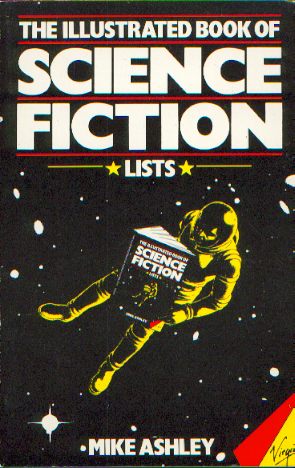
And here's the cover of the UK original of the Ashley volume:
For more of today's books, please see Patti Abbott's blog.


