Showing posts sorted by relevance for query william campbell gault. Sort by date Show all posts

Wednesday, August 25, 2021

William Campbell Gault; Jack Ritchie; Talmage Powell: football fiction from PLAYERS' CHOICE, (nominally) edited by Gale Sayers, Dave Robinson, Howard Mudd and Charley Gogolak (Whitman/Western Publishing 1969) Short Story Wednesday

selected by Dave Robinson, Howard Mudd, Gale Sayers, and Charley Gogolak; illustrated by Ken Shields
Contents:
All-American Washout  (originally published as "Tinsel Tailback")/ William Campbell Gault --
Dark, Dank, and Dismal / Wade H. Mosby 
Boys’ Life v51 #10, October 1961--
That's My Boy / Jerome Brondfield Liberty v23 #47, November 23, 1946--
The Fullback from Liechtenstein / Jack Ritchie --
A Time for Triumph / Talmage Powell --
Dirtiest Game of the Year / Booton Herndon 
The Saturday Evening Post v225 #16, October 18, 1952.


Three stories, for three widely divergent markets, by three writers who eventually became, at least, far better known for their crime fiction than their sports fiction. For William Campbell Gault, that might not've been his first choice for career path, as he was one of the most widely-respected of sports fiction writers at mid-century...his story in this book was taken from the September 1950 issue of the pulp magazine Fifteen Sports Stories...as the sports pulps dwindled (with this issue, the magazine began running a reprinted piece or several in each number), no digest or other sports-fiction magazines came in to take up their markets, and the presence of sports fiction became somewhat less frequent in the men's and general-interest magazines, Gault began writing, voluminously, sports novels for the burgeoning Baby Boom YA market...while also keeping a hand in with crime fiction, one of his most popular series characters being an ex-pro football player, Brock Callahan. 

In recent decades, there have been several little magazines devoted to sports fiction, particularly to baseball fiction and poetry, albeit a few eclectic ones as well, and ESPN Magazine has had at least one fiction issue. Very very sporadically, Sports Illustrated has run some fiction over the last half-century (not counting photo-retouching).

Talmage Powell's story was published in a 1952 issue of the US Roman Catholic missionary-support magazine Extension, which is still published but with no fiction content so-labelled; the story deals perhaps a bit heavy-handedly with ethical concerns, both for a football-star college student and those who do his schoolwork for him, and the faculty the star player interacts with, as they collectively wrestle with pressures to cheat and/or knuckle under, not least to a once golden-boy graduate and overbearing benefactor to the college in question, whom Powell is clearly happy to have eventually referred to as Dick Manley. 

While Jack Ritchie's story was rather obviously tailored for its market, the November 1963 issue of Boys' Life, one of the most reliable markets for sports fiction in the latter half of the 1900s in the US. It involves a high-school football team, and the rather supercilious but effective motivational analysis a European exchange student, and soccer star back home, manages to apply to his US football teammates. One of whom is also a Manley, albeit not a Dick.

Three decent stories, to say the least, even if the Gault might be drowning in details of the game (and its slang and argot) for those in a less passionate readership than a sports-fiction pulp might serve; the Powell is far lighter on the gridiron chat per se, if also a bit more melodramatic (as is Powell's wont) in the manner it lays out its tale, and the Ritchie is also rather typical of its author in the reasonably sly manner in which the foreign-exchange antagonist of sorts sizes up and re-motivates his American teammates. The Gault is unsurprisingly the best and most adult of them, clearly by design, and certainly with the intended audiences in mind. 

Interesting example of Whitman/NFL cross-promotion in 1969; I could see Sayers, at least, feeling reasonably at home in picking out stories, perhaps all four were, though I have to wonder who at Western Publishing might've culled a longlist for them to pick from. 


For more of today's Short Story Wednesday posts, please see Patti Abbott's blog.


Friday, December 20, 2013

FFB: William Campbell Gault: uncollected short stories (online)


William Campbell Gault, the much-admired writer of mostly crime fiction by the end of his career, first made his mark as a sports-fiction specialist in the pulps of the 1940s and into the '50s...while also writing crime fiction, sf and no doubt other work (ISFDB apparently misunderstands the eventual agent Larry Sternig to have been a Gault pseudonym, as opposed to friend and occasional collaborator, in their early years together; Roney Scott was Gault's most famous penname).

As I've mentioned before here, I first read Gault's work in a couple of auto-racing anthologies, one (High Gear) all fiction, the other, The Great Auto Race and Other Stories of Men and Cars, a mixed group of short stories and nonfiction. Not too long after, I started finding the YA sports novels Gault wrote for his primary bread and butter by the end of the 1950s and through the next decade, until for some reason the market began to turn away from those (Bill Crider is probably correct in suggesting he was important in getting Gault to start writing crime fiction again, some years later). I read a few of those, and they helped give me further evidence that even though I wasn't all that interested in sports per se, that didn't mean great sports fiction wasn't worth looking into. (I preferred the short fiction he'd written for adult audiences, but the YA books were not too shabby.) And when, a few years later on (newly a sophomore at my second high school, the one with an impressive library for even a wealthy private high school), I was first reading Damon Knight's collection of critical essays and book reviews, In Search of Wonder, I came across his passage about how he had a positive antipathy to sports, and had found Gault's sf to be weak tea, but that the man was Hell on Wheels in the sports fiction field (where Knight was working as an editor at the Popular Publications line of pulps--Argosy, the Dime titles such as Dime Detective and Dime Sports, etc., and had duties across the range of magazines they published), the best he'd read, and that Knight liked everything about that fiction, except the sports element.

Now, what's a pity is that no one has ever bothered to collect Gault's sports fiction in any sort of best-of nor representative volume, in the manner of Bill Pronzini's Gault collection Marksman and Other Stories, collecting some of the best of his crime fiction. The sports stories remain buried in the back pages of the sports and general-interest pulps, and probably a few other magazines (Boy's Life? Playboy? Argosy after it went over to being the downmarket Esquire?)...but several are online these days, and you can enjoy at least the following, as I have had over this very busy week (where I've had no time to read nor reread any of Robert Barnard's work, alas...a man who was the same age as my parents when he died this year...).
Gault's initials typo'd.

Among those I've picked up over the last week:
"Sweet Chariot" from Argosy, 2 August 1941--a solid, early story of dirt-track auto racing. short and pretty sweet and swinging, indeed.
"A Colt for the Carlton" from Short Stories, August 1949--a longer and somewhat more complex story about aspirants on the less financially secure edge of the horseracing business. (Also, from the period where Dorothy McIlwraith was impressively editing both Weird Tales and Short Stories, though given the perceived manly audience for the latter, she was always signed as "D. McIlwraith" on the masthead.)

Romance and adrenaline go hand in hand (or hand on steering wheel and hand on reins) in these two stories, along with a easy mastery of the argot of the respective sports--I still need to look up a few terms from the horse-racing story, but it's not intrusive and one picks up what's necessary from context...Gault's prose is sometimes dismissed or at least underrated in some quarters, but he actually (at very least in most of his work I've read) is a lean writer without making a fetish of that, quite capable of turning a deft phrase and with an excellent eye for characterization in short focus. Ed, the jockey protagonist of "Colt," for example, is a young man of some emotional limitation, but not unaware of how to manipulate a situation non-maliciously, and not the kind of slightly-off-center character (without being at all a caricature) that the uninformed are likely to assume they could find in a pulp story...and neither of these stories is Gault at his absolute best, but are fine examples which reward the reading. As some more knowledgeable critics had noted, Gault is (at least) almost always good...and often better than that. (The first Gault crime novel I read was the version of the fine Don't Call Tonight in the Mercury Mystery issue above...reissued in book form as End of a Call Girl...not the kind of title his YA sports novels featured often...)

from WorldCat:


The great auto race, and other stories of men and cars 
Editors: Ruth Christoffer Carlsen (also illustrator); G Robert Carlsen 
Publisher: New York : Scholastic Book Services, ©1965.

Contents:
The great auto race, by T. Mahoney
Old enough to drive, by S. McNeil
Wizard on wheels, by L.M. Nash
Rallye ride, by C.H. Rathjen
The hustling dream that ran on steam, by L.M. Nash
Won by inches, by M. Campbell
Greatest driver of them all, by Ken Purdy
The dream, by W.C. Gault


For actually book-length manuscripts for this week, please see Patti Abbott's blog.


Friday, February 1, 2013

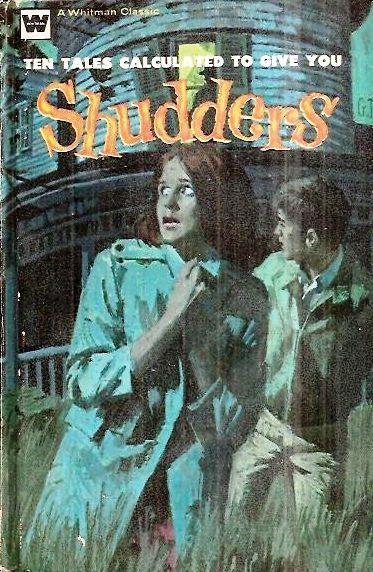
FFB: TEN TALES CALCULATED TO GIVE YOU SHUDDERS edited by Ross Olney (and its sfnal companion), Whitman 1972

Whitman, as an expression of Western Publishing, was certainly omnipresent in the mid-price and discount department stores, and the drugstores, of my youth, with their comics and even more notably with their usually brightly-colored, cheaply produced books, which, like Grosset and Dunlap's various series books for children (Nancy Drew, the Hardys) but slightly less well-bound, had no dust jackets, but full-color illustrated board covers. I owned copies of at least some of their classics for children (such as Anna Sewell's Black Beauty, a book which did defeat me as a youth in its dullness and dreariness in the early going), Big Little Books (the one I remember best was Woody Woodpecker and the Meteor Menace written by Don Christensen, which was my first encounter with the concept of a Grand Vizier, and of course an evil one), and some original items (usually media-driven...I had a hand-me-down copy of Doris Schroeder's Annette and the Mystery at Smuggler's Cove, part of that veteran screenwriter's Funicello book series commissioned by Disney and Western). Among the last were two rather good entries edited by Ross Olney.

Ross Olney has been mostly a writer of YA materials, and while I'm not sure I ever read any of his books, I'm particularly surprised I didn't come across (if I didn't) either of his two anthologies here, the horror item even moreso than the earlier sf volume...but not too many libraries carried Whitman books, seen as downmarket and disposable (and in severe need of rebinding if they were to survive at all in the circulating environment). I might've not taken too seriously any casual encounter with Shudders, since who expected a Whitman anthology to contain much of compelling interest, not Safe for the Kiddies? But, if so, I was mistaken, as a glance at the Weird Tales-heavy table of contents might suggest:

Ten Tales Calculated To Give You Shudders (Whitman 1972) (indices courtesy ISFDb:)
It's notable that relatively few Whitman books have introductions, much less long ones, and more notable yet the lack of watering-down this assembly presents to the young reader; the majority of these are chestnuts, though the other near-half weren't widely anthologized, and most of them had also been published in other YA anthologies over the previous decade, though not all (a lot of overlap with Robert Arthur's "Hitchcock" anthologies aimed at adults and for the YA market, for example). I'd forgotten I'd encounterd the FB Long story elsewhere, for example (in a "Hitchcock Presents:" volume, and in another Robert Arthur horror antho for young readers) (and it's always amusing to be reminded of Burrage's initial pseudonym, "Ex-Private X"). The Anderson was from a then fairly-recent Alfred Hitchcock's Mystery Magazine issue, and beginning and ending the book with Robert Bloch (and these Bloch stories, particularly "Sweets") wouldn't've hurt my feelings any as a young reader. Olney is particularly an aficionado of cars and auto racing, hence the choices of these particular Jacobi and Wakefield stories, at least. 

Whitman had taken a slightly less impressive, but still good and only slightly idiosyncratic, science fiction anthology from Olney previously, with two from William Campbell Gault in that book...Gault, of course, is best remembered today for his crime fiction, but was a fairly consistent if rarely exceptional contributor to sf magazines, and one of the great stars (if not the greatest) of the sports-fiction magazines (and made much of his money in the 1960s from his YA sports novels), and I suspect Olney was particularly fond of Gault's auto-racing fiction...


Tales of Time and Space (Whitman 1969)
I'm very certain I never encountered the sf anthology in my early reading, and still wonder if saw and simply never got around to the horror book (the first edition of which is proud to note that it's published on recycled paper, and that paper is of a better grade than that used on the Whitman books I recall above--I wonder if this was a shortlived upgrade in the production process generally of these books)...all told, either of these books wouldn't be the worst introduction to their fields for young readers still (if not quite up to the Robert Arthur "Hitchcock" anthologies, or some of the other landmarks I've reviewed previously).

This week's FFB list of links is being assembled by Evan Lewis at his Davy Crockett's Almanack of Mystery, Adventure and the Wild West (speaking as we have of personages caught up in the Disney machines), and will be hosted here again next Friday, with one more pass through Evan's and then my blogs before Patti Abbott returns to hosting them. 

Friday, November 4, 2011

FFB: THE WESTERN HALL OF FAME and THE MYSTERY HALL OF FAME ed. Bill Pronzini, MH Greenberg (& Chas. Waugh), HIGH GEAR ed. Evan Jones

Some quick takes this week, but nonetheless some important books, the first one at least to me.
The first edition.

High Gear was the first anthology of sports fiction I read, as a kid; my father was a (mostly) amateur auto-racing driver (mostly sports cars, both track and auto-cross racing--the latter long-term road-racing, sometimes with my mother as navigator) in Alaska in the early and mid 1960s, and the Bantam Pathfinder edition of this anthology presumably caught his eye at the racks or someone else's eye who thought it would be a good gift. Certainly it was to me...it was my first encounter with the fiction of William Campbell Gault, William F. Nolan, John D. MacDonald, William Saroyan (beating out first exposure to My Name is Aram by a year or two), war-correspondent legend Bill Mauldin and some guy named Steinbeck; it wasn't my first experience with Thurber, but close, as well as with such sports-fiction specialists (along with Gault) as Ken Purdy and Henry Gregor Felsen. I don't know anything about this Evan Jones (there seem to be, possibly, several active in the literary world in the last century) except that he also seems to have edited some western and otherwise frontier-oriented anthologies...and that he had excellent taste as an editor here.

(High Gear and The Western Hall of Fame contents courtesy the Contento indices)
High Gear ed. Evan Jones (Bantam Pathfinder EP32, Jul ’63, 45¢, 184pp, pb); Reissue (original: Bantam, Mar ’55).

1 · First Skirmish · Henry Gregor Felsen · ss, 1954
16 · Change of Plan · Ken Purdy · ss Atlantic Monthly Sep ’52
23 · Dirt-Track Thunder · William Campbell Gault · ss Argosy, 1946
38 · The Ragged Edge · William F. Nolan · ss Sports Car Journal, 1957
52 · The Affair of the Wayward Jeep · Bill Mauldin · ss The Saturday Evening Post Jun 27 ’53
68 · Elimination Race · John D. MacDonald · ss Colliers Sep 13 ’52
83 · Smashup · James Thurber · ss New Yorker Oct 5 ’35
89 · Head-On · Robert Switzer · ss Esquire Feb ’53
94 · Hearse of the Speedway · Peter Granger · ss Esquire, 1936
105 · 1924 Cadillac for Sale · William Saroyan · ss, 1948
110 · Money on Morgan · Robert Westerby · ss Esquire, 1938
117 · The $20,000,000 Decision · Cameron Hawley · ss Colliers Jan 22 ’54
136 · Throttle Shy · Frank Harvey · ss Argosy Sep ’52
150 · The Phantom Flivver · Frank Luther Mott · ss The Saturday Evening Post Jan 28 ’50
161 · A Model T Named “It” · John Steinbeck · ss Ford Times Jul ’53
165 · The Magnificent Torpedo · Dean Evans · ss Argosy Oct ’51
178 · Flags in Castelfiorentino · Francis Steegmuller · ss New Yorker, 1951

A rather blurry image of the Pathfinder reprint edition my father had, which he's given to me.

The Western Hall of Fame ed. Bill Pronzini & Martin H. Greenberg (William Morrow and Co. 0-688-02220-0, 1984, $17.95, 376pp, hc, cover by Terry Fehr) [Western]

5 · Introduction · Bill Pronzini & Martin H. Greenberg · in
11 · The Blue Hotel · Stephen Crane · nv Colliers Nov 26, 1898
45 · The Notorious Jumping Frog of Calaveras County · Mark Twain · ss, 1867
53 · The Outcasts of Poker Flat · Bret Harte · ss Overland Monthly Jan, 1869
67 · An Afternoon Miracle · O. Henry · ss Everybody’s Magazine Jul ’02
81 · Tappan’s Burro · Zane Grey · nv Ladies Home Journal Jun ’23
131 · Wine on the Desert · Max Brand · ss This Week Jun 7 ’36
141 · Stage to Lordsburg · Ernest Haycox · ss Colliers Apr 10 ’37
159 · A Day in Town · Ernest Haycox · ss Colliers Jan 1 ’38
177 · The Indian Well · Walter Van Tilburg Clark · ss, 1943
197 · A Man Called Horse · Dorothy M. Johnson · ss Colliers Jan 7 ’50
215 · Outlaw Trail · S. Omar Barker · ss The Saturday Evening Post Jan 3 ’59
231 · Blood on the Sun · Thomas Thompson · ss The American Magazine Jun ’54
249 · Stubby Pringle’s Christmas · Jack Schaefer · ss (YA chapbook, Houghton Mifflin, 1964)
265 · The Winter of His Life · Lewis B. Patten · ss The Colorado Quarterly, 1953
275 · Isley’s Stranger · Clay Fisher · ss (Legends and Tales of the Old West, edited by S. Omar Barker for WWA, Doubleday 1962)
309 · Lost Sister · Dorothy M. Johnson · ss Colliers Mar 30 ’56
323 · Paso Por Aqui · Eugene Manlove Rhodes · nv The Saturday Evening Post Feb 20 ’26 (+1)

What's notable to me in this anthology, with its stories chosen by polling the members of the Western Writers of America, with a simplified Australian ballot (essentially, please name your choice for best western short story ever, and your four or so [more if you like] other suggestions for the anthology) is in who isn't in the book...such younger writers as Joe Lansdale and Loren Estleman were still establishing themselves in 1983-84, but the absence of the Els--Elmer Kelton and Elmore Leonard--seems a bit odd, though perhaps their stars have risen among their peers in the last quarter-century. (Old favorite of mine Shirley/Lee Hoffman barely wrote any short fiction in the western field, pretty much going straight into the novels with The Valdez Horses and her first-novel Spur; rather comparable to Samuel Delany's entry into the sf scene.) Also, and even more surprising to me, is that not a damned one of these stories was first published in a western-fiction magazine, pulp, digest or otherwise, though the "Clay Fisher" story was apparently first published in the "1962 Doubleday WWA anthology," as the Spur Awards page on the WWA site puts it (not bothering to name the anthology!--though Pronzini and Greenberg fail to do so, as well, in the copyrights detail page). I've just received this book, so haven't yet had the opportunity to go through it...though it does look inviting, save the Zane Grey story (which, I'm amused to note, was first published in The Ladies Home Journal...given the machismic anxiety of some western readers, I'm sure that datum wouldn't help, but of course Grey, in the manner of Stephen King, wrote badly enough on a regular basis to transcend the usual audiences for his kind of fiction at the time...and perhaps, as I occasionally am with King, I'll be pleasantly surprised by this novella).


(courtesy WorldCat)
The Mystery Hall of Fame.
New York : Morrow, 1984
edited by Bill Pronzini; Martin Harry Greenberg; Charles Waugh; from polling of the Mystery Writers of America.
467 pp. ; 22 cm.

Contents: The purloined letter / Edgar Allen Poe --
The adventure of the speckled band / Sir Arthur Conan Doyle --
The oracle of the dog / G.K. Chesterton --
The monkey's paw / W.W. Jacobs --
The problem of cell 13 / Jacques Futrelle --
The hands of Mr. Ottermole / Thomas Burke --
The two bottles of relish / Lord Dunsany --
The gutting of Couffignal / Dashiell Hammett --
Accident / Agatha Christie --
Red wind / Raymond Chandler --
Rear window / Cornell Woolrich --
The house in Goblin Wood / John Dickson Carr --
Don't look behind you / Fredric Brown --
The nine mile walk / Harry Kemelman --
The specialty of the house / Stanley Ellin --
Love lies bleeding / Philip MacDonald --
Lamb to the slaughter / Roald Dahl --
No parking / Ellery Queen --
The oblong room / Edward D. Hoch --
Sweet fever / Bill Pronzini.

Now, this selection seems less surprising, though to find Kemelman muscling past the likes of Ross Macdonald, or John D. McD for that matter, seems not so much a gross injustice as a product of the time of the polling. However, as wonderful a story as W. W. Jacobs's "The Monkey's Paw" is, it has essentially no business being in this book...as opposed to the Silverberg and Greenberg The Horror Hall of Fame. The Pronzini was polled in, and published here over Pronzini's objection (a jusst case of modesty overruled). There is perhaps one too many classic stories here of murder and eating the evidence, but the gimmick was pretty irresistible, and the stories are indeed classics (though John Collier's "A Touch of Nutmeg Makes It" might still be the most insidious of this class among the early stars). (Also notable to me is the number of typos in some WorldCat listings...fixed above...) Another recent purchase (simultaneous, actually), but I've read more of the selections above before, and don't actively dislike the work of any of the writers collected here, so expect to have a more familiar good time going through this one.

For more of this week's books, please see Patti Abbott's blog.

And, a late bulletin: it seems that, even as Robert Silverberg has edited or co-edited two poll-driven Fantasy Hall of Fame volumes, that Dale Walker (again with the WWA polled? Yes, as it turns out) produced a 1997 Western Hall of Fame (index from Contento):


The Western Hall of Fame Anthology
ed. Dale L. Walker (Berkley 0-425-15906-X, Dec ’97, $5.99, 268pp, pb) [Western]

vii · Introduction · Dale L. Walker · in
xi · Author Notes · Dale L. Walker · ss
1 · The Defense of Sentinel · Louis L’Amour · ss 5 Western Novels Magazine Oct ’52
11 · Gun Job · Thomas Thompson · ss Colliers Feb 28 ’53
33 · The Luck of Roaring Camp · Bret Harte · ss Overland Monthly Aug, 1868
45 · The Blue Hotel · Stephen Crane · nv Colliers Nov 26, 1898
77 · To Build a Fire · Jack London · ss The Youth’s Companion May 29 ’02
95 · The Burial of Letty Strayhorn · Elmer Kelton · ss New Trails, ed. John Jakes and Martin H. Greenberg, Doubleday, 1994
109 · Hell on the Draw · Loren D. Estleman · ss The New Frontier, ed. Joe R. Lansdale, Garden City, NY: Doubleday, 1989
125 · A Horse for Mrs. Custer · Glendon Swarthout · ss
145 · The Face · Ed Gorman · ss The Best Western Stories of Ed Gorman, Swallow Press, 1992
159 · Candles in the Bottom of the Pool · Max Evans · ss, 1973
189 · The Shaming of Broken Horn · Bill Gulick · ss The Saturday Evening Post Feb 13 ’60
207 · No Room at the Inn [Sabrina Carpenter; John Quincannon] · Bill Pronzini · ss Crime at Christmas, ed. Jack Adrian, Equation, 1988
221 · Geranium House · Peggy Simson Curry · ss Frontiers West, ed. S. Omar Barker, Doubleday, 1959
233 · Three-Ten to Yuma · Elmore Leonard · ss Dime Western Magazine Mar ’53
249 · The Tin Star · John M. Cunningham · ss Colliers Dec 6 ’47
267 · Permissions · Dale L. Walker · ms

--that certainly redresses some of the slights of the first set...while adding some more! At least this one (and the second Silverberg) could've been, as the SFWA sf HOF volumes were, tagged Volume 2...

...and, for the hell of it, here's the comparison of the two Fantasy Hall of Fames, the first from a World Fantasy Convention attendees poll, the second from a SFWA poll a decade and a half later:

The Fantasy Hall of Fame ed. Robert Silverberg & Martin H. Greenberg (Arbor House 0-87795-521-2, Oct ’83, $16.95, 431pp, hc)

9 · Introduction · Robert Silverberg · in
13 · The Masque of the Red Death · Edgar Allan Poe · ss Graham’s Lady’s and Gentleman’s Magazine May, 1842
21 · An Inhabitant of Carcosa · Ambrose Bierce · ss San Francisco Newsletter Dec 25, 1886
26 · The Sword of Welleran · Lord Dunsany · ss The Sword of Welleran and Other Stories, London: G. Allen, 1908
42 · The Women of the Wood [earlier version of “The Woman of the Wood”, Weird Tales Aug ’26] · A. Merritt · nv The Fox Woman & Other Stories, Avon, 1949
76 · The Weird of Avoosl Wuthoqquan · Clark Ashton Smith · ss Weird Tales Jun ’32
86 · The Valley of the Worm [James Allison (past lives of)] · Robert E. Howard · nv Weird Tales Feb ’34
110 · Black God’s Kiss [Jirel of Joiry] · C. L. Moore · nv Weird Tales Oct ’34
143 · The Silver Key [Randolph Carter] · H. P. Lovecraft · ss Weird Tales Jan ’29
157 · Nothing in the Rules · L. Sprague de Camp · nv Unknown Jul ’39
191 · A Gnome There Was · Henry Kuttner · nv Unknown Oct ’41
221 · Snulbug · Anthony Boucher · ss Unknown Dec ’41; F&SF May ’53
239 · The Words of Guru [as by Kenneth Falconer] · C. M. Kornbluth · ss Stirring Science Stories Jun ’41
248 · Homecoming · Ray Bradbury · ss Mademoiselle Oct ’46
263 · Mazirian the Magician [Dying Earth] · Jack Vance · ss The Dying Earth, Hillman, 1950
282 · O Ugly Bird! [John] · Manly Wade Wellman · ss F&SF Dec ’51
296 · The Silken-Swift · Theodore Sturgeon · nv F&SF Nov ’53
318 · The Golem · Avram Davidson · ss F&SF Mar ’55
325 · That Hell-Bound Train · Robert Bloch · ss F&SF Sep ’58
341 · Kings in Darkness [Elric] · Michael Moorcock · nv Science-Fantasy #54 ’62
375 · Pretty Maggie Moneyeyes · Harlan Ellison · nv Knight May ’67
399 · Gonna Roll the Bones · Fritz Leiber · nv Dangerous Visions, ed. Harlan Ellison, Garden City, NY: Doubleday, 1967
424 · The Ones Who Walk Away from Omelas · Ursula K. Le Guin · ss New Dimensions 3, ed. Robert Silverberg, Nelson Doubleday, 1973

The Fantasy Hall of Fame ed. Robert Silverberg (HarperPrism 0-06-105215-9, Mar ’98 [Feb ’98], $14.00, 562pp, tp) Anthology of 30 fantasy stories from 1939 to 1990, chosen by SFWA members. Introduction by Silverberg; individual story introductions by Martin H. Greenberg.

vii · Introduction · Robert Silverberg · in
1 · Trouble with Water · H. L. Gold · ss Unknown Mar ’39
21 · Nothing in the Rules · L. Sprague de Camp · nv Unknown Jul ’39
47 · Fruit of Knowledge · C. L. Moore · nv Unknown Oct ’40
77 · Tlön, Uqbar, Orbis Tertius [1941] · Jorge Luís Borges · ss Labyrinths, New Directions, 1962
91 · The Compleat Werewolf [Fergus O’Breen] · Anthony Boucher · na Unknown Apr ’42
137 · The Small Assassin · Ray Bradbury · ss Dime Mystery Magazine Nov ’46
153 · The Lottery · Shirley Jackson · ss New Yorker Jun 26 ’48
161 · Our Fair City · Robert A. Heinlein · ss Weird Tales Jan ’49
177 · There Shall Be No Darkness · James Blish · nv Thrilling Wonder Stories Apr ’50
211 · The Loom of Darkness [“Liane the Wayfarer”; Dying Earth] · Jack Vance · ss The Dying Earth, Hillman, 1950
221 · The Man Who Sold Rope to the Gnoles [as by Idris Seabright] · Margaret St. Clair · ss F&SF Oct ’51
225 · The Silken-Swift · Theodore Sturgeon · nv F&SF Nov ’53
243 · The Golem · Avram Davidson · ss F&SF Mar ’55
249 · Operation Afreet [Steven Matuchek; Ginny Greylock] · Poul Anderson · nv F&SF Sep ’56
277 · That Hell-Bound Train · Robert Bloch · ss F&SF Sep ’58
289 · Bazaar of the Bizarre [Fafhrd & Gray Mouser] · Fritz Leiber · nv Fantastic Aug ’63
311 · Come Lady Death · Peter S. Beagle · ss Atlantic Monthly Sep ’63
327 · The Drowned Giant · J. G. Ballard · ss The Terminal Beach, London: Gollancz, 1964
337 · Narrow Valley · R. A. Lafferty · ss F&SF Sep ’66
349 · Faith of Our Fathers · Philip K. Dick · nv Dangerous Visions, ed. Harlan Ellison, Garden City, NY: Doubleday, 1967
379 · The Ghost of a Model T · Clifford D. Simak · nv Epoch, ed. Roger Elwood & Robert Silverberg, Berkley, 1975
393 · The Demoness · Tanith Lee · ss The Year’s Best Fantasy Stories #2, ed. Lin Carter, DAW, 1976
405 · Jeffty Is Five · Harlan Ellison · ss F&SF Jul ’77
423 · The Detective of Dreams · Gene Wolfe · nv Dark Forces, ed. Kirby McCauley, Viking, 1980
439 · Unicorn Variations · Roger Zelazny · nv IASFM Apr 13 ’81
461 · Basileus · Robert Silverberg · ss The Best of Omni Science Fiction, No. 5, ed. Don Myrus, Omni, 1983
477 · The Jaguar Hunter · Lucius Shepard · nv F&SF May ’85
501 · Buffalo Gals, Won’t You Come Out Tonight · Ursula K. Le Guin · nv Buffalo Gals and Other Animal Presences, Capra Press, 1987
527 · Bears Discover Fire · Terry Bisson · ss IASFM Aug ’90
537 · Tower of Babylon · Ted Chiang · nv Omni Nov ’90

Two covers that leave much to be desired...the newer book's being a bit less dire...

Friday, July 8, 2011

FFB: long stories: Ray Nelson, "Turn Off the Sky" (1963); William Campbell Gault, "Deadly Beloved" (1956); Stuart Dybek, "Four Deuces" (2011)

Three novelets and/or novellas this week, from old favorites...including one I've been meaning to read for more than thirty years, the Nelson.
"Turn Off the Sky" appears to be the first professionally-published fiction of Ray Nelson (who has also signed his fiction R. Faraday Nelson), and first and so far I think only has appeared in the August, 1963, issue of F&SF, getting a pretty striking Ed Emshwiller cover illustration, and sharing cover-space with Asimov (the pop-science columnist for F&SF; he and editor Avram Davidson didn't get along very well; previous editor Robert Mills, who had asked Asimov to start the column, was referred to by Asimov ungrammatically as the Kindly Editor; typically, Davidson took this as a cue to refer to himself as the Cruelly Editor) and Heinlein (whose influence on Nelson in this story is strong, and whose not atypically flawed fantasy novel Glory Road saw the second of three parts of its serialization in this issue)(typically flawed in that it had started well and with typically pointed Heinleinian asides, about the Vietnam War and other matters, that helped ground it in reality, only to see those asides take over the story and remake it into a dull lecture about Heinlein's worldview, not too far along). Davidson mentions in his long headnote that he'd read the Nelson four years before, and had been looking for an opportunity to help it into print; Nelson was already a well-known or Big Name Fan, having been active as a cartoonist and writer for fanzines for some years, and credited as the inventor of the propeller beanie as the shorthand indicator of sf fannishness in those cartoons (this has since gone well beyond sf fandom to be a nearly universally-recognized mark of the enthusiastic geek in all sorts of geekish subcultural portrayal). Nelson was also already well-known in fandom for his sharp observation, and sophisticated take on matters both within and outside the subculture, and that's reflected in the story as well.

It's a very much Beat sf story, when there were relatively few such in evidence (William Burroughs was just beginning to publish his own within the several years previous, and Fritz Leiber, Damon Knight, Davidson, Heinlein and a few others, particularly Theodore Sturgeon, were first exploring the Beat subcultural tendencies, tentatively yet for more than mere outre background, as many of their peers had been doing); the influence of Jack Kerouac on the approach and the content is at least as strong as Heinlein's, even if Heinlein is name-checked at one point. In an affluent, post-scarcity social-democratic world state of the not terribly distant future, among an often shallow and conformist but influential bohemian fringe, a youngish African-American pacifist anarchist named Abelard Rosenburg interacts with greater or lesser degrees of disillusionment with his fellow bohos, and escapes from an increasingly hostile party (a "clean" musician was being forcibly introduced to opiates, with little Rosenburg could do to help him, in a stinging satire of countercultural peer pressure) and meets his dream woman, Reva, on the subway. Reva engages him intellectually, emotionally and sexually, but is too much a free spirit to choose to stick with Abelard initially; she vanishes after a day or so till a fortuitous reunion at a coffee shop, when she's in the company of a FSU (or "fuck shit up") pseudo-anarchist would-be terrorist who goes by Little Brother (whether this was further inspiration to Cory Doctorow's much later work is unknown to me); Little Brother, who admires Lenin and Trotsky (those murderers of anarchists and enemies of anarchism) more than anyone else, is all barely-contained id, and attacks Abelard, losing Reva to Abelard as a result. Reva and Abelard enjoy a bit of an idyll, but Little Brother isn't through with them yet.

A clever and mostly engaging tale, with indicators of Early Work apparent here and there (such later work as "Nightfall on the Dead Sea" was much more thoroughly assured, if also less ambitious), and worth the effort to procure the back-issue; not long after, F&SF would publish the Nelson vignette "Eight O'Clock in the Morning," which would much later serve as the basis for the rather less mordant film They Live!. I would've loved "Sky" that much more when I was thirteen, when the not altogether dissimilar John Varley novella "The Persistence of Vision" was blowing my doors off. Following the Nelson in the issue is a Calvin W. Demmon vignette, Demmon being another fannish writer who contributed mostly clever and disturbing vignettes to Davidson's F&SF and later fiction to Ted White's magazines, but is underappreciated; such similar writers as Samuel Delany and Chet Anderson and Richard Brautigan and Thomas Pynchon were just beginning to publish at about the same time, and the still-new Carol Emshwiller and Joanna Russ to begin to take on similar matter.

Time grows tight, so I will note for now that William Campbell Gault's "Deadly Beloved" is a Joe Puma story, wherein Puma is, typically, as quick with his fists when he needs to be and as attractive to women who are game as most of his peers in fictional private detection in the 1950s, but Gault never lets the tropes take over the story, nor force him to be less than verisimilitudinous; Puma knows better, as a former boxer, than to pick fistfights he's likely to lose, and is acutely aware that not every woman is actually attracted to him, even when some of them might pretend to be. The web of jealousy surrounding the murder of a mildly philandering unsuccessful actor (and all but gigolo) is reasonably well worked-out here, but the characterization of Puma and the other characters, even when they could just as easily be straight stock ciphers, is the biggest draw. I haven't yet checked if this Manhunt novelet (October, 1956) has been collected or anthologized, but Richard Moore is kind enough to remind us in comments that it's included in Bill Pronzini's collection of Gault short fiction, Marksman and Other Stories (Crippen and Landru).

Stuart Dybek's "Four Deuces" is the longest piece of fiction in the current issue, 13, of A Public Space, and I haven't quite finished it yet, but it's a fine example of Dybek's way with character and pacing, as well. Rosie, the owner and widow of the co-owner of the Chicago bar which shares its name with the story, gives an account to a customer of how the bar came to be, and her late husband's obsession with Rosie's apparent ability to pick winning horses, which led up to the bar's purchase; the story is all in the form of her side of the conversation.

All three stories are perhaps linked in my mind in part because of the diversity of ethnicities of the characters running through them; ameliorated tragedies (and love stories), all, too.

I first read Nelson with "Nightfall on the Dead Sea" (1978) and "Eight O'Clock in the Morning" (1963) in, respectively, new and back issues of F&SF in 1978.

I first read Gault with his pulp-magazine auto-racing short stories in anthologies and at least one of his YA baseball or basketball novels in the mid-1970s (sports fiction was his first love, and if there was anyone better at it, I don't know of them...though a few about as good).

I first read Dybek with "Horror Movie" in the first F&SF I ever actually saw, January 1976, which leads off with Joanna Russ's "My Boat."

For more of today's books (most of them, at least, books!), please see Patti Abbott's blog.

Wednesday, October 28, 2020

Short Story Wednesday: DIME MYSTERY MAGAZINE, October 1949: John D. MacDonald, Margaret St. Clair, Day Keene, Lix Agrabee...

Well, isn't that a hell of a line-up of writers...St. Clair, MacDonald, Gault, "Keene", Powell, Siegel and Holden, even if I've barely read the last two...much as I've never before read the work of  Ms. "Lix Agrabee" (one of the more flagrant pseudonyms I've run across) as far as I know (Helen D. Conway has only four stories as by Agrabee listed in the FictionMags Index, all a cluster in Dime Mystery in 1947-49, and nothing much else pops up for her in a quick set of searches). 

What's notable about these folks, for the most part, is that they are writing better than serviceable pulp prose, as one might expect, even in this late pulp issue...inasmuch as all of them except, I think, Holden (and Conway) were going on to sustained careers in post-pulp-era publishing, several already contributing to higher-paying or more widely-respected markets by 1949. They were already writing fiction here and elsewhere that could fit in "slicks" or "little" magazines, paperbacks and Best of the Year annuals. Even if all but one of these short stories, in this penultimate issue of Dime Mystery (already costing the newsstand browser two dimes, and about to have its name changed, for a few more issues before folding, to 15 Story Mystery) are simply good reading, usually with excellent detail if not breaking much in the way of new ground. 

And so much burial ground to break, since all the short stories in this issue save St. Clair's involve corpses (or presumed corpses)  that need to be disposed of (in a variety of bucolic settings), but just keep coming back or refuse to stay where they were left or go where they should--or are they simply ghosts? Well, mostly corpses. The legacy of Dime Mystery as one of the original "shudder pulps" when that form was being more or less invented at Popular Publications in the early '30s gets its last licks in as this late issue features essentially all conventional but more or less "off-trail" crime fiction. 

Margaret St. Clair's "Nightmare Lady" is a turning worm story with an unsurprisingly (for its author) feminist edge (likewise, an openness to taking premonition dreams seriously), wherein a long-suffering sister/aunt, who has served as caretaker to her brother and his two children since the death of his wife, decides she won't allow him to crush the spirit of his daughter, her niece, through his bitter selfishness and stubbornness. Rather more deftly played out here than in too many episodes of Alfred Hitchcock Presents: not too long after...

John D. MacDonald's "The Last Rendezvous" is also a revenger's tale, somewhat more improbable but neatly enough done, involving a husband and his young sister-in-law who play a kind of vicious turnabout trick on a drunken lout, who had caused the death of their wife/sister in such a way it couldn't be easily proven in court. Thus, in a small way, an early movement in the direction of The Executioners, filmed inadequately twice as Cape Fear.

"Day Keene" (Gunard Hjerstedt)'s "The Laughing Dead" is closer to its author at full display of his powers, wherein a very mean piece of human furniture kills a distant cousin of his wife in an opportune encounter on a lonely road, but has the damnedest time taking care of the corpse, which seems to keep popping up and/or refusing to be disposed of/temporarily hidden as well as it might be. Also depends on some rather improbable coincidences, but is a little less in need of being indulged by the reader than the plot of the MacDonald, though at least one of the coincidences is rather quickly papered over. 

While all the rest of these are at least well-enough-written and indicative of the better work these people would do elsewhere, "The Corpse Came Back!" (surprise!) by "Lix Agrabee" is a notable exception, trying breathlessly yet almost always clumsily to get across the rising desperation of its protagonist, telling us frequently in the same sentence two or three times what is happening/has just happened, just in case we wouldn't believe it the first time...which is odd, since the thin plot of this one, disenchanted poor boy bumps off his doting, but (very) slightly overbearing, wealthy young wife, is the least improbable of the quartet (even if the resolution is about as awkward as most of the prose). Less odd, though, given that pulps usually paid by the word, and this reads a bit like the clumsier passages in later Harold Robbins/Jackie Collins-style "glam" fiction, particularly when describing wardrobe selections in repetitious detail or with lines such as: "He leaned out, palms spread to balance himself, laughing insanely now that calm sanity had come to him, knowing as he did so that he must pull himself together and, as soon as possible, pull himself out of the whole thing." 

Dime Detective, of course, was at its height one of the most important of  crime-fiction magazines in the field, a notable heir to Black Mask, and its stablemate Dime Western had a similar influence in its field; Dime Mystery was always a bit overshadowed by its littermates except in its shudder primacy years, but I'll be reading at very least the William Campbell Gault story here, and the other work by some of the better writers as pops up in this issue and others archived on-line. 

Please see Patti Abbott's blog for the rest of this week's SSW entries!


Friday, May 28, 2010

FFB/"forgotten" stories: UNCOLLECTED CRIMES edited by Bill Pronzini & M. H. Greenberg; UNCOLLECTED STARS edited by Barry N. Malzberg, Piers Anthony, Charles Waugh, & M. H. Greenberg; FINE FRIGHTS edited by Ramsey Campbell


from the Contento indices: 
Fine Frights: Stories that Scared Me ed. Ramsey Campbell (Tor 0-812-51670-2, Aug ’88 [Jul ’88], $3.95, 309pp, pb) Anthology of 12 horror stories.
  • ix · Introduction · Ramsey Campbell · in
  • 1 · Child’s Play · Villy Sørensen; trans. by Maureen Neiiendam · ss Strange Stories, 1956
  • 15 · More Sinned Against · Karl Edward Wagner · ss In a Lonely Place, Scream/Press, 1984
  • 43 · Lost Memory · Peter Phillips · ss Galaxy May ’52
  • 67 · The Fifth Mask · Shamus Frazer · nv London Mystery Magazine #33 ’57
  • 91 · The Horror at Chilton Castle · Joseph Payne Brennan · nv Scream at Midnight, New Haven, CT: Macabre Press, 1963
  • 119 · The Clerks of Domesday · John Brunner · nv *
  • 157 · Thurnley Abbey · Perceval Landon · ss Raw Edges, Heinemann, 1908
  • 187 · Cutting Down · Bob Shaw · ss IASFM Dec ’82
  • 219 · The Necromancer [as by Ingulphus] · Arthur Gray · ss The Cambridge Review Oct 17 ’12
  • 235 · The Greater Festival of Masks · Thomas Ligotti · ss Songs of a Dead Dreamer, Silver Scarab Press, 1985
  • 251 · The War Is Over · David Case · ss *
  • 269 · Upon the Dull Earth · Philip K. Dick · nv Beyond Fantasy Fiction #9 ’54
Uncollected Stars ed. Piers Anthony, Martin H. Greenberg, Barry N. Malzberg & Charles G. Waugh (Avon 0-380-89596-X, Feb ’86 [Jan ’86], $3.50, 312pp, pb) Anthology of 16 previously uncollected stories, with a foreword by Anthony and an afterword by Malzberg.


Update: the FictionMags Index TOC:
and from the original post:
 from the Paperback Swap citation (which refers to "Manjunt" magazine) 

Uncollected Crimes, edited by Bill Pronzini and Martin Harry Greenberg, 
fiction contents (w/o accounting the introduction, etc.) 
Publisher: Berkley Pub Group Book Type: Paperback ISBN-13: 9780425116135 - ISBN-10: 0425116131 
Publication Date: 6/1/1989 
Pages: 240 (after the Walker hardcover, 1987) 
[original publication sources taken from Contento/Stephensen-Payne indices and The Thrilling Detective citations of the individual stories, for the most part, when I could find such citations.]  

Two O'Clock Blonde -- James M. Cain (Manhunt, August 1953) 
Riddle of the Marble Blade -- Stuart Palmer ([Hildegarde Withers], nv Mystery, Nov 1934; reprinted The Saint Detective Magazine [UK] Nov 1962) 
The $5,000 Getaway -- Jack Ritchie (ss AHMM May '59) 
Squealer -- John D. MacDonald (Manhunt, vol. 4 # 5, May 1956) 
The Cackle Bladder -- William Campbell Gault (originally as “The Corpse and the Cackle-Bladder”, nv Detective Tales Mar 1950; reprinted Ellery Queen’s Mystery Magazine [Australia] Jan 1961)
Everybody Needs a Mink -- Dorothy B. Hughes (ss The Saint Mystery Magazine [UK] Jun 1965; The Saint Mystery Magazine [US] Jul 1965) 
I Still See Sally -- John Jakes 
Homecoming -- Michael Collins 
The Deadly Mrs. Haversham -- Helen Nielsen (AHMM, Apr. 1958) 
The Problem of the County Fair -- Edward D. Hoch ([Dr. Sam Hawthorne], ss EQMM Feb 1978) 
The Tree on Execution Hill -- Loren D. Estleman (ss AHMM Aug 1977) 
Bank Job -- Bill Pronzini (August 1978, EQMM) 
Discount Fare -- John Lutz (Alfred Hitchcock's Mystery Magazine, April 1979) 
Consolation -- Ed McBain (1976, Mystery Monthly) 

While Ramsey Campbell was recalling the "lost" stories that had made the greatest impression on him, Martin Greenberg and his collaborators sought out the stories that had never been collected in book form (I could dig out online the magazine appearances for the Unollected Crimes stories faster than I could dig out my copy from storage and copy from the acknowledgements page, I suspect, though maybe not--the only one I'd read in its original magazine appearance was Pronzini's own "Bank Job," in one of the first Ellery Queen's Mystery Magazines I purchased off the newsstand)...so the average quality of the Campbell is greater, but all three books will amply reward the Forgotten Books reader's efforts in finding them...it's almost but not quite an inevitable irony that all of these have fallen out of print, in their efforts to revive interest (Barry Malzberg, never one to let an irony slip away from him, has noted that this was the first book published under Piers Anthony's byline not to earn out its advance--I certainly picked up my copy from a huge remaindered stack in a bookstore, a relative rarity for a mass-market paperback...and, I note, nearly a quarter century later [time does fly] Anthony is now a less potent commercial force than he was in the '80s and has less presence in the marketplace than Greenberg, if still a fair amount in print--and, in a 2021 note while reformatting--thanks a lot, Blogspot, btw--now Greenberg fades from view). The notion that these might be rare treasures or near-(enough-)treasures, often from writers whose careers (at least in the fields the anthologies collect) were unfairly and/or unfortunately brief, is perhaps just not a sufficient motivation to the casual readership, however much it might draw readers such as you or me. The supporting material is useful and interesting in each volume, if thinner than one would like in a few instances (and most amusingly the editors of Stars are not afraid to disagree with and correct each other in their notes.) All three, in the paperback editions (Crimes had a hardcover edition, too...from Pronzini's publisher Walker & Co. in 1987) were produced using acid-soaked paper, undistinguished at best covers (see above), and rather weak bindings (even for paperbacks of their era), so somewhat battered examples of the books are more likely than near-mint ones. But any books that will give you examples of solid work by good, and sometimes even continuingly famous, artists in the fields, and such bonuses in the Campbell as the best unfamous story by Joseph Payne Brennan I've read (and one of the best by him, better than such well-known items as "Gavagan's Back Yard") and Philip Dick's brilliant "Upon the Dull Earth" (I first read it here), are worth the quick search and reasonable expense online or at your favorite well-stocked second-hand store. For much more prompt Friday "Forgotten" Books, see George Kelley's blog, where the vacationing Patti Abbott has apparently made her displeasure with Suicide Girl mascots for the FFB known...