Showing posts sorted by relevance for query margaret st. clair. Sort by date Show all posts

Friday, December 3, 2010

FFB: Joan Aiken, THE GREEN FLASH; THE BEST OF MARGARET ST. CLAIR (Greenberg, ed.); C. M. Kornbluth, THIRTEEN O'CLOCK AND OTHER ZERO HOURS (Blish, ed.)

Three collections, none definitive, all rewarding.


Title: The Green Flash and Other Stories of Horror, Suspense, and Fantasy
Author: Joan Aiken
Year: 1973-00-00
Catalog ID: #3235
Publisher: Dell Laurel-Leaf
Pages: 176
Binding: pb
Contents:
A View of the Heath • (1971) •
Belle of the Ball • (1969) •
Dead Language Master • (1965) •
Follow My Fancy • (1971) •
Marmalade Wine • (1958) •
Minette • (1971) •
Mrs. Considine • (1969) •
Searching for Summer • (1969) •
Smell • (1969) •
Sonata for Harp and Bicycle • (1958) •
Summer By the Sea • (1971) •
The Dreamers • (1971) •
The Green Flash • (1971) •
The Windshield Weepers • (1971) • (aka The Windscreen Weepers 1969)
(index courtesy ISFDb)

The Best of Margaret St. Clair Margaret St. Clair (Academy Chicago 0-89733-164-8, 1985 [Nov ’85], $4.95, 271pp, pb) Collection of 20 stories plus a new introduction by the author, edited by Martin H. Greenberg.
v · Introduction · in
1 · Idris’ Pig [“The Sacred Martian Pig”] · nv Startling Stories Jul ’49
40 · The Gardener · ss Thrilling Wonder Stories Oct ’49
53 · Child of Void · ss Super Science Stories Nov ’49
70 · Hathor’s Pets · ss Startling Stories Jan ’50
84 · The Pillows · ss Thrilling Wonder Stories Jun ’50
98 · The Listening Child · ss F&SF Dec ’50
109 · Brightness Falls from the Air [contest story] · ss F&SF Apr ’51
117 · The Man Who Sold Rope to the Gnoles [as by Idris Seabright] · ss F&SF Oct ’51
122 · The Causes [as by Idris Seabright] · ss F&SF Jun ’52
135 · An Egg a Month from All Over [as by Idris Seabright] · ss F&SF Oct ’52
143 · Prott · ss Galaxy Jan ’53
159 · New Ritual [as by Idris Seabright] · ss F&SF Jan ’53
168 · Brenda · ss Weird Tales Mar ’54
180 · Short in the Chest [as by Idris Seabright] · ss Fantastic Universe Jul ’54
190 · Horrer Howce · ss Galaxy Jul ’56
203 · The Wines of Earth [as by Idris Seabright] · ss F&SF Sep ’57
211 · The Invested Libido · ss Satellite Aug ’58
220 · The Nuse Man [Nuse Man] · ss Galaxy Feb ’60
232 · An Old-Fashioned Bird Christmas · nv Galaxy Dec ’61
255 · Wryneck, Draw Me · ss Chrysalis 8, ed. Roy Torgeson, Doubleday, 1980
(index courtesy the Contento/LOCUS indices)

Thirteen O’Clock and Other Zero Hours C. M. Kornbluth (Dell, 1970, pb); Cecil Corwin stories, edited by James Blish.
· Preface · James Blish · pr
· Thirteen O’Clock [combined version of “Thirteen O’Clock” and “Mr. Packer Goes to Hell”, Stirring Science Stories Feb & Jun ’41, both as by Cecil Corwin; Peter Packer] · nv *
· The Rocket of 1955 · vi Escape Aug ’39
· What Sorghum Says [as by Cecil Corwin] · ss Cosmic Stories May ’41
· Crisis! [as by Cecil Corwin] · ss Science Fiction Quarterly Spr ’42
· The Reversible Revolutions [as by Cecil Corwin] · ss Cosmic Stories Mar ’41
· The City in the Sofa [as by Cecil Corwin] · ss Cosmic Stories Jul ’41
· The Golden Road [as by Cecil Corwin] · nv Stirring Science Stories Mar ’42
· MS. Found in a Chinese Fortune Cookie · ss F&SF Jul ’57
(from the Contento indices)

Three books that give a sense, if not the fullest sense, of what their authors were capable of. The Green Flash is a decent cross-section of the short fiction of Joan Aiken, with an eye to her younger audience who had found her through The Wolves of Willoughby Chase and its companions...but not incompatible with the interests of her gothic readers, if less so perhaps with her more straightforward romance-fiction readers (and surely welcomed by those who'd known of her short fiction over the previous decades). "The Green Flash" itself is a charming bit of misdirection, and it introduced me to the notion of the rarely-seen atmospheric prism effect of a green flash at sundown. "Marmalade Wine" is perhaps the story which sruck me hardest at the time, neat and vicious, while "The Windscreen Weepers" manages to overcome its weak title conceit (and apparently was a particular favorite of either Aiken or her book editors, as most of these stories were drawn from an earlier, more comprehensive collection that took its title from this one).

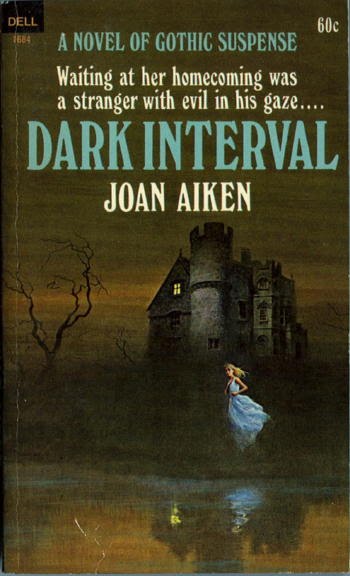
I'd been looking around (for a post last year) for a good image of the handsome cover Ace put to her The Crystal Crow, and managed to finally find it...though not the the more "edgy" cover that at least onne other of her gothics for them sported. Meanwhile, her other work in this mode seems also likely to be more interesting than the usual run of the gothic lines of the times, including her Heyeresque sequelization of Austen:


Margaret St. Clair has been only very inadequately represented in collections so far, despite a decent selection in the Greenberg compilation, which nonetheless slights her fantasy and horror work in favor of her sf, I'd say...also true of her other two, earlier collections.


I've had the great pleasure to read some of the stories I hadn't realized were uncollected (at least in a volume of her work), particulary from St. Clair's run around the turn of the 1950s in Weird Tales, while for reasons I'm not yet clear on, she seemingly preferred to publish as "Idris Seabright" in The Magazine of Fantasy and Science Fiction in the same years.


Here's the issue of WT featuring St. Clair's "Professor Kate" and the F&SF with Seabright's "The Man Who Sold Rope to the Gnoles" (featuring two cover creatures capable of some serious necking, if so inclined). Her sf could often track back to the horrific as well, as with the fine Galaxy story "Horrer Howce," but the absense of such stories as "The Little Red Owl" (WT, July 1951) is felt in the MHG selection. St. Clair could use a fat NESFA Press career-encompassing collection. Otherwise, one might need to buy this Famous Fantastic Mysteries issue to read the only other story in it aside from the cover novella, St. Clair's "The Counter-Charm"...or to seek out this fine issue of F&SF for, among others, St. Clair's "Sawdust" (not that some collectors wouldn't appreciate the mammary attention of artists Lawrence and Freas):


Happily, C. M. Kornbuth, at least, has already had a NESFA Press retrospective, more than a quarter-century after Dell published this interesting project, interesting in part because Dell felt it worth publishing a collection focusing on the Very early work of a writer, still in his teens when seeing most of these published, who had never quite gained his commercial due (and a man who loved to publish under pseudonyms of various sorts, in part because most of the stories collected here were among several by Kornbluth under various names filling each of the issues of his friend Donald Wollheim's nearly unbudgeted pulp magazines Cosmic Stories and Stirring Science Stories)--even if Dell gave it as little support as possible. James Blish takes some arguable editorial liberties here, in combining the first two stories, and refuses to include a fragment, published much later than most of these, under the Corwin name but apparently without Kornbluth's permission. "Thirteen O'Clock" is famously the young Kornbluth at his most antic, "The Rocket of 1955" first displaying his bitter black humor and trenchancy (to come to full flower in such stories as "The Marching Morons," emulated, to be kind, in a dumbed-down fashion without credit by Mike Judge's film Idiocracy), and has become one of the classic vignettes in science fiction, after extensive reprinting from the little magazine or fanzine (depending on one's point of view) that first published it--Stirring Science Stories was the first to reprint it, in this issue:


The existence of the NESFA His Share of Glory volume almost makes this volume retroactively redundant, but the omnibus doesn't include Blish's notes nor the version of the conjoined stories presented here.

As with the other books and other work under discussion here, eminently worth seeking out.

For more Forgotten Books this week, please see Patti Abbott's blog.

Friday, January 16, 2009

Friday "Forgotten" Books: NINE STRANGE STORIES edited by Betty M. Owen (Scholastic, 1974)

Includes:
The rocking-horse winner, D. H. Lawrence;
Heartburn, Hortense Calisher;
The snail-watcher, Patricia Highsmith;
Manuscript found in a police state, Brian Aldiss;
The man who sold rope to the Gnoles, Idris Seabright (Margaret St. Clair);
The mark of the beast, Rudyard Kipling;
The summer people, Shirley Jackson;
The leopard man's story, Jack London;
The garden of forking paths, Jorge Luis Borges

Another in the series of books that sustained my love of horror, even though this, like most Owen and other Scholastic anthologies, was about as eclectic as an ALFRED HITCHCOCK PRESENTS anthology. A timely citation, since unfortunately Calisher, whose "Heartburn" is included, just died (somewhat less timely, but stil synchronicitous, is the citation by Andy Duncan on the IAFA-L list of an insane blurb on a 1963 book by the late St. Clair, not killed by apoplexy upon reading the blurb, but she might well've been:

From the back cover of Sign of the Labrys by Margaret St. Clair, a 1963 original paperback novel from Bantam:

"Women are writing science-fiction! ... Women are closer to the primitive than men. They are conscious of the moon-pulls, the earth-tides. They possess a buried memory of humankind's obscure and ancient past which can emerge to uniquely color and flavor a novel. Such a woman is Margaret St. Clair, author of this novel. Such a novel is this, Sign of the Labrys, the story of a doomed world of the future, saved by recourse to ageless, immemorial rites ..."

Duncan's scan of that cover:
http://beluthahatchie.blogspot.com/2009/01/women-are-writing-science-fiction.html

Meanwhile, I think you can see why these books might appeal to any literate youth; this was, I'm pretty sure, my introduction to Borges (I wouldn't catch up to his new work till The Book of Sand a few years later; also to Lawrence and probably to Aldiss, Highsmith, and "Seabright" (slightly ironic that what is almost certainly St. Clair's best know story was published by her under her Magazine of Fantasy and Science Fiction pseudonym).

The Aldiss is a slightly silly but ingenious account of a prison made up cells on a sort of wheel within a mountain, told in the great gray tones appropriate to such a narrative. The Highsmith is "The Snail Watcher," and I hope you've come across it somewhere in your reading life by now...easily the most famous short story published by the shortlived US fantasy and sf magazine Gamma, despite not being sf nor fantasy, but a potentially realistic animal suspense story involving the kind of obsessive Highsmith loved to describe (and one wonders why it ended up in Gamma rather than a higher-paying market...was it widely rejected? A favor to editor Charles Fritch, who later would edit the last years of Mike Shayne Mystery Magazine? The others are nearly as common chestnuts of such anthologies, and other sorts, except perhaps for the Calisher, which might well've been first anthologized, and spotted by Owen, in Ray Bradbury's Timeless Tales for Today and Tomorrow.


Friday, April 17, 2015

FFB/S: "Super Whost" by Margaret St. Clair and why it matters...

Margaret St. Clair, despite admirers much better-known than myself including Ramsey Campbell and Martin H. Greenberg, remains stubbornly underappreciated.  I've finally read one of the gently satirical stories in her early series about a suburban married couple of the future, Oona and Jick, the second, "Super Whost," from the July 1947 issue of Startling Stories. As with most of the series, it's not yet been reprinted, despite being charming and funny and a cross between the kind of "comic inferno" writing that would be associated with Galaxy magazine a few years later, and the kind of surprisingly sharp domestic farce that Jean Kerr and Shirley Jackson would also be writing not long after, and echoed more popularly and broadly by I Love Lucy and eventually Erma Bombeck. (In a quotation from St. Clair in her rather good Wikipedia entry, she notes that the reader response to her stories in this never-collected series was less than warm, but one suspects the motivated writers were the same sort of fanboys who so usefully drive a lot of online conversation today.) The story is a deft account of Oona's attempt to win a vacation on Mars through a short essay/blurb contest requiring proofs of purchase from the packaging of a glutinous wheat product,  Super Whost, and the result of having entirely too much of the stuff in the house as a result of the extra expenditure, along with various further agglomeration of Super Whost as others' attempts to rid themselves of the product, after also gathering proofs of purchase for prizes, lead to Oona and Jick both "winning" even more of it. Unlike as in some of the "comic inferno" writing as Galaxy started to get lazy in the mid 1950s (where characters might've simply stuffed themselves sick with some similar product), it occurs to both Oona and her husband to simply throw the stuff away, but it's just expensive and useful enough to make that less easy to contemplate than attempting to palatably use it up, and it's in the little details of commercial exploitation (the contest) and social interaction (a friend, having made her own SW treats for what amounts to a bridge or mah jongg party, remarks a bit pointedly about Oona apparently not being too pleased with the dessert...Oona deflects this with a mention of needing to get in shape for the upcoming season with her new frontless bathing suit). Having been exposed to network radio advertising from the 1940s, its descendants through today but particularly those of the decades past from, say, Kraft and Jell-O, and generally aware of the long shadow of Depression and
July 1947...typical SS cover for 1947.
wartime privation 
over even the relatively comfortable middle class I was raised in, and the Feminine Mystique that Friedan was able to delineate, for those who hadn't quite let it set in, fifteen years later...it all resonates.

Looking at St. Clair's ISFDB citations, one sees that she, like her slightly later-arriving peers such as Algis Budrys and Robert Sheckley (or Ursula Le Guin and Michael Shaara...Kate Wilhelm and Richard McKenna...Philip K. Dick and...), generated a torrent of work from the latter 1940s through the end of the 1950s, when she slowed a bit...and, like those other (shall we call them "post-Futurian"?) writers, she was the product of a broad, rigorous college education in literature and writing, in a way that most of the auto-didacts who had been Futurians or associated with the Futurian magazines such as Astonishing Stories or Science Fiction were not, even if their interests and approaches (and educations) were similar--and those folks would be much of the core of writers who helped make Galaxy what it was, and so influential on sf and other literature which followed. While St. Clair was publishing these stories in Samuel Merwin's issues of Startling Stories, the odd (but influential and well-remembered) story such as William Tenn's "Child's Play" or T. L. Sherred's "E for Effort" was popping up in John Campbell's Astounding Science Fiction...even if Campbell eventually regretted publishing a few of them since he had some trouble with their perspective when it set in with him. Certainly, Judith Merril and Evelyn E. Smith and Kit Reed, as well as Theodore Sturgeon, Kurt Vonnegut, Ray Bradbury and certainly Fritz Leiber, might've found themselves nudged in certain directions in their writing by that of St. Clair, who would do more forceful work than "Super Whost" while retaining this story's charm and wit...perhaps such other underappreciated geniuses as Wilma Shore were influenced as well.

Please see Patti Abbott's blog for more of today's books and/or stories...and a reminder of why the late Ron Scheer matters...

Wednesday, October 28, 2020

Short Story Wednesday: DIME MYSTERY MAGAZINE, October 1949: John D. MacDonald, Margaret St. Clair, Day Keene, Lix Agrabee...

Well, isn't that a hell of a line-up of writers...St. Clair, MacDonald, Gault, "Keene", Powell, Siegel and Holden, even if I've barely read the last two...much as I've never before read the work of  Ms. "Lix Agrabee" (one of the more flagrant pseudonyms I've run across) as far as I know (Helen D. Conway has only four stories as by Agrabee listed in the FictionMags Index, all a cluster in Dime Mystery in 1947-49, and nothing much else pops up for her in a quick set of searches). 

What's notable about these folks, for the most part, is that they are writing better than serviceable pulp prose, as one might expect, even in this late pulp issue...inasmuch as all of them except, I think, Holden (and Conway) were going on to sustained careers in post-pulp-era publishing, several already contributing to higher-paying or more widely-respected markets by 1949. They were already writing fiction here and elsewhere that could fit in "slicks" or "little" magazines, paperbacks and Best of the Year annuals. Even if all but one of these short stories, in this penultimate issue of Dime Mystery (already costing the newsstand browser two dimes, and about to have its name changed, for a few more issues before folding, to 15 Story Mystery) are simply good reading, usually with excellent detail if not breaking much in the way of new ground. 

And so much burial ground to break, since all the short stories in this issue save St. Clair's involve corpses (or presumed corpses)  that need to be disposed of (in a variety of bucolic settings), but just keep coming back or refuse to stay where they were left or go where they should--or are they simply ghosts? Well, mostly corpses. The legacy of Dime Mystery as one of the original "shudder pulps" when that form was being more or less invented at Popular Publications in the early '30s gets its last licks in as this late issue features essentially all conventional but more or less "off-trail" crime fiction. 

Margaret St. Clair's "Nightmare Lady" is a turning worm story with an unsurprisingly (for its author) feminist edge (likewise, an openness to taking premonition dreams seriously), wherein a long-suffering sister/aunt, who has served as caretaker to her brother and his two children since the death of his wife, decides she won't allow him to crush the spirit of his daughter, her niece, through his bitter selfishness and stubbornness. Rather more deftly played out here than in too many episodes of Alfred Hitchcock Presents: not too long after...

John D. MacDonald's "The Last Rendezvous" is also a revenger's tale, somewhat more improbable but neatly enough done, involving a husband and his young sister-in-law who play a kind of vicious turnabout trick on a drunken lout, who had caused the death of their wife/sister in such a way it couldn't be easily proven in court. Thus, in a small way, an early movement in the direction of The Executioners, filmed inadequately twice as Cape Fear.

"Day Keene" (Gunard Hjerstedt)'s "The Laughing Dead" is closer to its author at full display of his powers, wherein a very mean piece of human furniture kills a distant cousin of his wife in an opportune encounter on a lonely road, but has the damnedest time taking care of the corpse, which seems to keep popping up and/or refusing to be disposed of/temporarily hidden as well as it might be. Also depends on some rather improbable coincidences, but is a little less in need of being indulged by the reader than the plot of the MacDonald, though at least one of the coincidences is rather quickly papered over. 

While all the rest of these are at least well-enough-written and indicative of the better work these people would do elsewhere, "The Corpse Came Back!" (surprise!) by "Lix Agrabee" is a notable exception, trying breathlessly yet almost always clumsily to get across the rising desperation of its protagonist, telling us frequently in the same sentence two or three times what is happening/has just happened, just in case we wouldn't believe it the first time...which is odd, since the thin plot of this one, disenchanted poor boy bumps off his doting, but (very) slightly overbearing, wealthy young wife, is the least improbable of the quartet (even if the resolution is about as awkward as most of the prose). Less odd, though, given that pulps usually paid by the word, and this reads a bit like the clumsier passages in later Harold Robbins/Jackie Collins-style "glam" fiction, particularly when describing wardrobe selections in repetitious detail or with lines such as: "He leaned out, palms spread to balance himself, laughing insanely now that calm sanity had come to him, knowing as he did so that he must pull himself together and, as soon as possible, pull himself out of the whole thing." 

Dime Detective, of course, was at its height one of the most important of  crime-fiction magazines in the field, a notable heir to Black Mask, and its stablemate Dime Western had a similar influence in its field; Dime Mystery was always a bit overshadowed by its littermates except in its shudder primacy years, but I'll be reading at very least the William Campbell Gault story here, and the other work by some of the better writers as pops up in this issue and others archived on-line. 

Please see Patti Abbott's blog for the rest of this week's SSW entries!


Monday, July 27, 2015

BEST FROM STARTLING STORIES, THE SHAPE OF THINGS, WONDER STORIES 1957 and other reprints from the Thrilling Group science fiction titles

After Standard Magazines/Better Publications shut down their Thrilling Group pulp magazines in 1955, they concentrated their activities mostly in the Paperback Library division of the Ned Pines organization...but James Hendryx, Jr. was given the task over the next decade to edit reprint magazines (with a couple of stories reprinted from the slicks rather than pulp back issues): two almost identical issues of Wonder Stories (the first in digest format, the second in pulp size) and eventually three issues of Treasury of Great Science Fiction Stories (with the last cutting the title down), also in pulp format.  (Treasury also had a western fiction companion.)
Cover painting by Richard Powers
Contents:
Contents:


Contents:
Contents:


Contents:
And the anthologies drawn from the Thrilling Group magazines:
cover painting by Alex Schomberg


The Best from Startling Stories ed. Samuel Mines (Henry Holt LCC# 53-8980, 1953, $3.50, 301pp, hc) Also as Startling Stories and Moment Without Time
    • vii · Foreword: Blueprint for Tomorrow · Samuel Mines · in
    • ix · Introduction · Robert A. Heinlein · in
    • 1 · The Wages of Synergy · Theodore Sturgeon · nv Startling Stories Aug 1953
    • 61 · The Perfect Gentleman · R. J. McGregor · ss Startling Stories Sep 1952
    • 81 · Moment Without Time · Joel Townsley Rogers · nv Thrilling Wonder Stories Apr 1952
    • 113 · The Naming of Names · Ray Bradbury · ss Thrilling Wonder Stories Aug 1949
    • 135 · No Land of Nod · Sherwood Springer · ss Thrilling Wonder Stories Dec 1952
    • 163 · Who’s Cribbing? · Jack Lewis · ss Startling Stories Jan 1953
    • 173 · Thirty Seconds — Thirty Days · Arthur C. Clarke · nv Thrilling Wonder Stories Dec 1949
    • 207 · Noise · Jack Vance · ss Startling Stories Aug 1952
    • 225 · What’s It Like Out There? · Edmond Hamilton · nv Thrilling Wonder Stories Dec 1952
    • 255 · Dormant · A. E. van Vogt · ss Startling Stories Nov 1948
    • 279 · Dark Nuptial · Robert Donald Locke · ss Thrilling Wonder Stories Feb 1953
Cover painting by Eugene Berman


    • Introduction · Damon Knight · in
    • Don’t Look Now · Henry Kuttner · ss Startling Stories Mar 1948
    • The Box · James Blish · ss Thrilling Wonder Stories Apr 1949
    • The New Reality · Charles L. Harness · nv Thrilling Wonder Stories Dec 1950
    • The Eternal Now · Murray Leinster · nv Thrilling Wonder Stories Fll 1944
    • The Sky Was Full of Ships · Theodore Sturgeon · ss Thrilling Wonder Stories Jun 1947
    • The Shape of Things · Ray Bradbury · ss Thrilling Wonder Stories Feb 1948
    • The Only Thing We Learn · C. M. Kornbluth · ss Startling Stories Jul 1949
    • The Hibited Man · L. Sprague de Camp · ss Thrilling Wonder Stories Oct 1949
    • Dormant · A. E. van Vogt · ss Startling Stories Nov 1948
    • The Ambassadors · Anthony Boucher · ss Startling Stories Jun 1952
    • A Child Is Crying · John D. MacDonald · ss Thrilling Wonder Stories Dec 1948
My review of The Shape of Things
Indices and images from ISFDB and Homeville.